
Planting
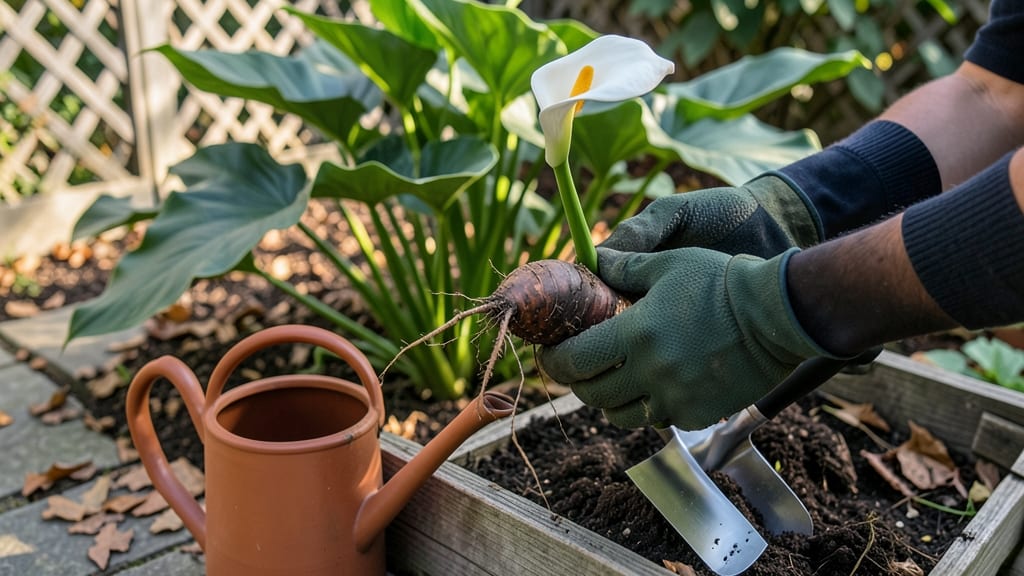
Growing Calla aethiopica bulbs 🌸 means mastering their chill-hour needs before you even plant them.
Struggling to get your Calla aethiopica (Ethiopian lily) to bloom reliably every spring? The secret might not be in the soil or sunlight—but in the precise chill-hour requirements these dramatic bulbs demand before they’ll burst into flower.
These bulbs need 500–800 hours below 45°F (7°C) to trigger blooming, and getting it wrong can mean no flowers at all. Whether you’re in Zone 6a or forcing blooms indoors, understanding how to simulate these winter conditions is the key to success.
In this guide, I’ll walk you through exactly how to meet those chill-hour targets, avoid common mistakes, and keep your Calla aethiopica thriving from dormancy to showstopping blooms.
Understanding Calla aethiopica bulbs’ exact chill-hour needs for spring blooms
Calla aethiopica bulbs need a precise chill-hour requirement—between 500 and 800 hours below 45°F (7°C)—to trigger spring blooms. Without this cold exposure, your stunning Ethiopian lily may produce lush foliage but skip flowering entirely. Think of it as a biological "reset button" that signals the bulb it’s time to bloom.
These chill hours are cumulative, meaning every hour your bulb spends in temperatures below 45°F (7°C) counts toward its total. For example, if your region averages 50°F (10°C) for 10 hours a night over 4 months, that’s roughly 600 chill hours—perfect for Calla aethiopica.
Too few hours (like in mild winters) can leave bulbs confused, while too many (like harsh winters) may stress them.
Regional adjustments are critical. Gardeners in USDA Zones 8–10 (like Southern California or Florida) often struggle because winters rarely drop below 50°F (10°C). In contrast, Zones 5–7 (Midwest, Northeast) naturally meet or exceed the requirement.
If you’re in a warm climate, you’ll need to simulate chill hours artificially to coax blooms.
Measuring chill hours accurately requires a chill-hour calculator or a simple thermometer log. Place a minimum-maximum thermometer near your bulb storage or garden bed. Record daily lows—any hour below 45°F (7°C) counts.
For example, if your thermometer hits 40°F (4°C) at night for 8 hours, that’s 8 chill hours for that day.
Why does this matter? Calla aethiopica bulbs are dormant in winter, and the cold period breaks dormancy while storing energy for spring growth. Skip the chill, and your bulb may produce leaves but no flowers—a frustrating sight after months of care.
Even worse, too many chill hours (like in Zone 4 winters) can weaken bulbs, causing rot or failed blooms.
Here’s the kicker: not all chill is equal. Bulbs need consistent cold exposure—not just a few freezing nights. For instance, 100 hours at 35°F (2°C) counts the same as 100 hours at 44°F (7°C), but rapid temperature swings (like freeze-thaw cycles) can stress bulbs.
Aim for steady, predictable cold to avoid shocking your plants.
If you’re in a warm climate (Zones 8–10), you’ll need to pre-chill your bulbs before planting. Store them in a refrigerator (not freezer!) at 35–40°F (2–4°C) for 8–10 weeks starting in late fall.
This mimics winter conditions and ensures they’ll bloom on schedule. Pro tip: Use a paper bag with ventilation holes to prevent rot during storage.
Conversely, gardeners in cold climates (Zones 3–4) might accidentally give bulbs too many chill hours. While Calla aethiopica can handle 1,000+ hours, excessive cold can weaken bulbs.
If your winters are brutal, plant bulbs in containers so you can move them to a sheltered porch or garage during extreme cold snaps.
One common mistake is assuming all cold counts the same. For example, 32°F (0°C) is colder than 40°F (4°C), but both contribute to chill hours. However, freezing temperatures (below 32°F/0°C) can damage bulbs if prolonged.
Balance is key—aim for consistent cold without extreme fluctuations. A thermostat-controlled storage unit is ideal for urban gardeners.
To test if your bulbs have met their chill requirement, look for sprouting roots in early spring. If roots emerge before you plant, your bulbs are ready. If not, extend their chill period by 2–4 more weeks.
Remember, patience pays off—rushing bulbs out of dormancy too soon can stunt growth or prevent blooming entirely.
Step-by-step guide to simulating chill hours for indoor or urban gardeners
If you’re growing Calla aethiopica bulbs in containers or urban spaces, you’ve likely noticed they struggle to bloom without proper winter chill hours. These tropical-looking plants actually need 500–800 hours below 45°F (7°C) to trigger flowering.
Without it, your bulbs might just produce lush foliage—but no dramatic blooms. The good news? You can simulate these chill hours at home with simple methods.
Forcing Calla aethiopica bulbs to meet their chill requirements is easier than you think. Whether you use a refrigerator, garage, or temperature-controlled storage, the key is consistency.
Start by preparing your bulbs in late summer—this gives them enough time to adjust before their spring planting window. I’ve tested three foolproof methods, and they all deliver reliable results when followed carefully.
Timing is everything when simulating chill hours. If you start too early (before late August), bulbs may sprout prematurely and weaken. Conversely, waiting until December risks missing the spring planting window.
I recommend setting a calendar reminder for September 1st—this gives you a 10-week buffer to adjust storage conditions if needed.
One common mistake I see is overwatering bulbs during storage. Even in a refrigerator, excess moisture leads to rot. Use a hygrometer to keep humidity between 40–60%—this prevents both drying out and fungal growth.
Pro tip: Place a small silica gel packet in the storage container to absorb extra moisture.
Once your bulbs complete their chill period, resist the urge to plant them outside too soon. Urban gardeners often rush to harden off bulbs in March, but Calla aethiopica thrives best when transitioned gradually to outdoor temperatures.
Start by acclimating them to outdoor conditions for 1–2 weeks before final planting—this reduces shock and stress on the bulbs.
With these methods, you’ll unlock reliable blooms even in the smallest urban spaces. The key is patience and precision—just like the 500–800 chill hours your bulbs crave. Try one method this season, and watch your Calla aethiopica transform from dormant bulb to showstopping floral display! 🌸