
Advice
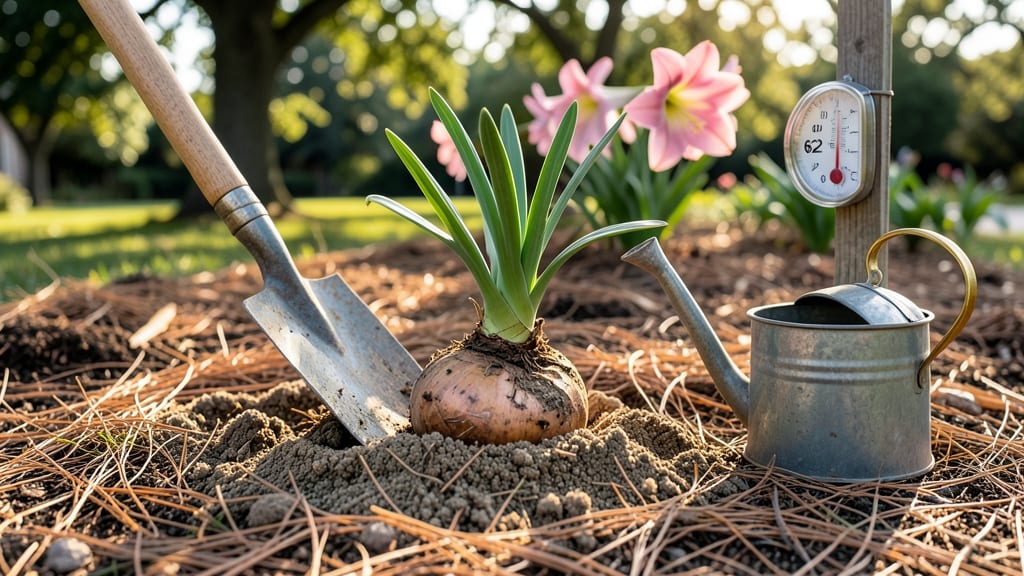
You can amaryllis bulbs be planted outside only in USDA Zones 9-11, where temperatures reliably stay above 20°F (-6°C). In colder regions, these tropical bulbs must be lifted and stored indoors after flowering to prevent frost damage, which can occur even when bulbs appear dormant.
These stunning bloomers thrive outdoors year-round only in frost-free climates like Southern California or Florida. 🌿 The issue isn't just freezing temps—it's the water content in the bulbs freezing and expanding, which ruptures their cells.
Even a light frost can trigger irreversible damage, unlike hardy bulbs like daffodils that can survive -20°F (-29°C) conditions. For gardeners in colder zones, the key is timing: plant in spring after last frost, then dig up bulbs before the first 40°F (4°C) nights of fall.
When transitioning between indoor and outdoor environments, I've found gradual temperature acclimation helps prevent bulb shock. Start by moving potted amaryllis outdoors during daytime hours only, then slowly increase exposure over 7-10 days.
For in-ground plantings in Zone 9-11, enrich the soil with compost and apply a 4-inch mulch layer in winter to insulate the bulbs—this mimics their natural tropical habitat's moisture protection.
💡 In This Article
- Amaryllis Bulb Cold-Hardiness and Freeze Sensitivity
- Outdoor Amaryllis Planting Zones and Seasonal Care
Amaryllis bulb cold-hardiness and freeze sensitivity
Amaryllis bulbs are tropical plants at heart, with a biological makeup that makes them extremely sensitive to cold. Their high water content—typically around 60-70% of their weight—is what makes them so vulnerable to frost.
When temperatures drop below 20°F (-6°C), the water inside their cells freezes and expands, physically rupturing delicate cell walls. This is why even a light frost can be fatal, unlike hardy bulbs like daffodils which have thick, protective outer layers that can withstand -20°F (-29°C) without damage. 🌡️
The damage mechanism is particularly insidious because it happens at the cellular level. Amaryllis bulbs enter a partial dormancy stage after flowering, but their cells remain metabolically active enough to be affected by cold.
Unlike true winter dormancy in hardy bulbs, where cellular activity nearly stops, amaryllis bulbs maintain some moisture exchange. This makes them susceptible to freeze-thaw cycles that can occur even in 30-35°F (1-2°C) temperatures, which is why gardeners in marginal zones often see their bulbs fail despite careful planning.
What most people don't realize is that the damage isn't always immediately visible. The outer scales might look intact, but the internal tissues are often already compromised. This hidden damage means the bulb may appear healthy for weeks before suddenly rotting or failing to produce flowers the following season.
The critical threshold is 20°F (-6°C)—any colder, and the cellular damage becomes irreversible. Even in Zone 8b where winter lows occasionally dip below this, amaryllis bulbs require special protection.
Comparing amaryllis to other popular bulbs highlights their fragility. Daffodils can survive -20°F (-29°C) because their cells contain antifreeze proteins that prevent ice crystal formation. Tulips, while less cold-hardy, can tolerate 10°F (-12°C) because their bulbs have thicker protective layers.
Amaryllis bulbs simply weren't evolved to handle freezing conditions—they originate from South American rainforests where temperatures rarely drop below 50°F (10°C). 🌿
This biological vulnerability explains why you'll see amaryllis thriving as container plants in cold climates but failing when planted directly in the ground. The soil provides some insulation, but it's not enough to protect against prolonged exposure to freezing temperatures.
Even mulch layers—typically 4-6 inches—only provide about 5-10°F (3-6°C) of additional protection, which isn't sufficient for amaryllis in frost-prone areas.
The good news is that this understanding gives gardeners in colder zones precise strategies for success. By lifting bulbs before the first 40°F (4°C) nights of fall and storing them in a cool (50-60°F/10-15°C), dry place, you can preserve them for years.
The key is acting before the bulbs have a chance to experience any freezing, as even brief exposure can trigger the irreversible cellular damage we've discussed. 💡