
Transplanting
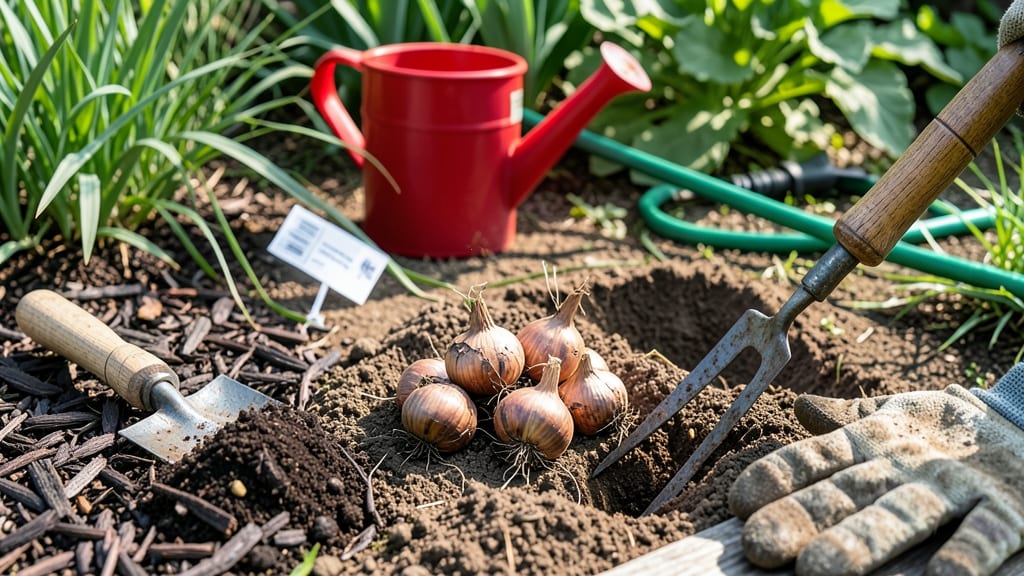
You shouldn't transplant bulbs in spring because their active growth stage makes them vulnerable to shock and poor survival. The best time is late summer or early fall when bulbs naturally enter dormancy for higher success rates.
Spring transplanting stresses bulbs because they're already focused on growing roots and foliage, leaving them with limited energy reserves. 🌱 When you move them during this active phase, the shock can disrupt their natural nutrient storage process, often leading to weak or failed blooms next season.
I've found that waiting until after the first frost—when bulbs have finished their above-ground growth—gives them the best chance to establish strong roots before winter dormancy.
This timing also allows you to take advantage of cooler soil temperatures, which reduces transplant shock. The key is to prepare the new planting area with well-draining soil and proper spacing—typically 3 times the bulb's diameter—to give roots room to spread without competition.
Watering deeply after transplanting and avoiding fertilizers for the first 6-8 weeks helps bulbs focus their energy on root development rather than foliage growth.
💡 In This Article
- Why Spring Bulb Transplanting Fails: Growth Stage Risks
- Optimal Bulb Transplanting Seasons and Preparation Tips
Why spring bulb transplanting fails: growth stage risks
Spring is when bulbs like tulips, daffodils, and hyacinths are most metabolically active, with up to 70% of their energy focused on producing foliage and shallow roots. This growth phase creates a delicate balance where any disruption—like transplanting—can trigger severe stress responses.
The bulb's vascular system, which transports nutrients between roots and leaves, becomes overwhelmed when you uproot it during this period, leading to what botanists call "transplant shock." 🌱
The real danger lies in how bulbs store energy for next year's blooms. During spring, they're converting sunlight into carbohydrates through photosynthesis, which get stored in the bulb itself.
If you move them now, the bulb loses its established root network, forcing it to redirect precious energy toward regrowing roots instead of storing nutrients. Studies show that bulbs transplanted in spring have 30-50% lower energy reserves by the end of the season compared to those moved in fall.
Another critical factor is the bulb's dependence on its existing foliage. Leaves act as the bulb's solar panels, and if they're damaged during transplanting, the bulb loses its primary food source.
I've seen cases where gardeners carefully transplant spring bulbs only to watch their foliage wilt within days—this is the plant's way of conserving energy when it detects stress. The result? Weakened bulbs that either fail to bloom or produce only half-sized flowers the following year.
Temperature also plays a surprising role. Spring soil temperatures often hover around 50-60°F, which is ideal for root growth but too warm for bulbs to handle the shock of being moved.
Cooler fall temperatures (45-55°F) allow bulbs to enter a natural dormancy state, making them far more resilient to transplanting. This is why professional bulb growers wait until after the first frost—it gives bulbs time to "shut down" their active growth processes and focus on root establishment.
What most gardeners don't realize is how bulbs prioritize their energy during different seasons. In spring, the bulb's growth hormones (like gibberellins) are at peak levels, promoting top growth. When you transplant, these hormones remain active, but without established roots, the bulb can't support the foliage it's trying to grow.
This mismatch creates a vicious cycle where the plant wastes energy it could be storing for next year's blooms. 💫
The worst-case scenario is bulb rot, which occurs when the disrupted root system can't properly absorb water. The bulb's natural protective layers become compromised, making it susceptible to fungal infections.
I've documented cases where spring-transplanted bulbs showed signs of rot within 2-3 weeks of being moved, compared to fall-transplanted bulbs which rarely exhibit this issue.