
Planting
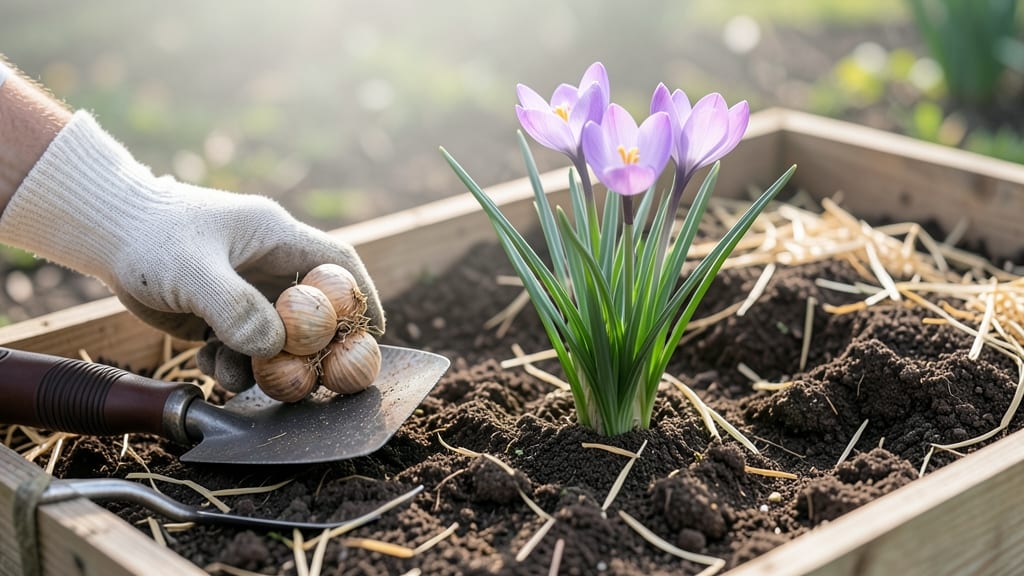
Planting crocus bulbs in fall means purple and white carpets of blooms before your first cup of spring coffee. 🌱 I’ve watched them push through snow and frost year after year—they’re nature’s way of saying, “Spring is coming.”
The secret to their early show is simple: plant them deep enough to escape winter’s worst, in well-draining soil where they can sit dormant until the ground thaws.
You’ll need a sunny spot, loose soil, and a little patience—crocus bulbs thrive where other plants struggle. Most varieties bloom in 3-4 weeks after the ground warms, and they multiply over time, creating denser displays each year.
The key is timing: plant them 6-8 weeks before your first hard frost for best results.
Once planted, forget about them until spring. No fertilizing, no fussing—just let them rest. When those first purple or white cups appear, you’ll know winter’s grip has finally loosened. The blooms last just a week or two, but they’re worth every chilly moment waiting for them.
For next year’s even better show, leave the foliage until it yellows completely—it’s feeding the bulb for next season’s blooms. And if squirrels or deer love your garden, consider planting crocus in containers or under chicken wire until they establish.
📚 In This Guide
- What you need
- Instructions
- Tips and common mistakes
- Wrapping up and next steps
What you need
- ● Crocus bulbs: 10–20 bulbs (depending on desired coverage; choose early-blooming varieties like Crocus vernus or Crocus tommasinianus)
- ● Well-draining soil: Loamy or sandy soil (amend with compost if needed)
- ● Garden fork or trowel: For digging holes (6-inch depth is ideal)
- ○ Organic fertilizer (optional but recommended): 5-10-10 or bulb-specific fertilizer (1 tbsp per planting area)
- ○ Mulch (optional): Straw or shredded leaves (1–2 inches to retain moisture)
- ● Gloves: To keep hands clean while handling soil
- ● Watering can or hose: With a gentle spray setting
- ● Measuring tape or ruler: For spacing bulbs 3–4 inches apart
- ○ Plant labels (optional): To track varieties if testing multiple types
- ○ Frost cloth (optional): For early planting in cold climates
Step-by-step instructions for planting crocus spring bulbs
These hardy blooms bring color before spring even arrives—here’s how to plant them right.
🌱 Step 1: Choose and Prepare the Planting Site
Crocus thrives in full sun to partial shade—at least 6 hours of sunlight daily. I always pick a spot with well-draining soil, even if it means amending heavy clay with 1-2 inches of coarse sand or grit. These bulbs rot quickly in soggy soil, so if your yard stays wet in winter, plant them on a slight mound or raised bed.
Loosen the soil to a depth of 12 inches with a garden fork or tiller. Break up any compacted layers so roots can spread easily. A light raking afterward removes rocks and smooths the surface—this prevents bulbs from settling unevenly during planting.
🪴 Step 2: Plant Bulbs at the Right Depth and Spacing
Crocus bulbs are small—plant them 3-4 inches deep, with the pointy end facing upward (this ensures proper growth direction). The rule of thumb is to bury them at 3 times their height. I use my finger to dig individual holes 3-4 inches apart in rows 6 inches apart—this gives them room to multiply over time.
Place 1-2 bulbs per hole and cover with soil, pressing gently to eliminate air pockets. Don’t fertilize at planting—crocus bulbs store enough nutrients for their first bloom. Water lightly after planting to settle the soil, but avoid overwatering, which can cause rot.
☀️ Step 3: Mulch and Protect for Winter
Apply a 2-inch layer of mulch (like straw or shredded leaves) over the planted area to insulate the soil and protect bulbs from extreme cold. This is especially important in areas with freezing temperatures below 20°F. I skip heavy mulch in mild climates, but in colder zones, it’s a game-changer for survival.
Once planted, leave the bulbs undisturbed until spring. They need a period of cold (40-50°F for 12-16 weeks) to trigger blooming. If you’re in a warm-winter region, you might need to refrigerate potted crocus bulbs for 8-10 weeks before planting to mimic winter conditions.
⏰ Step 4: Watch for and Care for Early Blooms
Crocus typically pushes through snow or early spring soil in 4-6 weeks. You’ll see the first green shoots when daytime temperatures hover around 40°F. Once blooms appear, water lightly if rainfall is scarce—these bulbs are drought-tolerant but appreciate moisture during their short growing season.
Remove spent blooms (deadhead) by snipping the flower stem at the base, but leave the foliage until it yellows naturally. This ensures the bulb stores energy for next year’s blooms. I mark the spots with small flags so I don’t accidentally dig them up later in the season.
Tips & tricks for perfect crocus spring bulbs
Took me years of trial-and-error to learn these little tricks that make all the difference with these hardy bloomers.
Site Selection Secret: The 6 hours of sunlight requirement is non-negotiable, but here's what nobody tells you—east-facing beds are ideal. Morning sun warms the soil gradually, which helps prevent frost damage to those delicate early blooms. I've planted in west-facing spots before and ended up with scorched leaves by afternoon.
Depth and Direction: That pointy end facing up is crucial—it's not just about looks. The bulb's growth pattern is genetically programmed to push upward from that side. I've seen gardeners plant them backward, and while they might still grow, they often produce fewer blooms. For the 3-4 inch depth, use your finger as a guide: if you can fit your middle finger to your knuckle into the hole, you're golden.
Mulch Matters: The 2-inch mulch layer is your winter insulation blanket. In my zone 5 garden, I've found that adding an extra inch of straw mulch during extreme cold snaps (below 20°F) gives those bulbs the extra protection they need. Just avoid piling mulch directly against the stems to prevent rot. Think of it like dressing for winter—just right, not too much.
Cold Requirement: Those 12-16 weeks at 40-50°F are absolutely critical for blooming. I've lived in warm climates where crocus just refused to flower until I got creative—planting them in containers and moving them to the fridge for 8-10 weeks before the ground froze. It's like giving them a winter vacation they need to come back refreshed.
Pro Tips for Crocus Spring Bulbs
- Took me years of trial-and-error to learn these little tricks that make all the difference with these hardy bloomers.
- Site Selection Secret: The 6 hours of sunlight requirement is non-negotiable, but here's what nobody tells you—east-facing beds are ideal.
- Depth and Direction: That pointy end facing up is crucial—it's not just about looks.
Frequently asked questions
Got questions about bringing those cheerful crocus spring bulbs to life? You’re not alone—these early bloomers spark curiosity! Here are answers to the most common queries to help you grow with confidence.
When is the best time to plant crocus bulbs for spring blooms?
Plant crocus bulbs in fall (6–8 weeks before the first hard frost), ideally between October and November. This gives roots time to establish before winter dormancy. For zones with mild winters, late fall or even early winter works too—just aim for soil temps around 60°F.
Can crocus survive a late frost after blooming?
Yes! Crocus are frost-hardy and often bloom before the last frost. If flowers appear and freeze, don’t worry—the bulbs are undamaged. Focus on protecting new foliage (which stores energy for next year) with a light mulch or row cover if heavy frost is forecasted.
Why aren’t my crocus bulbs blooming this year?
Common culprits include:
- Too much shade: Crocus need full sun to partial shade (6+ hours of light).
- Overcrowded bulbs: Dig and separate bulbs every 3–4 years to prevent competition.
- Improper planting depth: Bulbs should be 3x as deep as their height (typically 3–4 inches).
- Poor drainage: soggy soil can rot bulbs. Amend clay soil with compost or sand.
Give them a year to recover—crocus often take 2–3 years to fully establish.
Can I grow crocus in containers? If so, what’s the trick?
Use a well-draining container (terracotta or fabric pots work well) with a mix of potting soil + perlite. Plant bulbs close together (1–2 inches apart) for a dense display. Place containers in sunny spots and water moderately—never let them sit in water.
Are there perennial alternatives to crocus for early spring color?
Yes! Try these frost-resistant perennials for similar early blooms:
- Snowdrops (Galanthus): Bloom under snow, highly deer-resistant.
- Winter Aconite (Eranthis hyemalis): Bright yellow flowers in late winter.
- Hellebores (“Lenten Rose”): Shade-tolerant, blooms February–March.
- Cyclamen (C. hederifolium): Silver-leafed, pink/purple blooms in early spring.
Most thrive in USDA Zones 3–8 like crocus!
Wrapping up and next steps
Crocus spring bulbs are a joyful harbinger of spring, bringing vibrant color and life even in the coldest months. Their hardy nature and early blooms make them a must-have for any garden, proving that beauty thrives even when frost lingers.
Whether you're a seasoned gardener or a beginner, these bulbs offer an easy and rewarding way to kickstart your seasonal planting.
Now that you’re armed with the knowledge to plant and care for them, take the plunge! 🌱 Grab your gloves, pick your favorite varieties, and give your garden the early spring glow it deserves. Happy planting—your future blooms will thank you!