
How To
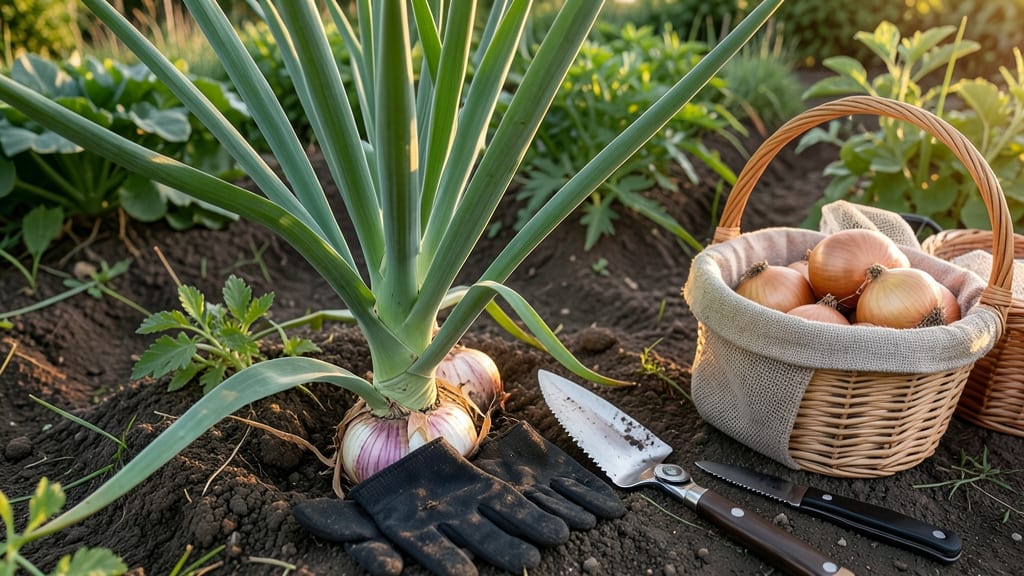
Deciding it's time to harvest onion bulbs at the right moment means the difference between a perfectly stored crop and one that spoils before you can use it.
If your onion tops are bending over like a bowing gardener, it might be time to harvest—but how do you know for sure? Waiting too long means shriveled bulbs, while pulling them too early wastes your hard work.
Onions 🧅 give you three clear signals when they’re ready: the tops yellow and flop over, the neck tightens, and the skin turns papery. But timing also depends on your USDA Zone 6a climate, soil moisture, and even the variety you’re growing.
In this guide, I’ll walk you through the exact visual cues to watch for, how to adjust for late-season planting, and the best way to cure and store your harvest so it lasts all winter.

3 Clear signs your onion bulbs are ready for harvest (top falls over checklist)
Harvesting onions at the right time ensures plump, flavorful bulbs that store well all winter. The most reliable indicator is when the green tops fall over—but not all onions behave the same.
Short-day varieties (like Texas Super Sweet) may flop dramatically, while long-day onions (like Yellow Sweet Spanish) might just yellow and bend slightly. Understanding these three key signs will help you decide it's time to harvest onion bulbs before they rot in the ground.
First, pay attention to the top fall-over angle. When the tops bend at a 30° to 45° angle, your onions are nearing maturity. This is your first warning that the bulb below is developing.
If you wait until the tops are completely flat (90°), you risk over-mature bulbs that split or shrivel. The neck drying is another critical clue—the stem between the bulb and leaves should start shrinking and feel dry to the touch, signaling the plant is redirecting energy to the bulb.
Don’t rely on the calendar alone! Weather plays a huge role. If your area has hot, dry spells, onions may mature faster, while cool, wet conditions can delay harvest. Even the soil moisture level matters—overwatered onions develop soft, pithy bulbs, while underwatered ones stay small and tough.
The best way to confirm readiness is to gently dig up one bulb and check its firmness.
-
1. Top Falls Over at 30°–45° Angle
Short-day varieties flop dramatically; long-day types may just yellow. Use this as your first cue to check bulb firmness. -
2. Neck Dries and Shrinks
The stem between bulb and leaves tightens and feels dry—this means the plant is maturing the bulb for storage. -
3. Bulb Feels Firm and Dry
Gently squeeze the bulb—it should be solid, not soft or moist. If it’s still damp, wait 3–5 days.
Pro tip: Test one bulb by digging it up and peeling back the outer layers. A ready-to-harvest onion will have dry, papery skin and a tight, firm bulb. If the skin is still green or the bulb feels soft, wait another week.
Remember, onions need full sun (6+ hours daily) to mature properly—shady spots delay these signs and result in smaller bulbs.
Timing matters even more for storage onions (like Yellow Sweet Spanish) versus green onions (like White Lisbon). Storage types need full maturity to last through winter, while green onions can be harvested when the tops are 6–8 inches tall.
If you’re unsure, harvest a few bulbs early and cure them—this gives you a taste test for readiness.
One common mistake is harvesting based on leaf color alone. Yellowing tops are a sign, but pale green leaves can also indicate maturity. Always combine leaf color with the top fall-over angle and neck drying for accuracy.
For example, in my garden, my Texas Super Sweet onions flop over dramatically by mid-July, while my Candy onions take until early August to show the same signs.
Weather can throw off your harvest timeline. If you’ve had unusually hot temperatures (above 85°F), onions may mature faster and need harvesting earlier. Conversely, cool, cloudy weather can stretch the harvest window.
Keep a garden journal to track when your onions typically reach these stages—this helps you adjust for future seasons.
Finally, avoid the temptation to harvest based on bulb size alone. A large bulb isn’t necessarily ready if the tops are still upright. The neck drying and top fall-over angle are more reliable indicators than size.
For example, I once harvested a giant bulb with green tops—it was pithy and rotted within weeks. Always prioritize the visual and physical cues over guesswork.
Once you’ve confirmed all three signs, it’s time to harvest! Use a fork to gently loosen the soil around the bulb, then lift it out. Let the onions cure in the sun for 3–5 days before storing to toughen the skins and prevent rot.
This simple step extends their shelf life from months to nearly a year.
When to harvest vs. when to wait: onion top fall-over timeline explained
Onion tops don’t just flop over randomly—they follow a predictable timeline that tells you exactly when to harvest. The angle of the fall-over, combined with weather patterns and variety traits, creates your harvest window.
Short-day onions (like Yellow Granex) may fall over earlier, while long-day types (like Sweet Spanish) take longer to signal readiness.
Start monitoring when the tops bend at a 30° angle—this is your first clue. By the time they reach 90° (flat on the ground), most bulbs are ready, but not always. Dry, sunny weather speeds up the process, while cool, rainy conditions can delay it by weeks.
Late-season plantings may never fully flatten due to shorter daylight hours.
Here’s how to interpret the top fall-over progression and adjust your harvest timing based on conditions:
If you’re growing short-day onions (like Vidalia), they’ll often fall over 2–3 weeks earlier than long-day types. Soil moisture also plays a role—dry spells can cause premature top fall-over, while overwatering delays it.
Always dig up a test bulb to check for firmness and papery skin before committing to a full harvest.
For late-season plantings (after June), expect tops to fall over more slowly due to reduced daylight. In these cases, harvest when the tops reach 60°–75° and the bulbs feel firm. Storage quality may suffer, so cure them thoroughly in a dry, shaded area for 2–3 weeks before storing.
Don’t ignore weather forecasts—a heatwave can cause tops to flop over quickly, while prolonged rain may rot bulbs before they’re ready. If tops fall over but bulbs are still soft, wait 5–7 more days or blame poor drainage in your soil.
Adjust your next planting schedule based on these lessons!
🌱