
How To
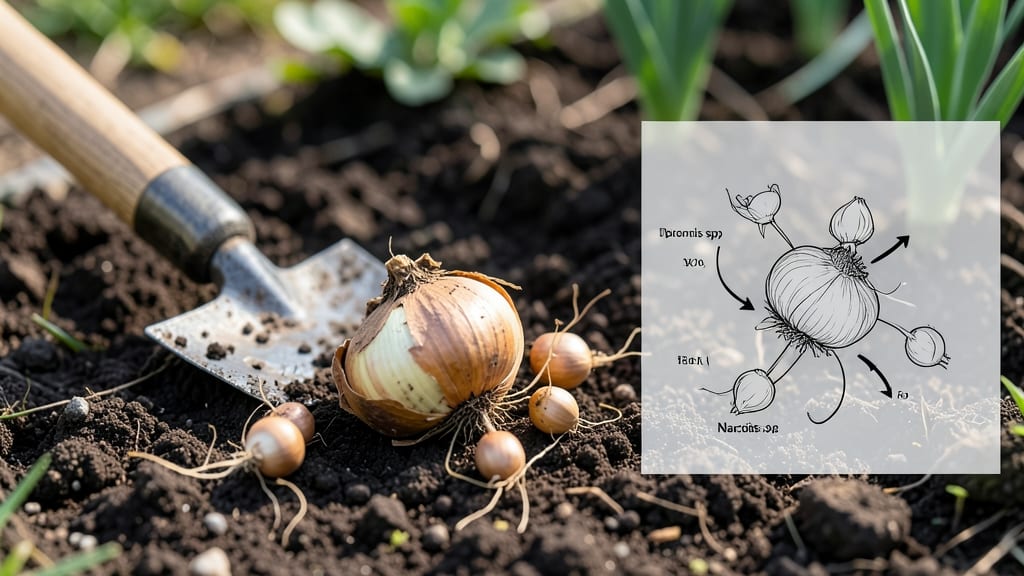
Bulbs do multiply naturally by producing offsets and dividing over time, creating new plants around the parent bulb. Varieties like daffodils, tulips, and lilies can easily be separated and replanted to grow your garden collection.
This natural propagation happens when the parent bulb sends out smaller bulbs called offsets from its base, storing energy for future growth. 🌱 The process works best when bulbs have matured fully—typically after 2-3 growing seasons—giving them time to build up nutrients.
Spring is the ideal time to dig up and divide most bulbs, though some like snowdrops multiply best in fall when temperatures drop. I've found that patience pays off: a single daffodil bulb can produce 5-10 offsets over 3 years, turning one plant into a whole cluster!
For best results, focus on bulbs known for vigorous multiplication like alliums, which form dense clusters, or crocuses that spread rapidly. Always use sharp tools when dividing to avoid damaging the offsets, and replant them at the same depth as the original bulb.
The key is keeping soil well-draining and providing consistent moisture during their first growing season. Overcrowding is the #1 mistake—it stresses the parent bulb and reduces offset quality.
💡 In This Article
- How Bulb Offsets and Division Work
- Best Bulbs for Natural Multiplication and Care Tips
How bulb offsets and division work
The magic of bulb multiplication begins at the base of the parent bulb, where tiny offsets form like miniature versions of the original. These offsets are essentially baby bulbs that develop from dormant buds on the mother bulb's bottom, storing carbohydrates and nutrients for future growth.
Think of it like a natural cloning process—each offset contains the same genetic material as the parent, ensuring identical flowers and foliage. 🌱 The process kicks into high gear after the parent bulb has matured, typically after 2-3 growing seasons, when it's built up enough energy reserves.
Timing is everything when it comes to division. Most bulbs, like daffodils and tulips, should be divided in early spring when the foliage has just turned yellow but before it dies back completely. This gives the offsets a full growing season to establish roots and store nutrients.
However, some bulbs like snowdrops and crocuses prefer fall division, as they need cooler temperatures to trigger growth. The key difference lies in their natural dormancy cycles—spring dividers need warmth to wake up, while fall dividers rely on winter chilling to break dormancy.
Nutrients play a critical role in this process. The parent bulb acts like a battery, storing energy in its scales that fuels both its own growth and the development of offsets. When you divide bulbs, you're essentially splitting this energy source.
That's why it's crucial to replant offsets at the same depth as the parent bulb—they need consistent moisture and protection from temperature fluctuations. A well-draining soil mix with added compost provides the perfect environment for offsets to thrive, mimicking their natural forest floor habitat.
There's a fascinating biological reason why some bulbs multiply more aggressively than others. Fast-spreading varieties like alliums and chives produce offsets more rapidly because they've evolved to colonize open spaces quickly.
These bulbs develop adventitious roots—roots that grow from unusual places like stem nodes—which allows them to establish new plants even when separated from the parent. In contrast, slower-multiplying bulbs like hyacinths focus their energy on producing larger, showier flowers rather than numerous offsets. 🌿
Forced propagation methods can accelerate this natural process. Some gardeners use the "chitting" technique—placing bulbs in a warm, humid environment to encourage early growth before planting. Others experiment with bulb layers, where offsets are gently teased away from the parent bulb and planted separately.
While these methods can work, they require careful monitoring of moisture levels and temperature to prevent rot. The most reliable approach remains patience: letting nature take its course often yields the best results with minimal intervention.
What most people don't realize is that bulb division actually rejuvenates the parent plant. Over time, bulbs become overcrowded as offsets compete for nutrients, leading to smaller flowers and weaker growth. Dividing every 3-5 years gives both the parent bulb and its offspring the space they need to thrive.
I've seen firsthand how a single divided daffodil bulb can produce 15-20 offsets over five years when given proper care—a remarkable example of nature's propagation efficiency. 🌻