
How To
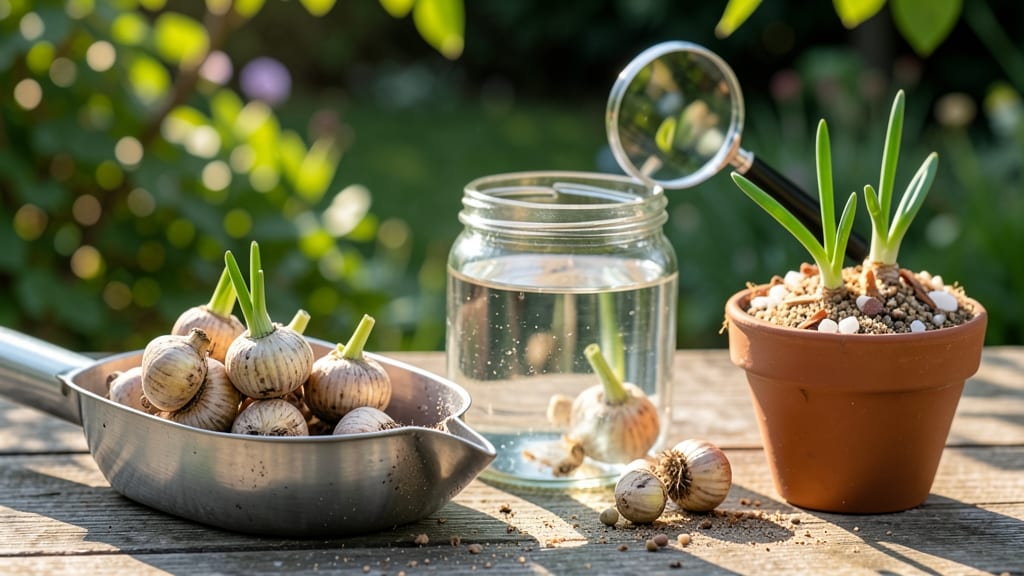
Ranunculus bulbs multiply naturally by producing offsets—small bulblets that form around the parent bulb. After 2-3 years, these offsets create dense clumps, but dividing them every 3-4 years keeps plants healthy and prevents overcrowding. The best time to separate and replant is in early spring.
These offsets form as the parent bulb stores excess energy, creating miniature versions that eventually grow their own roots. 🌱 The process mirrors how garlic or onions multiply, though ranunculus offsets are typically smaller and more delicate.
I’ve found that dividing clumps in early spring—right after the foliage yellows but before new growth appears—gives the bulbs time to establish roots before summer heat sets in.
What’s interesting is how ranunculus handles division differently than other perennials. While daffodils or tulips can wait until fall, ranunculus thrives when replanted in spring. The key is to gently separate the offsets with your fingers or a small trowel, ensuring each has a bit of root attached.
Plant them at the same depth as the original bulbs, about 2 inches below soil level, and water lightly until they’re fully established.
💡 In This Article
- How Ranunculus Bulbs Reproduce Through Offsets
- Step-by-Step Guide to Dividing Ranunculus Clumps
How ranunculus bulbs reproduce through offsets
Ranunculus bulbs multiply through a natural process called offset production, where the parent bulb generates smaller bulblets around its base.
This happens because the central bulb stores excess nutrients during its 2-year growth cycle—the first year focuses on foliage, while the second year redirects energy to bulb expansion and offset formation.
Unlike daffodils, which produce offsets more aggressively, ranunculus creates 1-3 offsets per parent bulb annually, leading to gradual clumping over time.
The offsets form at the bulb's base, connected by thin root strands that eventually sever naturally.
What makes this fascinating is how these miniature bulbs contain all the genetic material of the parent, ensuring identical blooms. 🌱 The clumping occurs because the parent bulb remains dominant while the offsets grow outward, creating a dense cluster.
In contrast, tulips often produce offsets that weaken the mother bulb, but ranunculus maintains balance—its offsets are self-sufficient once separated.
Timing matters because offsets only form during the bulb's dormant phase (late summer to early autumn). This is when the foliage yellows and dies back, signaling the bulb to redirect energy underground. The offsets remain dormant until spring, when they'll sprout their own leaves.
This biological rhythm explains why dividing in spring works best—the offsets are already established but haven't yet competed for resources with the parent bulb.
One common misconception is that ranunculus offsets are fragile, but they're actually quite resilient once separated. The key is to handle them gently—each offset should have at least one small root attached. Without roots, they won't establish properly.
This is where ranunculus differs from garlic: while garlic cloves multiply rapidly, ranunculus offsets grow more slowly but produce higher-quality blooms because they're not competing with a massive parent bulb.
Consider this comparison: A 5-year-old ranunculus clump might contain 5-7 bulbs, while a daffodil of the same age could have 20+ offsets. The difference lies in ranunculus's growth strategy—it prioritizes flower quality over quantity.
This is why gardeners often divide ranunculus less frequently (every 3-4 years) compared to daffodils (every 2-3 years). The trade-off is worth it for those lush, papery blooms!
What most gardeners don't realize is how the soil temperature affects offset production. Ranunculus thrives in 60-70°F soil during dormancy. Cooler soils (50°F) slow offset growth, while hotter soils (>75°F) can stress the bulbs.
This is why spring division works best—warm spring soils give the offsets time to establish before summer heat arrives.
Here's a pro tip: If you're dividing in spring, wait until the foliage has fully yellowed but hasn't yet died back completely. This 2-3 week window gives you the perfect balance—offsets are ready to separate, but the parent bulb hasn't yet exhausted its reserves.
Plant the offsets 2 inches deep in well-draining soil, and they'll bloom the following year, proving how efficient this natural multiplication process truly is! ✨