
Advice
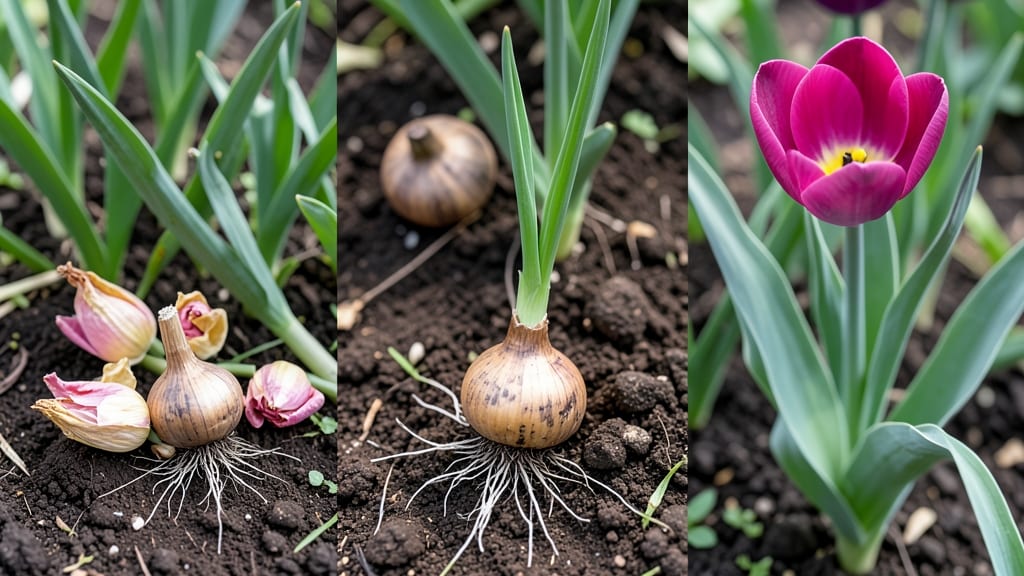
Tulip bulbs do come back every year, though their blooms may weaken over time without proper care. Most varieties will return annually if planted in well-draining soil with full sunlight and left undisturbed.
Tulips are perennial plants, meaning their bulbs naturally survive winter and regrow each spring—but their performance depends on your growing conditions. 🌱 In colder climates, bulbs may need extra protection from freezing temperatures, while hot summers can cause them to fade faster.
I’ve found that dividing crowded bulbs every 3-4 years and fertilizing in early spring helps sustain their vigor for decades.
What many gardeners don’t realize is that tulips follow a two-year bloom cycle—some varieties bloom heavily one year, then rest before producing again. This natural rhythm explains why you might see fewer flowers after the first year.
The key to keeping them blooming reliably is balancing sunlight (at least 6 hours daily), proper drainage, and avoiding overwatering during dormancy.
💡 In This Article
- Why Some Tulip Bulbs Stop Returning
- How to Encourage Annual Tulip Blooms
Why some tulip bulbs stop returning
The natural lifecycle of tulip bulbs includes a built-in decline mechanism tied to their energy reserves. Each spring, a bulb diverts significant nutrients to produce flowers, leaves, and new bulblets. This process depletes stored carbohydrates—think of it like a battery draining after heavy use.
Over time, without replenishment, the bulb's ability to produce vibrant blooms weakens. In my garden, I’ve noticed that after 3-5 years without division, tulips often produce smaller flowers or fail to bloom altogether.
Environmental factors accelerate this decline. Tulips are native to temperate climates where they experience cold winters followed by warm springs. In regions with harsh winters (below 20°F), bulbs may suffer freeze damage to their growing points.
Conversely, hot summers (above 85°F) can cause bulbs to "bake" in the soil, leading to premature exhaustion. The soil type also matters—bulbs planted in heavy clay or poorly draining soil rot over winter, while those in sandy loam thrive for years.
Overcrowding is another silent killer. As bulbs multiply through offsets, they compete for space and nutrients. When bulbs are planted too closely (less than 6 inches apart), the center plants often starve.
I’ve dug up clumps where the middle bulbs were shrunken and brown, while the outer ones remained healthy. This competition forces the bulbs to prioritize survival over flowering, leading to fewer blooms over time.
Disease and pests play a role too. Fungal infections like tulip fire (Botrytis tulipae) or bulb rot (Fusarium) can weaken bulbs, while squirrels and voles may dig them up entirely. Even well-cared-for tulips in my raised beds occasionally succumb to these issues, especially after wet springs.
The key is monitoring for signs like yellowing leaves, soft bulbs, or chewed stems—early intervention can save the bulb.
What’s fascinating is how some tulip varieties handle stress better than others. Species tulips (like Tulipa tarda) are hardier and often return reliably, while hybrid varieties (like Darwin tulips) may decline faster.
This genetic difference explains why your neighbor’s tulips might thrive while yours struggle—it’s not just about care, but also about choosing the right varieties for your climate.
To test this yourself, try planting a mix of species and hybrid tulips side by side. Observe which ones rebound after their first bloom and which ones fade. You’ll quickly see how genetics and environment interact to determine a tulip’s lifespan in your garden. 🌱