
Planting
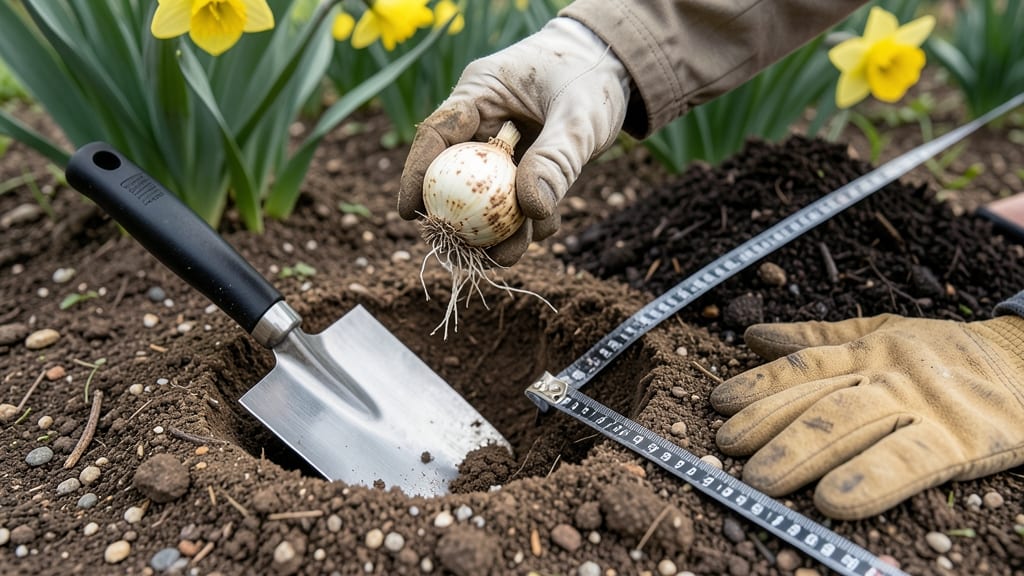
Planting daffodil bulbs at 6–8 inches deep in the ground is the secret to vibrant blooms that return year after year.
Struggling to get your daffodils 🌼 to thrive? The issue might be how deep you’re planting them. Too shallow, and they’ll flop; too deep, and they’ll never emerge. This exact depth ensures strong roots and perfect blooms.
Fall is the ideal time to plant in USDA Zone 6a, but the depth matters just as much as the timing. A simple rule—twice the bulb’s height—keeps things easy, while the right soil and spacing set the stage for success.
Below, I’ll walk you through the exact method, common mistakes to avoid, and how to care for your daffodils once they’re in the ground for perfect blooms every spring.
The exact depth to plant daffodil bulbs (with visual guide)
Planting daffodil bulbs at the correct depth is the foundation for healthy blooms. Most gardeners assume "deep enough" means success, but the truth is more precise: 6–8 inches deep is ideal for most daffodil varieties.
This depth balances root development with easy emergence in spring. Too shallow, and your bulbs may rot or flop over; too deep, and they’ll struggle to push through the soil.
Why does depth matter so much? Daffodils store energy in their bulbs during winter, and proper planting ensures they have enough room to grow strong roots while protecting them from freezing.
The 6–8 inch rule works for standard daffodils, but dwarf varieties may only need 4–6 inches. Always adjust for your bulb’s size—larger bulbs can handle slightly deeper planting.
Here’s the visual guide to help you plant with confidence, whether you’re a beginner or a seasoned gardener:
| Bulb Type | Planting Depth (Inches) | Soil Type Adjustment | Climate Notes |
|---|---|---|---|
| Standard Daffodils | 6–8 inches | Add 1 inch in clay soil | Cold climates: 8 inches |
| Dwarf Varieties | 4–6 inches | No adjustment needed | Mild climates: 5–6 inches |
| Large Bulbs (2+ inches) | 7–9 inches | Loosen soil 2 inches deeper | Heavy rain areas: 8–9 inches |
| All Varieties in Containers | 5–7 inches | Use well-draining mix | Winterize pots in cold zones |
Start by digging a hole twice as deep as the bulb’s height. For example, a 2-inch bulb needs a 4-inch hole, but you’ll fill it with 2 inches of soil first, then place the bulb on top of that layer.
This ensures the bulb sits at the correct depth while leaving room for roots to spread downward. Always plant the bulb with the pointy end up—this is where the stem will emerge.
Soil type plays a surprising role in depth. In heavy clay soil, add an extra inch to prevent waterlogging, which can rot bulbs. Conversely, in sandy soil, you might reduce depth slightly (by ½ inch) since drainage is already excellent.
Test your soil’s drainage by digging a hole, filling it with water, and timing how long it takes to drain—if it’s slower than 30 minutes, adjust your depth upward.
Climate also dictates depth adjustments. In cold climates (USDA Zones 3–5), plant bulbs deeper (closer to 8 inches) to protect them from freezing. In milder zones (6–8), 6 inches is perfect.
If you’re unsure about your zone, check the last frost date—plant bulbs 6 weeks before the first hard frost for best results. This timing ensures roots establish before winter sets in.
After planting, water thoroughly to settle the soil around the bulbs. A light layer of mulch (2–3 inches) helps insulate the soil in winter and retain moisture in spring. Avoid over-mulching, though—too much can suffocate the bulb as it tries to sprout.
In early spring, you’ll see shoots pushing through the soil, signaling that your depth was just right.
Pro tip: Use a bulb planter or even a long screwdriver to mark the exact depth in your garden bed. This visual guide prevents over- or under-planting, especially if you’re working with multiple varieties.
For containers, ensure the pot has drainage holes and use a well-draining mix like cactus soil blended with compost.
Remember, daffodils are perennial, meaning they’ll return year after year if planted correctly. The depth you choose now will determine whether your bulbs thrive for decades. With the right technique, you’ll enjoy vibrant blooms in spring with minimal effort—just sit back and enjoy the show! 🌼
Common mistakes that kill daffodil blooms (and how to fix them)
Even the hardiest daffodil bulbs can fail to bloom if planted incorrectly. Over-planting crowds roots, while under-planting leaves bulbs exposed to frost damage. I’ve seen gardens where daffodils refuse to return year after year—usually because of these three critical mistakes. Let’s fix them before next planting season.
First, soil compaction is a silent killer. Heavy foot traffic or clay soil crushes roots, starving bulbs of oxygen. This is especially true in urban gardens where soil gets walked on frequently. The fix? Aerate before planting using a garden fork or core aerator to break up compacted layers.
Second, incorrect spacing leads to weak stems and poor blooms. Most gardeners space bulbs too closely, thinking "more bulbs = more flowers." But crowded daffodils compete for nutrients, resulting in smaller blooms or no blooms at all. Space standard daffodils 6 inches apart and dwarf varieties 3-4 inches apart.
Third, seasonal timing mistakes happen when planting too early or late. In warm climates (Zones 8-10), plant in November-December to avoid summer heat stress. In colder zones (3-7), aim for September-October, 6-8 weeks before the ground freezes.
⚠️ Critical Depth Mistake
Planting daffodil bulbs too deep (below 8 inches) smothers them, while too shallow (under 4 inches) leaves them vulnerable to frost. The ideal depth is 6-8 inches—measured from the bulb's base to the soil surface. Use a bulb planter for precision, especially in heavy clay soils.
To prevent soil compaction after planting, add a 2-inch layer of mulch (straw or shredded leaves work best). This protects bulbs from temperature swings and retains moisture. Just avoid thick mulch piles—3+ inches can suffocate emerging shoots in spring.
For clay-heavy soils, mix in compost or sand before planting to improve drainage. Amend the top 12 inches of soil to ensure roots have room to grow. In sandy soils, add organic matter like peat moss to help retain moisture and nutrients.
Finally, fertilize correctly—too much nitrogen in spring can reduce blooms. Instead, apply a balanced 5-10-10 fertilizer in early fall (when planting) and again in late winter. This supports root growth without encouraging excessive foliage at the expense of flowers. 🌼