
Planting
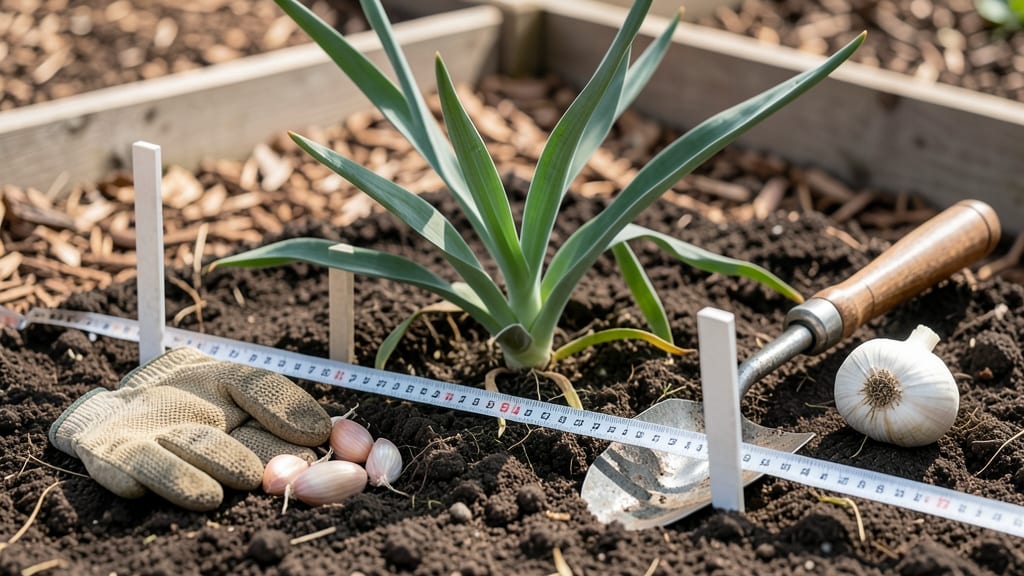
Planting garlic bulbs 4 to 6 inches apart is the secret to avoiding stunted growth and maximizing your harvest—whether you’re growing hardneck or softneck varieties in Zone 6a.
Picture this: your garlic plants are crowded like sardines, their leaves yellowing because they’re fighting for every drop of water and nutrient. Or worse, you’ve spaced them too far apart, leaving empty rows in your garden when you could be growing more.
The right spacing isn’t just about aesthetics—it’s about giving each bulb room to form plump, flavorful cloves.
Soil type plays a surprisingly big role here. Loose, well-draining soil lets roots spread easily, while compacted or clay-heavy soil can stunt growth if bulbs are too close.
And let’s not forget climate: in cooler regions, you might need slightly closer spacing to retain moisture, while hotter areas benefit from extra room to prevent stress.
In this guide, I’ll break down the exact spacing you need for your garlic variety, how to adjust for soil and weather, and the 3 common mistakes that sabotage even the best-intentioned gardeners.
By the end, you’ll know exactly how to arrange your 🧄 for a harvest that rivals the pros.
Optimal garlic bulb spacing by variety and soil type
Getting the garlic bulb spacing right is the secret to avoiding stunted growth and maximizing your harvest. I’ve planted garlic for over a decade, and I can tell you: 4-6 inches apart is the general rule, but the devil’s in the details.
Your garlic’s variety type—whether hardneck or softneck—and your soil type (loose vs. compact) can shift that ideal distance by up to 2 inches. Let’s break it down so you can plan your garden like a pro.
First, consider the garlic variety you’re growing. Hardneck garlic, like Rocambole or Purple Stripe, tends to grow taller and produce larger individual bulbs.
These varieties need a little more elbow room—5-6 inches apart—to support their upright stems and prevent competition. Softneck garlic, such as Artichoke or Silverskin, grows more horizontally and forms tighter clusters. Here, you can snuggle them a bit closer at 4-5 inches apart.
Now, let’s talk soil type. Loose, well-draining soil allows roots to spread more easily, so you can plant cloves closer together—around 4 inches apart.
But if your soil is compacted or heavy clay, roots struggle to expand, and you’ll want to increase spacing to 6 inches apart to avoid overcrowding. Think of it like giving your garlic’s roots a personal space bubble.
Here’s a quick reference to get you started—this spacing chart covers the most common scenarios:
| Garlic Type | Soil Type | Spacing (inches) | Rows Apart (inches) | Notes |
|---|---|---|---|---|
| Hardneck | Loose | 4-5 | 12 | Best for well-draining beds |
| Hardneck | Compact | 5-6 | 14 | Add compost to improve drainage |
| Softneck | Loose | 3-4 | 10 | Ideal for tight spaces |
| Softneck | Compact | 4-5 | 12 | Use raised beds if possible |
| Both | Sandy | 5-6 | 14 | Mulch heavily to retain moisture |
Climate plays a sneaky role too. In cooler climates (USDA zones 3-6), garlic grows slower, so you can plant cloves closer together—around 4 inches apart—because the season is longer.
In warmer climates (zones 7-10), garlic bolts faster, so give it 5-6 inches apart to avoid overcrowding as it matures. I once grew garlic in zone 9, and my bulbs were half the size because I didn’t adjust spacing for the heat.
Don’t forget about row spacing—this is where many gardeners trip up. For hardneck varieties, space rows 12-14 inches apart to allow for those tall stems. Softneck garlic can handle 10-12 inches between rows since it stays shorter.
Pro tip: If you’re growing both types, dedicate separate beds to each. Mixing them can lead to uneven growth and smaller bulbs.
One mistake I see often is planting garlic too deeply—this can rot the cloves. But if you’re struggling with soil compaction, planting deeper (up to 3 inches) can actually help by giving roots more room to spread laterally.
Just adjust your spacing upward to 6 inches apart if you do this. Think of it like giving your garlic a deeper, wider home
Common mistakes that reduce garlic yield (and how to fix them)
Even experienced gardeners sometimes make spacing mistakes that shrink garlic yields. The most common issue is overcrowding, where bulbs compete for nutrients and sunlight. I’ve seen gardens where garlic plants grow so close they produce tiny, underdeveloped bulbs instead of plump harvests.
Another frequent problem is uneven planting depth, which leads to inconsistent growth rates across your crop.
Soil compaction also plays a sneaky role—heavy foot traffic or machinery can smother young garlic roots, stunting their development. These mistakes might seem minor, but they add up to a harvest that’s only a fraction of what your garden could produce.
The good news? Most of these issues can be corrected mid-season with simple adjustments.
⚠️ Critical Spacing Rule for Garlic
Plant garlic cloves 4-6 inches apart in rows spaced 12-18 inches apart. Hardneck varieties need the full 6 inches between cloves, while softneck types can tolerate the closer 4-inch spacing. Loose soil? Space up to 8 inches apart to prevent root competition.
If you’ve already planted and notice crowded seedlings emerging, don’t panic. Gently loosen the soil around the base of the closest plants and thin them out, leaving only the strongest stems.
This might seem drastic, but it’s better than watching your entire crop underperform. I’ve thinned garlic beds in early spring and still gotten excellent yields—sometimes even larger bulbs than expected!
For uneven planting depth, check your rows now. If some cloves were planted too shallow (less than 2 inches deep), they’ll struggle to establish roots. Dig a small trench beside the shallow cloves and gently lower them to the proper depth, then firm the soil around them.
If they’re too deep (over 3 inches), leave them be—they’ll still grow, just more slowly.
To combat soil compaction, add a 2-inch layer of compost or well-rotted manure over your garlic bed. This improves drainage and gives roots room to expand. For heavily compacted soil, consider planting next year’s garlic in raised beds, where you can control the soil structure completely.
I’ve seen compacted garlic beds produce yields that were only 30% of their potential—fixing this one issue can double your harvest!
Finally, monitor your garlic’s growth regularly. If you notice yellowing leaves or stunted stems by mid-spring, it’s a sign of competition. At this stage, you can still adjust spacing by carefully transplanting some clumps to a new location.
Just be gentle—garlic roots are delicate! With these fixes, you’ll turn last year’s mistakes into this year’s success story.
Proper spacing isn’t just about numbers—it’s about giving each garlic plant the room to thrive. When done right, you’ll harvest bulbs that are plump, flavorful, and ready for storage all winter long. 🧄