
Planting
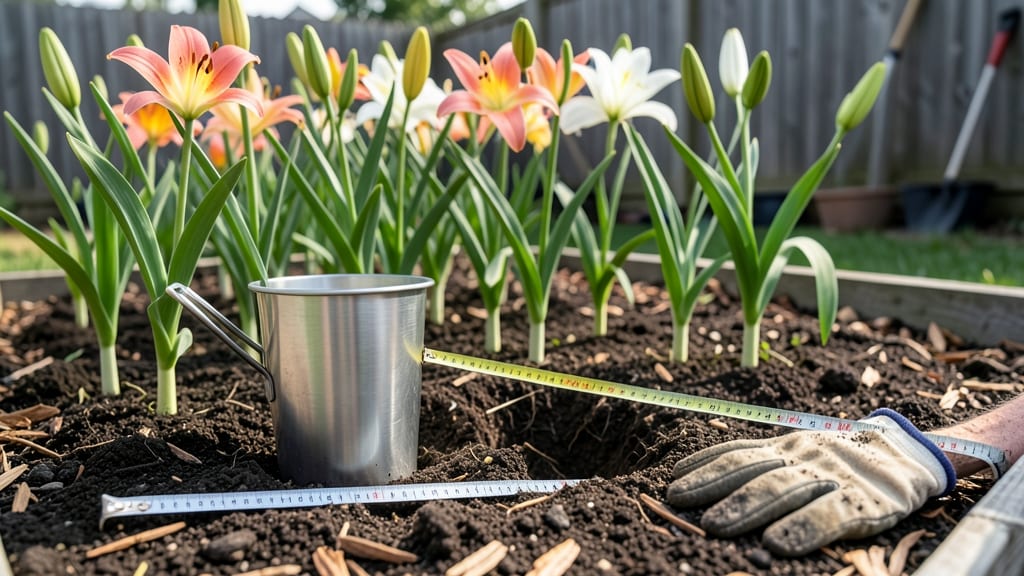
Planting lily bulbs the right distance apart is the key to stronger stems, bigger blooms, and a garden that looks full without fighting for space.
Struggling to get your lilies to bloom their fullest? The secret might be hiding in the spacing between your bulbs—plant them too close, and you’ll lose flowers to competition; too far, and your garden will look sparse. Here’s how to get it right.
Most gardeners assume one-size-fits-all spacing works, but lily varieties like Asiatic and Oriental need different room to thrive. A 6-inch gap for dwarf types can turn into 12 inches for towering Trumpet lilies, and that’s before you factor in soil drainage or sunlight.
Below, I break down the exact spacing for each type, how to adjust for containers or shady spots, and the one trick that prevents overcrowding without sacrificing blooms. Ready to transform your garden?
Optimal lily bulb spacing for different varieties and garden types
Getting your lilies to thrive starts with proper spacing—this often-overlooked detail determines whether your garden bursts with blooms or struggles with competition. Each lily variety has unique spacing needs based on its mature size and growth habit.
For example, Asiatic lilies need more elbow room than Martagon lilies, while Trumpet lilies require deeper spacing to support their towering stems. Let’s break down the perfect distances for your garden setup.
Spacing isn’t just about aesthetics—it’s a health strategy. Crowded bulbs compete for nutrients and water, leading to fewer blooms and weaker stems. Meanwhile, over-spaced lilies waste garden real estate. The key is balancing air circulation (to prevent fungal diseases) with visual density (for a lush look).
Whether you’re planting in in-ground beds, containers, or woodland gardens, these guidelines will help you maximize blooms.
Bulb size plays a surprising role in spacing. Larger bulbs (like those of Oriental lilies) need more room to establish strong roots, while smaller bulbs (common in dwarf Asiatics) can be planted closer. Even the soil type matters—sandy soil drains faster, allowing closer spacing, while clay soil requires wider gaps to prevent bulb rot. Let’s dive into the specifics for your favorite varieties.
For Asiatic lilies, the most popular variety for their vibrant colors, aim for 6-8 inches between bulbs in open beds. This spacing prevents overcrowding while allowing each plant to develop strong stems capable of supporting their 2-4 foot height.
In containers, reduce this to 4-6 inches since space is limited, but ensure your pot has drainage holes to prevent bulb rot.
Oriental lilies, known for their fragrant blooms and rich colors, need more room—9-12 inches apart in-ground. Their larger bulbs (3-4 inches in diameter) require deeper planting (6-8 inches deep) to establish strong roots.
In containers, use 6-8 inches spacing and choose pots at least 12 inches wide to accommodate their mature size of 3-5 feet.
If you’re growing Trumpet lilies, the drama
Common mistakes that ruin lily spacing (and how to fix them)
Even the most experienced gardeners can fall into spacing traps when planting lily bulbs. I’ve seen beautiful gardens turn into crowded messes where flowers compete for sunlight and nutrients—leaving you with fewer blooms than you planted.
The good news? Most spacing mistakes are easy to spot and fix, even if you’re working with an established garden.
One of the biggest mistakes is assuming one-size-fits-all spacing. Different lily varieties have vastly different mature sizes—planting Asiatic lilies (which stay compact) too far apart will leave gaps, while Oriental lilies (taller and bushier) need more room to avoid overcrowding.
Let’s break down the five most common errors and how to correct them before your next planting season.
Planting lily bulbs closer than 6 inches forces them to compete for nutrients and sunlight, resulting in:
- Smaller blooms (or none at all)
- Increased disease risk from poor airflow
- Weaker stems that flop under wind
Another frequent error is ignoring bulb depth while focusing only on horizontal spacing. Planting bulbs too shallow (less than 4 inches deep) makes them vulnerable to frost heave and rot.
Pair this with incorrect spacing, and you’ve set up a recipe for failure. Always measure depth from the base of the bulb—not the top—to ensure consistency.
Uneven planting is another sneaky problem. When bulbs are planted at different depths or angles, their growth becomes erratic. This creates a patchy look and makes it harder to maintain even watering.
Use a bulb planter or even a pencil to mark consistent depth before backfilling soil. A level surface ensures all bulbs emerge at the same time for a uniform display.
Forcing lilies into containers without adjusting spacing is a fourth mistake. Many gardeners assume the same 6-inch spacing works in pots, but container-grown lilies need 25-50% less space due to limited root room.
In a 12-inch pot, plant just 2-3 bulbs (not 5-6) to avoid stunted growth. Always choose containers with drainage holes to prevent bulb rot.
Finally, failing to plan for mature size leads to overcrowding as lilies grow. A Trumpet lily, for example, can reach 6 feet tall with a 2-foot spread, while a Martagon lily stays under 3 feet.
Group taller varieties together in the back of borders and shorter types in front. If your garden is already overcrowded, thin out bulbs in early spring before new growth emerges.