
Planting
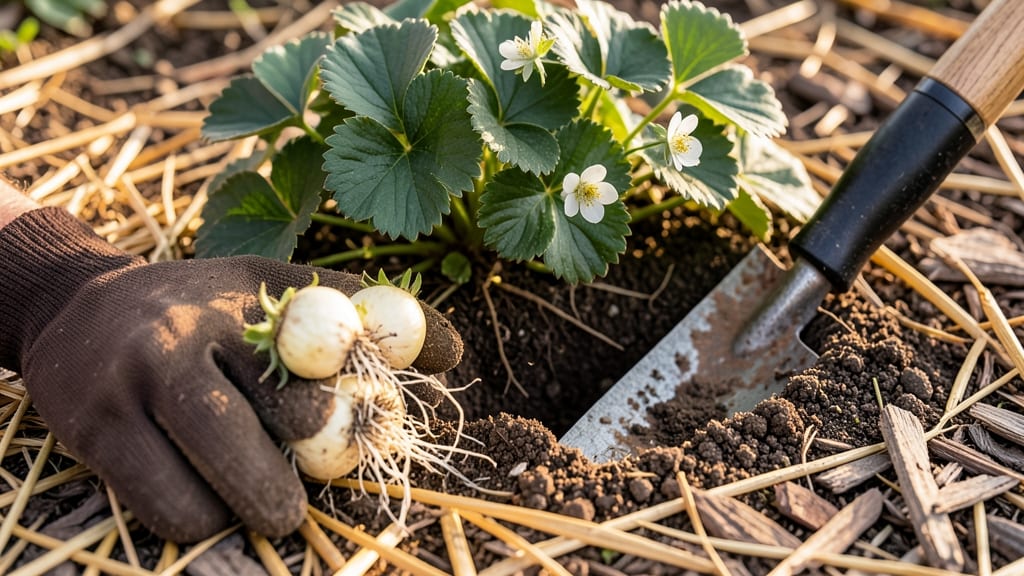
How to plant strawberry bulbs isn’t just about putting them in the ground—it’s about setting up a year-round harvest that keeps producing for seasons. 🌱 I’ve learned that spacing, soil prep, and timing make all the difference between a few sad berries and a lush, fruiting patch. The secret? Planting them shallow, keeping the soil moist, and giving them room to spread. You’ll need well-draining soil, a sunny spot (at least 6 hours of sunlight daily), and crowns that look plump and firm. Avoid planting too deep—just 1/2 inch below soil level—and space them 18-24 inches apart in rows 3-4 feet apart. This gives roots room to breathe and prevents disease. After planting, water deeply to settle the soil, then keep it consistently moist (not soggy) for the first 2-3 weeks. Mulch with straw to retain moisture and suppress weeds, and watch those first leaves emerge in 7-10 days. The payoff? A bountiful harvest starting as early as late spring, with some varieties producing well into fall. This method works for both spring and fall planting—just adjust timing to avoid extreme heat or frost. The key is patience: strawberries take 2-3 months to establish, but once they do, they’ll reward you with berries for years.
📚 In This Guide
- What you need
- Instructions
- Tips and common mistakes
- Wrapping up and next steps
What you need
- ● Strawberry bulbs (bare-root plants): 6–12 plants per square foot (adjust based on variety—June-bearing, everbearing, or day-neutral).
- ● Choose disease-resistant varieties like Albion or Seascape for best results.
- ● Well-draining soil: Mix in compost (2–3 inches) or aged manure to enrich the bed.
- ● Organic mulch: Straw, pine needles, or shredded leaves (2–3 inches thick) to retain moisture and suppress weeds.
- ● Balanced fertilizer: 10-10-10 or organic options like fish emulsion (apply sparingly at planting).
- ○ Watering can or hose with a gentle spray nozzle (drip irrigation is optional but ideal).
- ● Garden trowel or hand shovel (for digging small holes, ~6 inches deep).
- ● Gloves (to protect hands from thorns and soil).
- ● Measuring tape or ruler (to ensure proper spacing—12–18 inches apart for June-bearing, 6–12 inches for everbearing/day-neutral).
- ● Pruners or scissors (to trim long roots or leaves before planting).
- ○ Optional: Row markers or stakes (to label varieties and track planting dates).
- ● Soaker hoses (for efficient watering post-planting).
- ● Black plastic mulch (to warm soil in early spring or cool it in summer).
- ● Sunlight: A minimum of 6–8 hours of direct sun daily (more = sweeter berries!).
- ● Climate timing: Plant in early spring (2–3 weeks before last frost) or late summer (6–8 weeks before first frost).
- ● Avoid planting when soil temps exceed 85°F (29°C)—strawberries hate heat stress!
- ● Soil pH: Test and amend to 5.5–6.5 (use lime to raise pH or sulfur to lower it).
Step-by-Step instructions for planting strawberry bulbs
Here's the foolproof method I've used to grow lush strawberry patches—spaced perfectly for maximum yield.
🌱 Step 1: Choose the Right Location and Prepare the Soil
Strawberries thrive in full sun—select a spot that receives at least 6-8 hours of direct sunlight daily. I always test the soil first because strawberries demand well-draining, slightly acidic soil (pH 5.5-6.5). Amend heavy clay with 2-3 inches of compost and mix in a handful of perlite to prevent rot.
Clear the area of weeds and rocks, then loosen the soil to a depth of 12 inches with a garden fork. This ensures roots can spread freely without hitting compacted layers. If your soil is sandy, add a 1-inch layer of organic matter—strawberries are heavy feeders and need nutrients to produce fruit.
🌱 Step 2: Plant Bulbs at the Correct Depth and Spacing
Plant strawberry crowns (the bulb-like base where leaves emerge) just below the soil surface—no deeper than ½ inch. Burying them too deep suffocates the plant, while planting too shallow exposes crowns to rot. Space each bulb 18-24 inches apart in rows 3-4 feet apart for optimal airflow and sunlight penetration.
I like to plant in a slightly raised bed if my yard has poor drainage—this prevents waterlogging, which is the #1 killer of strawberry roots. After placing each bulb, press the soil gently around it to eliminate air pockets but avoid compacting. Water lightly immediately to settle the soil and encourage root contact.
☀️ Step 3: Mulch and Water for Establishment
Spread 2-3 inches of straw mulch (not hay—it can harbor weeds) around the plants, leaving a 1-inch gap around the crown to prevent rot. Mulch keeps roots cool in summer and insulated in winter, while suppressing weeds that compete for nutrients. Organic mulch also breaks down slowly, feeding the soil over time.
Water deeply 2-3 times per week until the soil is 6 inches moist—strawberries have shallow roots and need consistent moisture. Avoid overhead watering once plants are established; instead, use a drip irrigation system or water at the base. You’ll know it’s working when the soil feels damp 2 inches down but not soggy.
✂️ Step 4: Prune and Maintain for Continuous Harvest
Once plants establish 3-4 true leaves, remove the first set of flowers (called "primocanes") to redirect energy into root and leaf growth. This ensures stronger plants for next year’s harvest. After the first year, allow flowers to develop on second-year stems (floricanes)—these produce the fruit.
Throughout the growing season, trim any yellow or diseased leaves immediately to prevent spread. I also pinch off runners (long stems with baby plants) unless you’re intentionally propagating new plants. Overcrowding reduces fruit size and quality—keep spacing tight but not suffocating.
⏰ Step 5: Prepare for Winter and Next Season
In fall, add a 2-inch layer of organic mulch (like shredded leaves) to protect roots from freezing. Strawberries are semi-hardy and can survive mild winters, but extreme cold may damage crowns. In spring, remove old mulch, refresh the soil with compost, and prune dead foliage to encourage new growth.
Here’s the thing—strawberries reward patience. If you plant them correctly now, you’ll enjoy year-round harvests with minimal effort. Just keep an eye on spacing and soil moisture, and you’ll have berries from early summer through fall—and sometimes even into winter with protection.
Tips & tricks for perfect strawberry planting
Between us, the difference between a thriving strawberry patch and one that struggles is often in the details. Here's what I've learned after years of trial and error to ensure your strawberries grow lush and productive.
Soil Preparation Secret: In Step 1, when testing your soil's pH, don't just guess—use a reliable soil test kit. Strawberries are particularly sensitive to pH levels between 5.5-6.5. If your soil tests outside this range, amend it with elemental sulfur to lower pH or lime to raise it. I've seen plants wither when soil was too alkaline, despite having all other conditions right. For clay-heavy soils, mix in 2-3 inches of compost and a handful of perlite—not just compost alone—this prevents that dreaded rot from waterlogging.
Planting Depth Visual: Step 2's ½-inch depth can be tricky to judge. Here's my trick: Press the crown so the top of the bulb is just below soil level, then look at it from the side. You should see about ½ inch of soil covering the crown. Too deep? Roots suffocate. Too shallow? Crowns rot. I use a popsicle stick as a depth guide—mark it at ½ inch and use it to check each planting.
Mulch Layer Precision: The 2-3 inches of straw mulch in Step 3 is crucial, but placement matters just as much. Leave that 1-inch gap around the crown
Watering Consistency: In Step 3, when aiming for 6 inches of moist soil, use a screwdriver to check depth. Push it in—if it slides in easily, you're good. If it meets resistance, water more. Overhead watering? Avoid it after establishment—it spreads diseases. I use a moisture meter for precision, especially in hot summers when evaporation is high. The goal is damp, not soggy.
Pro Tips for Plant Strawberry Bulbs
- Between us, the difference between a thriving strawberry patch and one that struggles is often in the details.
- Soil Preparation Secret: In Step 1, when testing your soil's pH, don't just guess—use a reliable soil test kit.
- Planting Depth Visual: Step 2's ½-inch depth can be tricky to judge.
Frequently asked questions
about planting strawberry bulbs—because even the best gardeners need a little extra help! Here are answers to the most common questions to ensure your strawberries thrive.Can I plant strawberry bulbs in containers?
Strawberries grow beautifully in containers —just use pots at least 12 inches deep with drainage holes. Choose a lightweight, well-draining mix, and ensure each plant has 6+ inches of space. Containers warm up faster in spring, giving you an earlier harvest!
When is the best time to plant strawberry bulbs?
The ideal window is early spring (after the last frost) or late summer (6–8 weeks before first frost). For year-round harvests, plant new bulbs in spring and let existing plants produce fruit before replanting in fall. Avoid planting in extreme heat or freezing temps!
Why aren’t my strawberry plants producing fruit?
Common culprits include overcrowding (space them 18–24 inches apart!), poor sunlight (they need 6+ hours daily), or young plants (they may take 2–3 years to mature). Check for pests (like slugs) or nutrient deficiencies—feed with compost or a balanced fertilizer if needed.
Do strawberry bulbs need winter protection?
Yes! In cold climates, mulch heavily with straw or leaves (4–6 inches) after the first frost to insulate roots. In mild winters, minimal protection may suffice. Remove mulch in early spring to prevent rot and encourage new growth.
Can I plant strawberries from store-bought berries?
Not reliably! Store-bought berries are often treated to prevent sprouting. Instead, buy bare-root strawberry plants from nurseries or grow from seeds (slower but rewarding!). If you try it, save seeds from organic, untreated fruit and soak them in water for 24 hours before planting.
Wrapping up and next steps
Planting strawberry bulbs is a rewarding way to enjoy a year-round harvest of sweet, juicy berries—whether you’re a seasoned gardener or just starting out! 🌱 With the right spacing, soil prep, and care, you’ll be on your way to a thriving patch in no time.
Now that you’ve got the know-how, grab those bulbs and get planting!
Ready to take it further? Experiment with varieties, try container gardening, or even share your new skills with fellow plant lovers. Happy growing—your future strawberry treats are waiting! 🍓✨