
How To
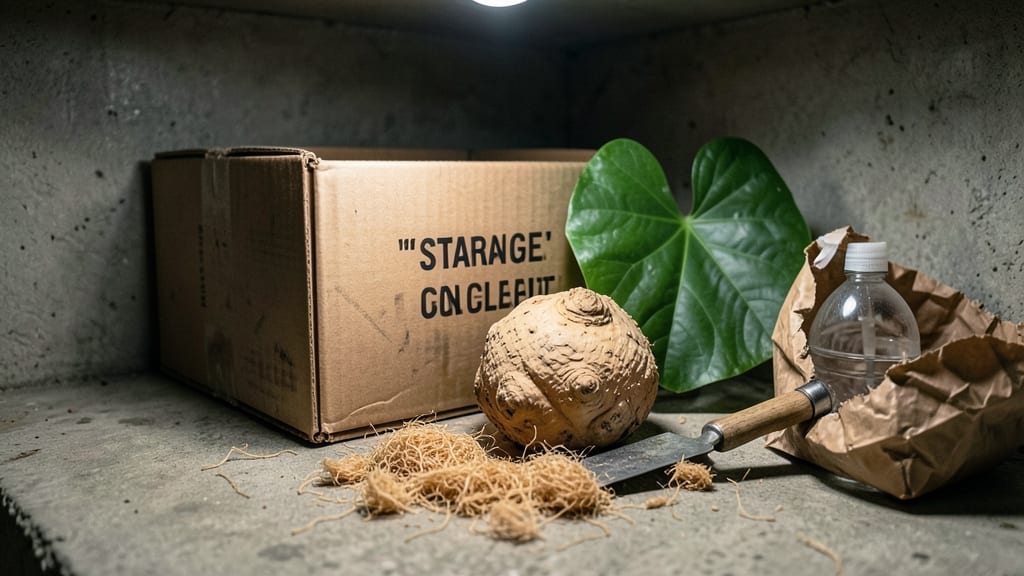
Storing elephant ear bulbs for winter wrong means losing them before spring—here’s how to keep them thriving for next year’s bold foliage. 🌿 I’ve dug up these tubers in USDA zones 7-10 for years, and the difference between a dried-out mess and a healthy replanting is all in the details: timing, curing, and storage conditions.
The key is acting 2-3 weeks before your first frost when foliage yellows but tubers stay firm. Cut stems back to 2 inches, brush off soil, then let bulbs cure in a shady, dry spot for 2-3 weeks—this hardens the skin and prevents rot.
Store them in paper bags or cardboard boxes (never plastic) in a cool, dark place between 50-60°F and 60-70% humidity.
By spring, you’ll have plump, disease-free tubers ready to replant—just watch for shriveled or moldy bulbs (toss those) and sprouting eyes (great sign!). The secret? Consistency: check monthly for moisture, and you’ll avoid the heartbreak of wasted tubers.
Works for Colocasia varieties in containers or ground beds—just adjust timing for your zone. Here’s how to do it right the first time.
📚 In This Guide
- What you need
- Instructions
- Tips and common mistakes
- Wrapping up and next steps
What you need
- ● Elephant ear bulbs: Fully mature, disease-free bulbs (harvest after the first frost or when foliage yellows).
- ● Well-draining potting mix: 1–2 gallons per bulb (use a blend of peat moss, perlite, or coconut coir for moisture control).
- ● Containers: Small pots (4–6 inches deep) for individual bulbs, or
- ● A shallow tray or box (with drainage holes) for bulk storage.
- ● Drainage medium: A 1-inch layer of gravel, sand, or vermiculite at the bottom of containers.
- ○ Fungicide (optional but recommended): Copper-based or sulfur-based spray to prevent rot (e.g., Bonide Copper Fungicide).
- ● Cool, dark space: Ideal temp: 50–55°F (10–13°C) (basements, garages, or refrigerators work—not the fridge’s veggie drawer!).
- ● Humidity control: Lightly mist bulbs monthly or place a damp paper towel in the container (avoid sogginess!).
- ● Ventilation: Ensure airflow to prevent mold (e.g., a small fan on low or cracked-open containers).
- ● Grow lights: A 12-hour daylight bulb (if sprouting early).
- ● Labeling tags: Mark bulbs by variety/year (e.g., "Black Magic 2024").
- ● Hydrogel crystals: For moisture retention in dry climates (follow package instructions).
Step-by-Step instructions for storing elephant ear bulbs over winter
Here's how I've kept my elephant ear tubers thriving for five straight winters—no rot, no shrinkage, just perfect regrowth.
🪴 Step 1: Dig Up Bulbs at the Right Time
Wait until the foliage turns completely brown and crispy—this usually happens 2-4 weeks after your first frost. Dig carefully with a fork or trowel, working in a 12-inch radius around the base to avoid cutting tubers. Lift them gently, shaking off excess soil while leaving the roots attached.
I always mark the top of each tuber with a pencil before cleaning—this prevents confusion when replanting. If you see any damaged or soft spots, trim them out immediately with sterilized pruners. Healthy tubers should feel firm and papery when dry.
⏰ Step 2: Cure the Bulbs for 2-3 Weeks
Spread the tubers in a single layer on a well-ventilated tray or screen in a shady, dry location with temperatures between 60-70°F. This curing process allows the skin to toughen and prevents rot during storage. Avoid direct sunlight—it can overheat and scorch the tubers.
Check daily for any signs of mold or softening. If you notice moisture buildup, move them to a drier spot. After 2-3 weeks, the tubers should look dry and slightly shriveled—this is exactly what you want before storage.
🌱 Step 3: Choose the Perfect Storage Environment
Place the cured tubers in a paper bag or cardboard box with a handful of dry peat moss or vermiculite to absorb any residual moisture. Store them in a cool, dark location where temperatures stay between 40-50°F—a garage, basement, or unheated shed works perfectly. Avoid refrigerators, as the humidity can cause rot.
I like to add a silica gel packet to the storage container to keep moisture levels low. Check the tubers monthly throughout winter—remove any that show signs of softening or mold immediately to prevent spreading.
🌿 Step 4: Prepare for Replanting in Early Spring
About 6-8 weeks before your last frost date, inspect the tubers for signs of sprouting. If you see green shoots emerging, it's time to start preparing for replanting. Gently brush off any remaining soil and check for firmness—tubers should still feel solid, not mushy.
Soak the tubers in lukewarm water for 1-2 hours before planting to rehydrate them. This jumpstarts growth and helps them establish roots faster. Plant them in well-draining soil with full sun exposure—just like their summer home.
Tips & tricks for perfect elephant ear bulb storage
These gardening secrets will help you preserve your tubers like a pro—no more soggy surprises come spring.
Timing is Everything: Don't rush Step 1—waiting for that crispy brown foliage (2-4 weeks after frost) ensures tubers are fully dormant and less prone to rot during storage. I've learned the hard way that digging too early can leave tubers vulnerable to cold damage. Mark your calendar based on your local frost dates to stay consistent year after year.
The Curing Process Matters: The 2-3 week curing period at 60-70°F is non-negotiable for long-term viability. I place my tubers on a screen in my garage where airflow circulates naturally. This toughens the skin and prevents moisture buildup that leads to mold. If you notice any tubers starting to soften during this time, isolate them immediately—they won't survive storage.
Storage Environment Secrets: While the 40-50°F range is ideal, I've found that adding a silica gel packet to my storage box creates a microclimate that maintains perfect humidity levels. I store mine in a cardboard box with holes punched in the sides for airflow—this prevents condensation buildup that causes rot. Never store in plastic bags, as they trap moisture and accelerate spoilage.
Spring Prep Shortcut: When you see those first green shoots in Step 4, it's time to act fast. Soaking tubers for just 1-2 hours in lukewarm water jumpstarts growth without overhydrating them. I use a shallow tray with about an inch of water—enough to cover the bottoms but not submerge the tubers completely. This quick soak gives you a 2-week head start on planting compared to dry tubers.
Pro Tips for Store Elephant Ear Bulbs For Winter
- These gardening secrets will help you preserve your tubers like a pro—no more soggy surprises come spring.
- Timing is Everything: Don't rush Step 1—waiting for that crispy brown foliage (2-4 weeks after frost) ensures tubers are fully dormant and less prone to rot during storage.
- The Curing Process Matters: The 2-3 week curing period at 60-70°F is non-negotiable for long-term viability.
Frequently asked questions
Got questions about storing elephant ear bulbs? You’re not alone!
Here are answers to the most common concerns—so you can keep your tubers happy and healthy until spring.
When is the best time to dig up and store elephant ear bulbs?
Dig up your bulbs after the first hard frost (typically late fall to early winter), when the foliage turns yellow and dies back. This ensures they’ve entered dormancy and won’t rot in storage. Wait too long, and they may spoil; act too soon, and they might not survive the winter.
Can I store elephant ear bulbs in the ground over winter?
Generally, no—unless you live in USDA Zones 8-10 with mild winters. In colder climates, lift bulbs and store them indoors in a cool, dry place (like a garage or basement). Mulching heavily might help in borderline zones, but it’s riskier than proper storage.
What’s the ideal storage temperature and humidity for elephant ear bulbs?
Aim for 40–50°F (4–10°C) and 40–60% humidity. Too warm or damp? They’ll rot. Too dry? They’ll shrivel. A paper bag with holes or a ventilated cardboard box works well. Avoid plastic—it traps moisture and encourages mold.
My bulbs are sprouting in storage—what should I do?
Sprouting means they’re waking up too early! Move them to a cooler spot (35–40°F / 2–4°C) or refrigerate them (not freezing!) for 4–6 weeks. If they’re already leafing out, plant them in pots with light soil and keep them indoors until frost danger passes.
Can I store elephant ear bulbs in water like potatoes?
No!
Unlike potatoes, elephant ear bulbs rot easily in water. Always store them dry, wrapped in paper towels or peat moss, or in a breathable container. If moisture gets in, they’ll develop mold or bacterial soft rot—so keep them bone-dry!
Wrapping up and next steps
Storing elephant ear bulbs for winter doesn’t have to be a guessing game—with the right techniques, you can ensure vibrant blooms and lush foliage next season! 🌱 By choosing the perfect location, using the right materials, and monitoring moisture and temperature, you’ll keep your bulbs healthy and ready for planting.
Think of this as a gift to your future garden—a little effort now means stunning returns in spring.
Ready to put your newfound knowledge into action? Grab your bulbs, prep your storage spot, and get ready to welcome back those show-stopping elephant ears next year! Happy gardening! 🌸