
Propagation
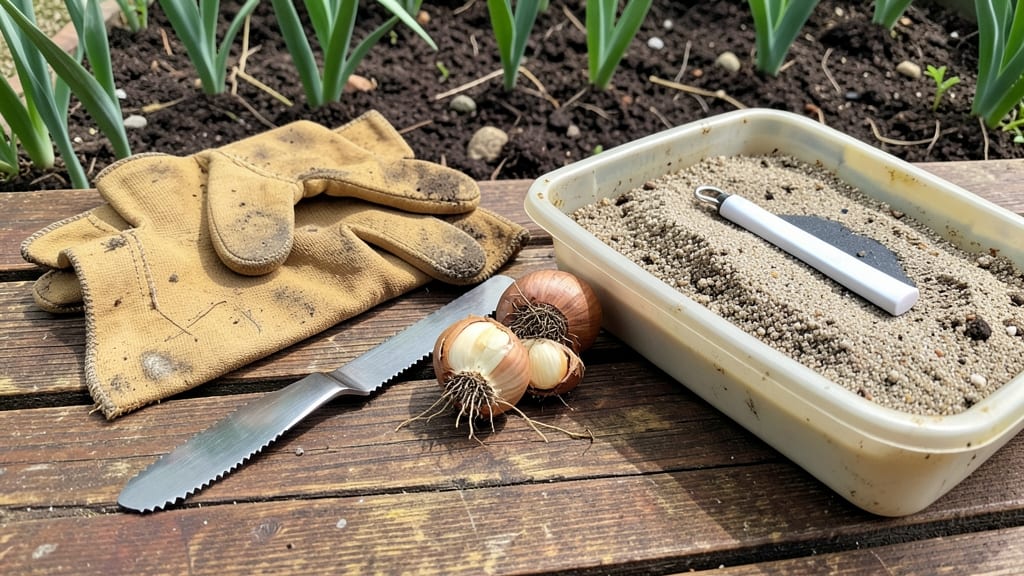
Splitting tulip bulbs turns a single clump into a dozen blooming opportunities next spring. 🌱 I've learned that when those layered bulbs form, it's not just a nuisance—it's your chance to multiply your garden's color without spending a dime.
The key is timing: wait until the foliage yellows after flowering, then dig carefully to avoid damaging the bulbs.
You'll need a sharp knife, gloves, and a sunny spot for replanting. The process is simple: slice between the bulbs, keeping each piece with its own roots. Discard any mushy or damaged bulbs—they won't regrow.
Store the healthy ones in a cool, dry place until fall planting, when they'll establish roots before winter sets in.
By splitting, you'll end up with stronger, more vibrant blooms next year. The bulbs spread out, reducing competition for nutrients, and you can share extras with neighbors.
My first attempt doubled my tulip count—now I have enough to fill an entire border. Just remember: patience is key, and the payoff comes in spring.
This method works for any layered bulb, from daffodils to hyacinths. Perfect for gardeners who want more blooms without buying new plants. Let's get those clumps separated and ready for next season's showstopper display.
The Hidden Triggers Behind Bulb Splitting
Tulip bulbs are like tiny powerhouses—packed with energy for stunning spring blooms, but they’re also surprisingly delicate. When they split or form layered clumps, it’s usually a sign that your bulbs are responding to their environment in a very specific (and often avoidable) way.
Understanding the root causes helps you adjust care strategies for healthier, more productive tulips. Here’s why your bulbs might be splitting—and how to steer them back on track.
Tulip bulbs naturally produce offsets—small "baby" bulbs that grow around the parent bulb over time. When these offsets multiply, they can force the main bulb to split apart as it struggles to accommodate the extra growth.
This is especially common in older bulbs that have been in the ground for three or more years.
Why it happens: Tulip bulbs are geophytes, meaning they store nutrients underground to fuel blooms above ground. As they age, their energy reserves shift toward producing offsets instead of a single large bulb. The parent bulb’s basal plate (the bottom where roots emerge) can weaken and fracture under the pressure of too many offsets, leading to visible splits.
Actionable fix:
- ✂️ Divide bulbs every 2–3 years in late summer (after foliage dies back) to prevent overcrowding.
- 🌿 Plant offsets separately—they’ll mature into full-sized bulbs in 1–2 seasons.
- 📏 Aim for 6-inch spacing between bulbs when replanting to reduce competition.
Water is the double-edged sword of bulb care. While tulips need moisture to grow, excessive or inconsistent watering can cause bulbs to swell unevenly, leading to cracks or splits in the outer scales.
Why it happens:
- 🌊 Overwatering: Bulbs are succulent storage organs, meaning they absorb and store water like sponges. When soil stays soggy, the bulb’s outer layers expand rapidly, creating internal pressure that forces scales apart.
- 🏜️ Drought stress: Conversely, prolonged dry spells cause bulbs to shrink unevenly. As they rehydrate, the scales don’t realign properly, leading to weak points that split when handled.
Actionable fix:
- 💧 Water deeply but infrequently—aim for 1 inch of water per week (including rain) during active growth (fall to spring).
- 🚫 Avoid waterlogged soil—ensure drainage with raised beds or sandy loam.
- 🌡️ Mulch lightly in winter (2–3 inches) to protect bulbs from freeze-thaw cycles, which can also cause splitting.
Tulips are hardy, but they hate sudden temperature fluctuations. Freeze-thaw cycles or heat stress can disrupt the bulb’s cellular integrity, making it more prone to splitting—especially during dormancy.
Why it happens:
The bulb’s basal plate and scales contain delicate tissues that contract and expand with temperature changes. When exposed to:
- ❄️ Rapid freezing: Ice crystals form in the bulb’s cells, rupturing cell walls and creating weak spots.
- 🔥 Sudden heat (e.g., early spring warmth): Bulbs may prematurely break dormancy, causing uneven growth and structural stress.
- ☀️ Baking summer heat: Overly dry, hot soil can desiccate the bulb’s outer layers, making them brittle and prone to cracking.
Actionable fix:
- 🏔️ Plant in well-draining soil to prevent water from pooling around bulbs during freeze-thaw cycles.
- 🌿 Choose sheltered locations (e.g., near fences or under deciduous trees) to buffer wind and temperature swings.
- 🌡️ Use a frost blanket in extreme climates if bulbs are newly planted in late fall.
Bulbs need specific soil conditions to thrive. Compacted, nutrient-poor, or overly fertile soil can distort bulb development, leading to splits as they struggle to form properly.
Why it happens:
The ideal tulip bulb environment includes:
- 🧱 Loose, aerated soil: Compacted soil restricts root growth, forcing the bulb to expand upward instead of outward, which can cause internal pressure and splits.
- 🌱 Balanced nutrients: Excess nitrogen (e.g., from fresh manure or over-fertilizing) promotes leafy growth at the expense of bulb development, leading to weak, split-prone structures.
- 🧂 pH imbalances: Tulips prefer slightly acidic to neutral soil (pH 6.0–7.0). Soil that’s too alkaline (pH >7.5) can lock out essential minerals, stunting bulb health and making them more fragile.
Actionable fix:
- 🔄 Amend soil with compost before planting to improve drainage and structure.
- 🌿 Avoid fresh manure—use well-aged compost or a balanced bulb fertilizer (e.g., 5-10-10) in early fall.
- 📊 Test soil pH and adjust with sulfur (to lower pH) or lime (to raise pH) if needed.
While less common, bulb-specific pests and diseases can physically damage the scales, creating entry points for splits or weakening the bulb’s structure.
Why it happens:
The most notorious culprits include:
- 🐛 Squirrels and voles: These rodents gnaw on bulbs for food, leaving jagged edges that can split further when handled.
- 🍄 Fungal infections (e.g., Fusarium or Botrytis): These pathogens rot the basal plate, causing the bulb to soften and split as it decomposes.
- 🐜 Nematodes: Microscopic worms pierce bulb cells, creating weak spots that split under stress.
Actionable fix:
- 🧱 Use wire mesh cages or plant bulbs in raised beds to deter rodents.
- 🌿 Rotate planting locations every few years to break pest/disease cycles.
- 💊 Apply fungicide (e.g., copper-based) if fungal issues are suspected in your area.
- 🍳 Dig Up the Bulbs Wait until late spring or early summer (after foliage yellows but before it dies back) to dig up the clumps. Gently loosen the soil with a fork or trowel to avoid damaging the bulbs.
- 👨🍳 Separate the Clumps Rinse off the soil to reveal the layered bulbs. Use your hands or a sharp knife to carefully pry apart the smaller "pups" (baby bulbs) from the larger, mature bulbs. Discard any soft, mushy, or shriveled bulbs—they won’t regrow.
- 🥘 Replant Strategically
- Large bulbs (mother bulbs): Plant these 6 inches deep and 6 inches apart in well-draining soil.
- Small pups: Plant these 4 inches deep in a separate area or a "bulb bed" where they can mature over 1–2 years before flowering.
- Pro tip: 💡 Label your bulbs if you’re experimenting with varieties—tulips can look very different when they bloom!
- ⏰ Timing Matters Replant immediately if the weather is mild, or store bulbs in a cool, dry place (like a mesh bag in the fridge) until fall planting.
- 🔪 Give Them a Rest Year Plant the separated bulbs in fall but don’t expect blooms the next spring. Instead, focus on establishing strong roots. Use a balanced fertilizer (like 10-10-10) at planting time to encourage growth.
- 🌡️ Optimize Growing Conditions - Sunlight: Tulips thrive in full sun (6+ hours/day). If your garden is shady, consider moving them to a sunnier spot. - Soil: Amend heavy or clay soil with compost or sand to improve drainage.
- ✨ Boost Next Year’s Blooms After the first rest year, your tulips should bloom beautifully in their second or third year. For extra vigor:
- Top-dress with compost in early spring.
- Avoid over-fertilizing with high-nitrogen feeds (this encourages leaves over flowers).
- 🧼 Clean and Inspect Before replanting, soak bulbs in a 1:10 bleach-water solution for 10 minutes to kill fungi or bacteria. Rinse thoroughly afterward.
- 🏗️ Improve Drainage If your soil is prone to waterlogging:
- Plant bulbs on a slight mound or in raised beds.
- Mix in perlite or coarse sand to the planting hole.
- Pro tip: 🌡️ Test your soil’s drainage—if water pools after 30 minutes, it’s too wet.
- 🌿 Space for Airflow Avoid planting bulbs too closely together. Good airflow reduces humidity and fungal risks.
- 📅 Divide every 3–4 years to maintain bloom quality.
- 🌱 Deadhead spent blooms but leave foliage until it yellows—this feeds the bulb for next year.
- 🍄 Mulch lightly in winter to protect bulbs but avoid smothering them.
- 🚫 Avoid planting tulips in containers unless they’re deep and well-draining (they multiply fast and can outgrow pots).
Fixing Overcrowded Tulip Bulbs
Splitting tulip bulbs may seem daunting, but with the right approach, you can transform those layered clumps into thriving, bloom-rich plants. Whether your bulbs are overcrowded, struggling to flower, or simply looking tired, these solutions will help you revive your garden with ease.
Let’s tackle the most common issues and their fixes—plus some pro tips to keep your tulips happy for years to come.
Cause: Over time, tulip bulbs naturally multiply, forming dense clumps that compete for nutrients and sunlight.
Fix:
Cause: Tulips need time to rebuild energy after division. Forcing them to flower too soon can weaken the plant.
Fix:
Tulips hate soggy roots—this is a top reason they fail to bloom. - Watering: Water deeply once a week after planting, then reduce to once every 2–3 weeks once established (unless there’s a drought).
Cause: Moisture, poor drainage, or handling damage can lead to rot or fungal issues.
Fix:
Once you’ve split and replanted, keep these habits to prevent future overcrowding and decline:
By following these steps, your tulip bulbs will thrive, multiply, and reward you with stunning blooms for seasons to come. Happy digging! 🌷✂️
Frequently asked questions about splitting tulip bulbs
When is the best time to split tulip bulbs?
Wait until late spring or early summer after the foliage turns yellow but before it completely dies back. This gives the bulbs time to store energy for next year's blooms. Never split them in fall—this disrupts their dormancy cycle and reduces winter hardiness.
Can I replant the small offsets immediately, or should I wait?
Small offsets (baby bulbs) need time to mature. Plant them 4 inches deep in a separate area and give them a rest year—they won't bloom right away but will develop into full-sized bulbs in 1-2 seasons. Store them in a cool, dry place if replanting isn't possible until fall.
How do I know if a bulb is healthy enough to replant?
Healthy bulbs feel firm and dry with intact outer scales. Discard any that are soft, mushy, or shriveled—these won't regrow. Even slightly damaged bulbs can be saved by soaking in a 1:10 bleach-water solution for 10 minutes before replanting to prevent rot.
Will splitting my tulip bulbs give me more flowers next year?
Yes! Splitting prevents overcrowding, which means each bulb gets better access to nutrients and sunlight. You'll typically see stronger blooms in 2-3 years as the separated bulbs establish themselves. Just be patient—the first year after division often produces fewer flowers as the bulbs rebuild energy.
What's the best way to store bulbs before replanting?
Keep them in a cool (40-50°F), dry place like a mesh bag in your fridge. Avoid plastic bags—these trap moisture and can cause rot. Check periodically for signs of mold or softening, and replant as soon as possible in fall for best results.