
Plants
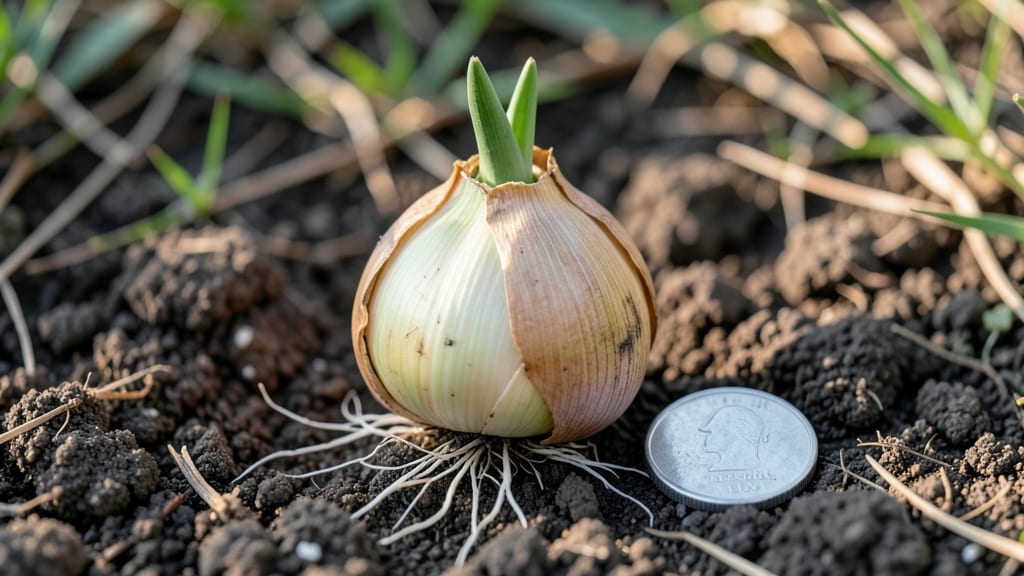
Tulip bulbs look like small, rounded onions with papery brown skins, typically 1 to 2 inches wide and 2 to 4 inches tall. Their firm, layered structure stores energy for spring blooms, and healthy bulbs feel dense without soft spots or mold.
Tulip bulbs resemble oversized garlic cloves rather than onions, with a distinctive brown papery husk that protects their delicate inner layers. 🌱 The size varies—smaller bulbs (1-2 inches) often produce single stems, while larger ones (2-4 inches) can yield multiple blooms.
What sets them apart from onions is their fleshy, concentric layers, which store carbohydrates for spring growth. When you hold a healthy bulb, it should feel surprisingly heavy for its size, signaling stored nutrients ready for planting.
These bulbs aren't just storage units—they're living organisms. The base where roots emerge is called the "neck," and mature bulbs develop small root buds even before planting. Immature bulbs, often called "bulblets," are tiny and won't bloom until they mature over 2-3 years.
That's why gardeners prioritize size when selecting bulbs—bigger usually means bigger, more reliable flowers next spring.
💡 In This Article
- Tulip Bulb Anatomy: Layers, Roots, and Growth Stages
- How to Identify Healthy vs Damaged Tulip Bulbs Before Planting
Tulip bulb anatomy: layers, roots, and growth stages
Tulip bulbs are botanical marvels with a layered structure designed for survival. Their concentric rings—typically 3-5 layers—store carbohydrates like starches and sugars, which fuel growth during dormancy. Each layer acts like a compressed energy reserve, with the outermost husk providing protection while the inner layers contain the most concentrated nutrients.
Think of it like an onion's rings, but instead of pungent flavor, these layers hold the chemical energy needed for spring blooms.
The base of the bulb, called the "basal plate," is where roots emerge. Healthy bulbs develop tiny root buds even before planting, which is why you'll sometimes see fine, white root hairs when you examine the bottom.
Mature bulbs (2-4 inches) often have a visible "neck"—a slightly tapered section where the stem will grow.
Smaller bulbs (1-2 inches) may lack this neck and produce only single stems, while larger specimens can yield 3-5 blooms per bulb. 🌿 The size difference isn't just about aesthetics; it correlates directly with the bulb's stored energy reserves.
Seasonal changes dramatically alter a tulip bulb's appearance. In late summer, after blooming, bulbs enter dormancy and shed their flowers and foliage. By fall, they develop a protective papery husk that prevents moisture loss.
The bulb's weight increases as it absorbs water and nutrients from the soil, making it feel dense and heavy—a key indicator of health. Immature bulbs, called "bulblets," are often found clustered around the mother bulb and resemble tiny, underdeveloped onions.
These won't bloom until they reach about 1 inch in diameter, a process that can take 2-3 years.
What most gardeners overlook is how the bulb's internal structure changes with age. A mature tulip bulb can produce "offsets"—small bulbs that form around the parent bulb during growth. These offsets can be carefully separated and replanted to create new plants.
The key to identifying maturity is the bulb's weight-to-size ratio: a healthy 2-inch bulb should feel noticeably heavier than a 1-inch bulb due to its concentrated nutrient storage. This weight is your best indicator of bloom potential next spring.
Temperature and light exposure also play critical roles in bulb development. During dormancy, bulbs need cool temperatures (40-50°F) to properly rest and store energy. If stored too warm, they may sprout prematurely or develop soft spots.
The outer husk isn't just decorative—it regulates moisture loss, preventing the bulb from drying out. When planting, avoid removing this husk unless absolutely necessary, as it protects the delicate inner layers from physical damage and fungal infections.
Here's what happens when you slice open a healthy tulip bulb: you'll see firm, white layers with a slightly translucent quality. The center often contains a small, undeveloped shoot that will grow into next year's stem.
This central shoot is surrounded by the nutrient-rich layers that provide sustenance until roots can establish themselves. The contrast between mature and immature bulbs is striking—a mature bulb's layers are thick and well-defined, while an immature one's layers appear thin and underdeveloped.