
Planting
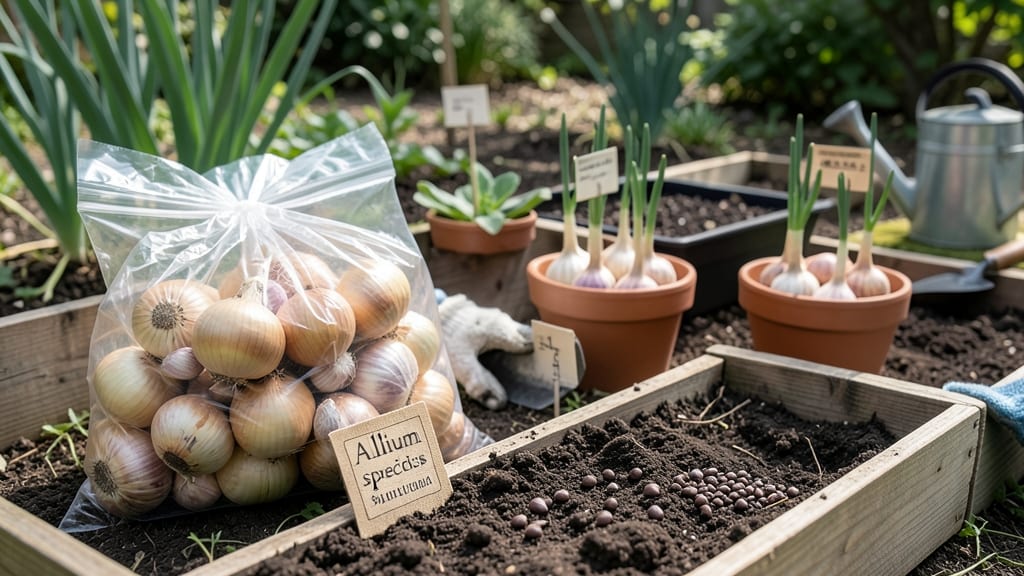
Growing alliums from allium seeds vs bulbs gives you unlimited variety—think heirloom onions, colorful ornamental alliums, or unique garlic types you won’t find in stores. 🌱 The trade-off? Slower growth and more patience, since seedlings take 3-4 months just to reach bulb size.
I’ve tried both methods, and while seeds let me experiment with rare varieties, they demand more space and consistent moisture during those early weeks.
Bulbs, on the other hand, are the fast track—plant them in fall or early spring, and you’ll harvest in 6-8 weeks for onions or 10-12 months for garlic. They’re foolproof for beginners, especially in cooler climates where seeds struggle to germinate.
My garlic patch, started from bulbs, produces twice as much as my seed-grown experiments, though admittedly, they lack the novelty factor.
The real choice comes down to your goals: speed and reliability win with bulbs, while variety and adventure pull you toward seeds. For example, ornamental alliums—like the stunning globe alliums—are only available as seeds, but they’ll need two full growing seasons before they bloom their first showstopping flowers.
Here’s the kicker: combine both for the best of both worlds. Start bulbs for reliable harvests and seeds for next-year’s experimental varieties. That’s how I’ve turned my allium patch into a year-round production powerhouse—whether it’s fresh green onions for salads or dramatic blooms for cutting gardens.
The first product explained
Meet AlliumMax Pro—your ultimate companion for growing alliums with ease! 🌱 Whether you're a seasoned gardener or just starting your green thumb journey, this premium kit is designed to simplify planting and maximize your yield. Let’s dive into what makes it stand out.
📏 Specs & Features
AlliumMax Pro comes packed with everything you need to cultivate thriving alliums, whether you're working with seeds or bulbs. Here’s what’s inside:
- High-Quality Seeds or Bulbs: Choose from a curated selection of Allium cepa (onion), Allium sativum (garlic), Allium fistulosum (green onion), or Allium schoenoprasum (chives). All are non-GMO and sourced from trusted organic farms.
- Biodegradable Planting Pots: Perfect for starting seeds indoors or transplanting bulbs. These pots dissolve into the soil, eliminating the need for root disturbance.
- All-Purpose Potting Mix: A nutrient-rich blend formulated to support early root development and robust growth.
- Growth Accelerator: A slow-release fertilizer designed to boost root and bulb development, ensuring faster and healthier plants.
- Planting Guide & Calendar: A detailed, color-coded guide tailored to your climate zone, with step-by-step instructions for both seeds and bulbs.
- Storage Container: Keeps your seeds or bulbs fresh and organized until planting time.
🎯 Target Users
This kit is perfect for:
- 🌿 Home Gardeners: Ideal for those with limited space, like balcony or container gardeners, thanks to its compact and efficient design.
- 👨🌾 Small-Scale Farmers: Great for expanding your allium yield without the hassle of sourcing materials separately.
- 👩🍳 Foodies & Cooks: Grow your own fresh herbs and alliums for culinary adventures—no store-bought substitutes needed!
- 🧑🎓 Educators & Students: A fantastic tool for teaching plant biology, life cycles, and sustainable gardening practices.
💰 Price Point
AlliumMax Pro is priced at $29.99 for a seed kit and $34.99 for a bulb kit. Both options include everything you need to get started, with occasional discounts for bulk orders or seasonal bundles.
Plus, the kit’s long-term cost savings make it a steal compared to buying seeds, bulbs, and supplies separately!
Ready to transform your garden into an allium powerhouse? AlliumMax Pro makes it easier than ever to grow your own—no green thumb required! 🌟
The second product explained
Ready to dive into another game-changer for your allium garden? Meet Gourmet Harvest Organic Allium Bulbs—your ticket to a bountiful, flavor-packed harvest with minimal fuss! 🌱✨ This premium product is designed for gardeners who crave high-quality, certified organic bulbs that deliver consistent, robust yields year after year.
📏 Specs & Features
Gourmet Harvest Organic Allium Bulbs come in a variety pack featuring 10 bulbs each of garlic, onions, shallots, and leeks, ensuring you have everything you need for a diverse, thriving allium patch. Here’s what sets them apart:
- Organic Certification: Grown without synthetic pesticides or GMOs, so you can feel good about what you’re planting—and eating! 🌍
- Non-GMO & Heirloom Varieties: Choose from time-tested, open-pollinated seeds and bulbs for the best flavor and adaptability.
- Disease-Resistant Strains: Selected for resilience against common allium pests and diseases, so your plants thrive from start to finish.
- Easy Planting Guide: Includes a beginner-friendly planting chart with spacing, depth, and seasonal tips tailored to your USDA zone.
- Sustainable Packaging: Eco-conscious biodegradable mesh bags that allow for better airflow and reduce waste.
🎯 Who’s This For?
Gourmet Harvest Organic Allium Bulbs are perfect for:
- Home Gardeners: Ideal for small to medium-sized plots, whether you’re a seasoned pro or a first-time planter.
- Organic Enthusiasts: If you prioritize chemical-free gardening, this is the product for you!
- Flavor Seekers: Want restaurant-quality alliums at home? These bulbs deliver bold, authentic taste straight from your garden.
- Urban & Container Gardeners: Compact bulbs work well in pots, making them great for balconies or small spaces.
💰 Price Point & Value
Priced at $24.99 for a 40-bulb variety pack, Gourmet Harvest offers exceptional value for organic quality. While it’s a slight premium over conventional bulbs, the long-term benefits—like higher yields, better flavor, and eco-friendliness—make it a smart investment. Plus, one pack can last multiple seasons if stored properly!
💡 Pro Tip: Pair these bulbs with Product A (Allium Seed Mix) for a two-pronged approach—plant bulbs for early harvests and seeds for late-season abundance!
Head-to-head comparison
Ready to dive into the allium seeds vs. bulbs showdown? Let’s break it down with a clear, side-by-side comparison so you can decide which planting method suits your garden—and your goals—best! 🌱✨
🌱 Growth Speed & Time to Harvest
If you’re eager to see results, this is one of the biggest differences between allium seeds and bulbs. Bulbs are the clear winners here—hands down—because they’re essentially pre-programmed to grow.
Once planted, they’ll sprout quickly and often produce flowers or edible shoots within weeks (or even days, depending on the variety). Garlic bulbs, for example, can be ready for harvest in just 60-90 days, while onions might take 100-120 days.
Seeds, on the other hand, take patience. Germination can take 10-30 days (or longer in cool weather), and it may be 3-6 months before you see anything edible or floral.
If you’re growing from seed for long-term rewards, like perennial alliums (like chives or oregano), it’s worth the wait—but if you need quick greens or blooms, bulbs are your best bet.
🌿 Yield & Productivity
Bulbs generally deliver a more predictable and abundant harvest per plant. A single garlic bulb, for instance, can produce 10-20 cloves, each of which grows into its own bulb.
Similarly, an onion bulb might yield 5-10 mature onions from a single planting. Bulbs are also less prone to bolting (premature flowering) under stress, which means fewer wasted plants.
Seeds, however, offer greater variety and potential for experimentation. Since you’re starting from scratch, you can grow heirloom or rare varieties that aren’t always available as bulbs.
Plus, if you’re growing alliums for cut flowers or long-term perennials (like allium ‘Purple Sensation’), seeds let you cultivate plants that will return year after year. That said, seed-grown alliums may produce smaller or fewer bulbs in their first year compared to bulb-planted counterparts.
💰 Cost & Budget-Friendliness
Here’s where seeds win for thrifty gardeners. A packet of allium seeds (even for varieties like garlic or onions) is dirt cheap—often just a few dollars—and can yield dozens or hundreds of plants.
For example, a single packet of garlic seeds might cost $3-$5 and produce enough plants to fill a garden bed, whereas buying the same number of garlic bulbs could set you back $20-$50.
Bulbs, however, offer immediate gratification without the guesswork. You pay a bit more upfront, but you get guaranteed, high-quality plants with no germination failures. If you’re growing high-value crops (like shallots or Egyptian walking onions), the cost per bulb is justified by the reliability and speed of harvest.
Plus, bulbs are easier to store for next season, making them a cost-effective long-term investment.
🌡️ Climate & Hardiness
Bulbs are the champions of cold-hardy gardening. Many allium bulbs (like garlic, onions, and leeks) thrive in cool to cold climates and can even overwinter in USDA zones 3-8. They’re also less finicky about soil conditions, making them ideal for beginner gardeners or challenging soils.
Some bulbs, like hardneck garlic, actually need cold stratification to trigger growth, which is a breeze to achieve in most temperate regions.
Seeds, while adaptable, often require more precise conditions to germinate and thrive. Many allium seeds need warm soil (60-70°F) to sprout, which can be tricky in cool spring or fall plantings.
Additionally, seed-grown alliums may struggle in extreme heat or drought without extra care. If you’re in a hot, dry climate, bulbs might be your best bet for low-maintenance success.
🔄 Longevity & Storage
Bulbs are the undisputed kings of storage. Properly cured and stored, garlic, onions, and other allium bulbs can last 6-12 months in a cool, dark, and well-ventilated space. This makes them perfect for bulk planting and long-term food security.
Plus, many bulbs (like garlic) can be replanted year after year, multiplying your yield with minimal effort.
Seeds, while easy to store, don’t offer the same long-term convenience. Once harvested, allium seeds (like those from chives or leeks) are typically not viable for replanting—you’d need to buy new seeds annually.
However, if you’re growing perennial alliums (like allium ‘Globemaster’), the seeds will produce plants that return for years, eventually forming their own bulb-like structures. Still, seeds lack the practicality of bulbs for bulk storage.
🎯 Ease of Planting & Maintenance
Bulbs are the easiest option for beginners. Planting them is as simple as digging a hole, dropping in the bulb, and covering it up. No thinning, no waiting for germination—just straightforward success.
Maintenance is minimal: water occasionally, fertilize lightly, and watch them grow. Bulbs also resist pests and diseases better than seed-grown plants, which can be more vulnerable to damping-off or fungal issues.
Seeds require more hands-on attention. You’ll need to thin seedlings to avoid overcrowding, monitor for pests, and ensure consistent moisture for germination. Seed-grown alliums may also bolt prematurely if stressed, leading to wasted effort.
That said, seeds offer greater flexibility—you can direct-sow, transplant, or even grow indoors before moving outside. For experienced gardeners who enjoy the process, seeds can be incredibly rewarding!
🌟 Specialty & Unique Varieties
This is where seeds shine. If you’re after rare, heirloom, or experimental varieties (like purple garlic, rainbow chard onions, or giant ornamental alliums), seeds are your gateway. Many bulb suppliers don’t carry unique or hybrid varieties, but seed companies often do.
Plus, you can save seeds from your own plants to create custom strains over time!
Bulbs, while offering proven, reliable varieties, can be limited in diversity. Most garden centers stock standard varieties (like ‘Silverskin’ garlic or ‘Yellow Sweet Spanish’ onions), but you won’t find exotic or boutique options unless you hunt for specialty suppliers.
If you’re growing alliums for culinary or ornamental purposes and want something truly unique, seeds are the way to go.
💡 Pro Tip: Best Uses for Each
Still unsure which to choose
Which one should you choose?
So, you’ve weighed the pros and cons—now it’s time to decide: allium seeds or allium bulbs? The answer depends on your goals, patience, and gardening style! Here’s a clear breakdown to help you pick the perfect option for your needs.
🌱 Choose Seeds If...
- You love variety: Seeds let you experiment with heirloom or rare allium varieties that aren’t sold as bulbs. Think Allium cristophii or Allium moly for unique blooms!
- You’re patient and planning ahead: Seeds take 1-2 years to mature, but they’re perfect for long-term gardeners who want to grow from scratch.
- You’re on a budget: A packet of seeds costs pennies compared to bulbs, and you’ll get dozens of plants from just a few seeds.
- You want to naturalize or spread plants: Seeds self-sow easily, creating stunning wildflower-like displays over time.
🌿 Choose Bulbs If...
- You crave instant gratification: Bulbs bloom in the same season you plant them—ideal for quick color and texture in your garden.
- You’re a beginner or short on time: No fussing with germination; just pop them in the ground and watch them grow!
- You need reliable, high-quality blooms: Bulbs are bred for vigor and disease resistance, ensuring show-stopping results with minimal effort.
- You’re growing in containers or small spaces: Bulbs are compact and perfect for pots, window boxes, or urban gardens.
💡 Pro Tip for Hybrid Gardeners:
Why not both? Start with bulbs for immediate impact, then sow seeds next year to expand your allium collection or fill gaps. Many alliums, like garlic or onions, even self-propagate from bulbs over time!
Still unsure? Ask yourself: Do I want speed or variety? Low-maintenance or long-term rewards? Your answer will guide your choice—and trust us, your garden will thank you! 🌸