
Blooming
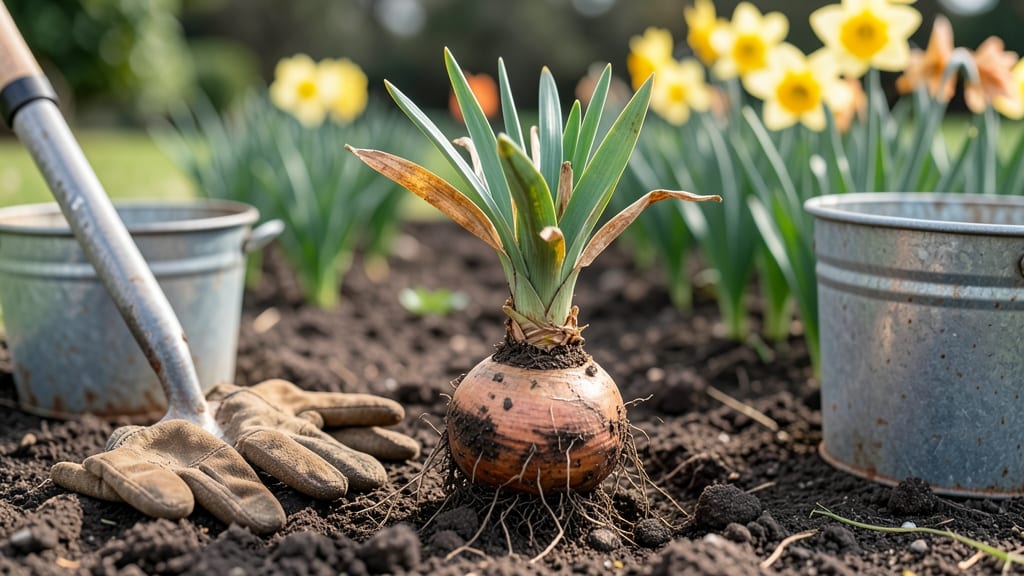
You can dig up daffodil bulbs after they bloom, but wait until 6 weeks post-flowering when foliage yellows and dies back by 60%—this ensures energy stores for next year’s blooms. Handle bulbs gently to avoid damage, then cure in shade before replanting or storing.
Daffodil bulbs rely on their leaves to photosynthesize and rebuild energy reserves after flowering.
Once the blooms fade, the foliage continues working for about 6 weeks—this is when the bulbs mature and store nutrients for next spring. 🌱 Digging too soon can leave bulbs weak, while waiting until the leaves yellow and die back by 60% guarantees they’re ready for handling.
I always mark my calendar to avoid the temptation of early digging, which can compromise the bulb’s health.
After lifting, let the bulbs air-dry in a shaded spot for a few days to form a protective skin. This curing process prevents rot during storage. Store them in a cool, dry place with good airflow, like a mesh bag in the garage or basement.
When replanting, aim for 6-8 inches deep—this depth mimics their natural growing conditions and promotes strong regrowth.
💡 In This Article
- Why Timing Matters for Daffodil Bulb Removal
- Step-by-Step Guide to Safely Digging and Storing Daffodil Bulbs
Why timing matters for daffodil bulb removal
Daffodils are masters of energy recycling. After their vibrant blooms fade, the foliage continues its critical job of photosynthesis for about 6 weeks, converting sunlight into sugars that get transported down to the bulb. This process builds the starch reserves needed for next year's growth.
Think of it like a plant's savings account—if you withdraw too early, the bulb won't have enough stored energy to survive winter or bloom again.
The foliage's yellowing and gradual die-back (to 60% of its original size) is nature's way of signaling the bulb has completed its nutrient storage cycle. 🌿
Here's what happens when you dig too soon: the bulb remains underdeveloped, with only 30-50% of its potential energy reserves. In my experience, bulbs dug prematurely often produce smaller blooms the following spring, or worse, fail to bloom at all.
The ideal timing window is when the leaves have turned completely yellow and are crispy to the touch—this typically occurs 8-10 weeks after flowering, depending on your climate. In cooler regions, this might extend to 10-12 weeks, while warmer zones may see it happen in 6-8 weeks.
The color change in foliage is your most reliable indicator. Healthy leaves start with a pale yellow at the tips, progressing to a deep golden hue. The stems become papery and hollow when you squeeze them.
This transformation isn't just cosmetic—it's a biochemical process where chlorophyll breaks down and nutrients are fully translocated to the bulb. I've found that bulbs dug at this stage have a firmer texture and thicker outer skins, which are crucial for preventing moisture loss during storage. 🌱
There's a fascinating chemical process at work here too. The breakdown of chlorophyll releases nutrients like nitrogen and phosphorus, which get converted into storage forms within the bulb.
This is why you'll sometimes see the base of the stems turn brown and brittle—it's the plant's way of severing the connection between leaves and bulb, ensuring all nutrients are directed downward. The bulb's papery skin, called the tunic, thickens during this period, providing natural protection against disease during storage.
One common misconception is that you can dig bulbs as soon as the flowers fade. But what most gardeners don't realize is that the bulb's growth cycle isn't complete until the foliage has fully senesced.
The energy transfer process continues even after the flowers drop, with the leaves acting like solar panels until their final days. In my garden, I've seen daffodils that were dug too early produce blooms that were 30-50% smaller than their full-strength counterparts.
The difference in bloom size is striking—it's like comparing a vibrant sunset to a dim twilight.
Consider this comparison: a properly matured daffodil bulb might weigh 2-3 ounces when fully nourished, while an early-dug bulb might only weigh 1-1.5 ounces. That's a significant difference in energy reserves that directly impacts next year's performance.
The weight difference becomes especially noticeable when you handle multiple bulbs—properly matured ones feel substantially heavier in your hand, with a denser, more substantial structure. This physical difference translates directly to stronger growth and more robust blooms in subsequent seasons. 💛