
Pests
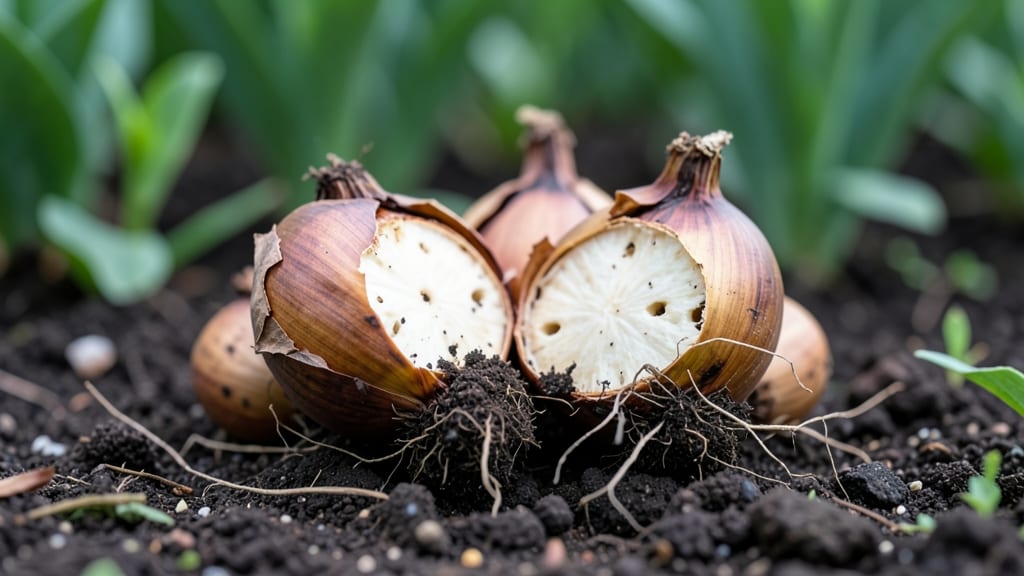
Moles don't eat bulbs—they avoid plant roots entirely, focusing instead on earthworms, grubs, and soil insects. Their digging disrupts bulb beds by exposing or crushing them, especially in gardens with tulips, daffodils, or hyacinths.
Moles are nature's underground pest controllers, specializing in invertebrates like worms and beetle larvae rather than plant matter. 🌱 Their tunnel networks can still wreak havoc on bulb gardens by destabilizing soil structure, which is why gardeners often notice damaged or missing bulbs after mole activity.
The key difference from voles (which do nibble roots) is that moles are purely insectivorous—they dig for food, not to eat the bulbs themselves.
What makes this tricky is that moles don't discriminate between useful and ornamental plants when tunneling. A single mole can create enough disruption to expose 50+ bulbs in a season, especially in loose, well-drained soil where their tunnels collapse easily.
The damage often appears as surface mounds or sunken patches where bulbs were previously planted.
💡 In This Article
- Mole Diet: What They Actually Consume in Gardens
- Protecting Bulbs from Mole Tunnel Damage
Mole diet: what they actually consume in gardens
Moles are specialized insectivores, meaning their diet consists almost entirely of soil-dwelling invertebrates rather than plant material. Their menu primarily includes earthworms (their favorite, making up 70-80% of their diet), grubs, beetle larvae, and other soft-bodied insects they encounter while tunneling.
This preference stems from their highly efficient foraging strategy—moles can consume up to 70% of their body weight daily in food, requiring constant digging to locate these high-protein meals.
Their foraging behavior differs dramatically from other burrowing pests like voles or gophers. While voles nibble on roots and shoots, moles tunnel through soil to access their prey, creating two distinct tunnel types: shallow surface tunnels (for hunting) and deeper, permanent tunnels (for travel).
These tunnels can extend 15-20 feet per mole in a season, disrupting soil structure and exposing bulbs planted just 4-6 inches deep. The damage occurs indirectly when tunnels collapse or when bulbs are uprooted during foraging.
What makes this particularly problematic for gardeners is that moles don't eat bulbs—they simply don't recognize them as food. However, their digging creates ideal conditions for bulb rot or desiccation.
For example, tulip bulbs (typically planted at 6 inches deep) become vulnerable when mole tunnels run parallel to them, causing soil compaction that restricts water uptake. The same goes for daffodils and hyacinths, whose shallow root systems are easily disrupted by this underground activity.
Interestingly, moles have a poor sense of smell but excellent hearing and touch, which they use to detect vibrations from moving prey. This sensory adaptation explains why they're so effective at locating worms and grubs but completely ignore plant material.
Their digging also aerates soil, which might seem beneficial—until you consider how it exposes dormant bulbs to predators like raccoons or deer, which then dig them up for the actual feast.
To visualize the scale: A single mole can process 1-2 pounds of earthworms weekly while creating enough tunnel damage to expose 50+ bulbs in a season. This indirect destruction is why gardeners often see surface mounds where bulbs were previously planted, even though the moles themselves never touched them.
The key takeaway is that while moles don't eat bulbs, their foraging habits create a cascade of problems that can devastate bulb gardens.