
Blooming
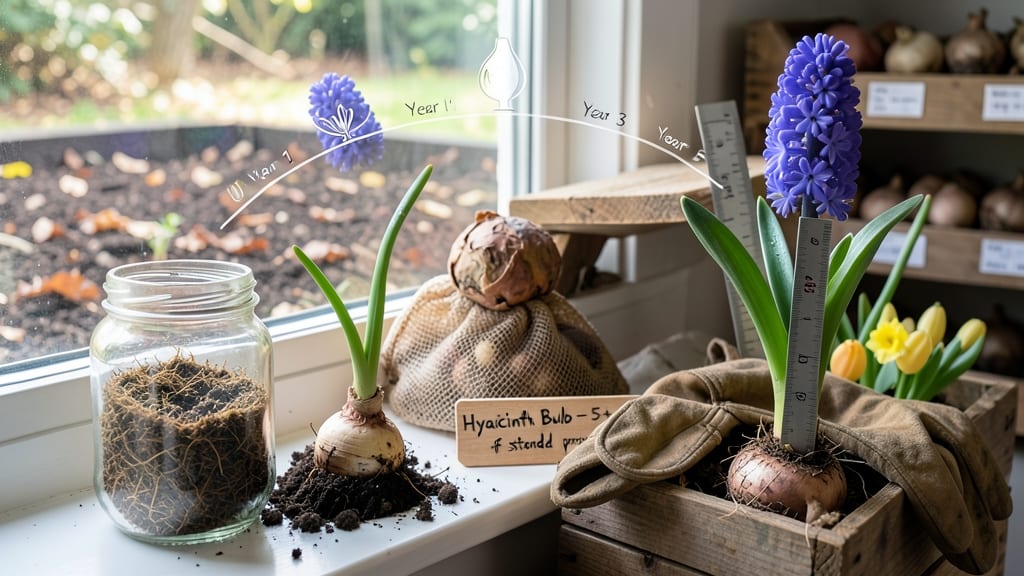
Flower bulbs last 1-5 years in storage, depending on type—tulips and daffodils typically survive 2-3 years, while hyacinths and lilies may last 3-5 years when kept dry and cool. Planting them annually extends their lifespan and ensures vibrant blooms.
Your flower bulbs' shelf life depends on their natural dormancy cycles and how well you preserve them.
Tulips and daffodils, for example, store energy differently than hyacinths, which is why their storage durations vary so widely. 🌱 The key to maximizing their potential lies in mimicking their natural winter conditions—cool temperatures and low humidity prevent moisture loss while keeping them dormant.
I've found that storing bulbs in mesh bags or paper envelopes with a bit of peat moss helps maintain that balance, especially for delicate varieties like crocuses.
What many gardeners overlook is that planting bulbs annually actually refreshes their vitality. When you store them too long, they gradually lose their ability to bloom as vigorously.
For instance, a daffodil bulb that's been sitting for four years might produce fewer flowers or weaker stems compared to one planted fresh each season. The trade-off between convenience and quality is worth considering—sometimes, the extra effort in replanting pays off in spectacular spring displays.
💡 In This Article
- Flower Bulb Longevity Factors by Type
- Optimal Storage Conditions to Extend Bulb Freshness
Flower bulb longevity factors by type
Flower bulbs vary dramatically in storage life because each type has unique biological adaptations for survival. Tulips, for example, store energy primarily in their scaly tunic layers, which dry out faster than the fleshy, moisture-rich bulbs of daffodils.
This is why tulips typically last only 1-2 years in storage—once those protective layers lose moisture, they become brittle and prone to rot. 🌷 In contrast, daffodils (genus Narcissus) have a waxy coating that retains moisture longer, allowing them to last 2-3 years when stored properly.
The real outliers are hyacinths and lilies, which can last 3-5 years due to their dense, layered structure. Hyacinths store nutrients in their papery outer skins, while lilies have a thick, fibrous base that acts like a natural insulator.
What's fascinating is how bulb size correlates with longevity—larger bulbs (like those of 10-inch tall daffodils) often outlast smaller ones because they contain more stored energy reserves.
For instance, a 6-inch crocus bulb might only last 1 year in storage, while a 12-inch allium bulb could survive 4 years.
Temperature sensitivity plays a major role in these differences. Tulips, for example, enter dormancy at 40°F and start degrading if exposed to temperatures above 60°F for extended periods.
This is why they're more prone to premature sprouting or mold. 🌼 Daffodils, however, can tolerate slightly warmer storage (50-60°F) because their natural growing zones often experience milder winters.
The key factor here is how each bulb type evolved to handle its native climate—understanding this helps explain why some bulbs last decades in their natural habitat but only a few years in our basements.
Moisture retention is another critical biological difference. Bulbs like fritillaries have a gelatinous layer that helps them survive drought conditions, while grape hyacinths rely on their tightly packed scales to prevent water loss.
When you store bulbs, you're essentially mimicking these natural moisture control mechanisms—but if you fail to replicate them (like storing bulbs in plastic bags without ventilation), the results can be disastrous.
For example, a hyacinth bulb left in a sealed container might develop mold within 3 months due to trapped ethylene gas.
What most gardeners don't realize is that bulb degradation often starts at the basal plate (the bottom where roots emerge). This is where the bulb draws nutrients during dormancy, and any damage here—like cuts or bruises—can accelerate spoilage.
For instance, a damaged daffodil bulb might only last 6 months in storage, while an intact one could last 3 years. The same principle applies to tulip bulbs, which are particularly vulnerable because their papery skins tear easily during handling.
Here's a quick comparison of common bulb lifespans under ideal conditions:
- Tulips: 1-2 years (energy stored in delicate papery layers)
- Daffodils: 2-3 years (waxy coating preserves moisture)
- Hyacinths: 3-5 years (dense layered structure)
- Crocuses: 1 year (small size, minimal reserves)
- Lilies: 3-4 years (thick fibrous base)
The takeaway? If you're storing bulbs long-term, handle them like delicate geological specimens—gentle care and proper conditions make all the difference in how long they'll last. 🌿