
Blooming
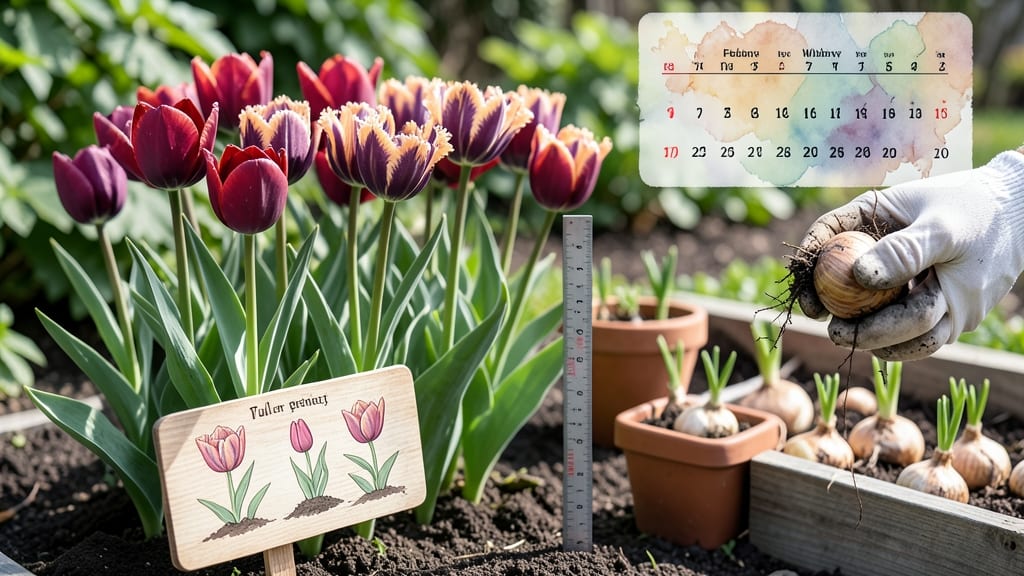
It takes bulbs 4 to 12 months to bloom after planting, with spring varieties like tulips and daffodils typically flowering in 8 to 12 weeks, while summer bloomers such as dahlias can take 10 to 16 weeks. Fall-planted bulbs often produce flowers the following spring or early summer.
Timing varies dramatically based on bulb type and planting season—spring bulbs planted in fall often bloom earlier than those planted in winter, while summer bulbs like alliums may need more time to establish roots before flowering. 🌱 Climate plays a role too: cooler regions can delay blooms by several weeks compared to warmer areas.
For example, hyacinths planted in late fall might push up shoots by March in mild zones but wait until April in colder climates.
What's fascinating is how bulb biology works: many store energy underground for months before sending up shoots. This means proper soil prep—like adding compost—can give them the nutrients they need to bloom faster.
I've found that pre-chilling bulbs in the fridge for 6-8 weeks mimics winter conditions, helping them sprout earlier when planted.
💡 In This Article
- Bulb Bloom Timelines by Type and Season
- Tips to Speed Up or Adjust Bloom Times
Bulb bloom timelines by type and season
The bloom timeline for bulbs is primarily dictated by their biological programming and environmental cues. Spring bulbs like tulips and daffodils are programmed to flower within 8-12 weeks after breaking dormancy, which typically occurs in late winter or early spring.
This timing aligns with their natural lifecycle, where they've stored energy underground during their fall planting and winter dormancy. For example, a tulip bulb planted in November might push up shoots by February and bloom by April in most temperate zones.
Summer-blooming varieties, such as dahlias and gladiolas, follow a different schedule. These bulbs require 10-16 weeks to mature and flower because they need more time to establish a robust root system before producing blooms.
Dahlias, in particular, often need 6-8 weeks of warm soil temperatures (above 60°F) before they'll send up shoots. This is why they're typically planted in spring after the last frost, rather than in fall like many spring bulbs.
The extended timeline also explains why summer bulbs often produce larger, more abundant flowers—they've had more time to build energy reserves.
Fall-planted bulbs introduce another layer of complexity. Many, like crocuses and snowdrops, are actually early spring bloomers that need a period of cold to trigger flowering. When planted in fall, they'll often bloom the following spring, sometimes as early as February or March in mild climates.
The key factor here is vernalization—the process where cold temperatures break dormancy and signal the bulb to flower. In colder regions, this might push blooms back by 2-4 weeks compared to warmer areas where winter is less severe.
Climate plays a surprisingly large role in bloom timing. For instance, hyacinths planted in late fall might bloom by March in Zone 7 but wait until April in Zone 5 due to colder winters.
Similarly, alliums—which can bloom from late spring to summer—might flower 3-4 weeks earlier in coastal regions with milder winters compared to inland areas.
The chilling requirement (number of hours below 40°F needed) varies by variety, which is why some bulbs bloom reliably year after year while others may skip a season if winter wasn't cold enough.
What most gardeners don't realize is how bulb size affects timing. Larger bulbs (like 12/14 cm daffodils) often bloom 1-2 weeks earlier than smaller ones because they've stored more energy.
This is why premium bulbs from nurseries tend to perform better—they've had more time to mature and develop stronger root systems before sale. The same principle applies to tulip bulbs: a 10 cm bulb might produce flowers 2-3 weeks later than a 15 cm bulb of the same variety.
Seasonal variations also create interesting patterns. For example, fall-planted spring bulbs (like tulips) often bloom 2-3 weeks earlier than those planted in winter because they've had more time to establish roots.
Meanwhile, summer bulbs planted in spring might bloom 1-2 weeks later than those planted in fall (if their variety tolerates fall planting). Understanding these nuances helps explain why some gardeners get inconsistent results—small differences in planting time or bulb size can shift bloom dates by weeks.