
Plants
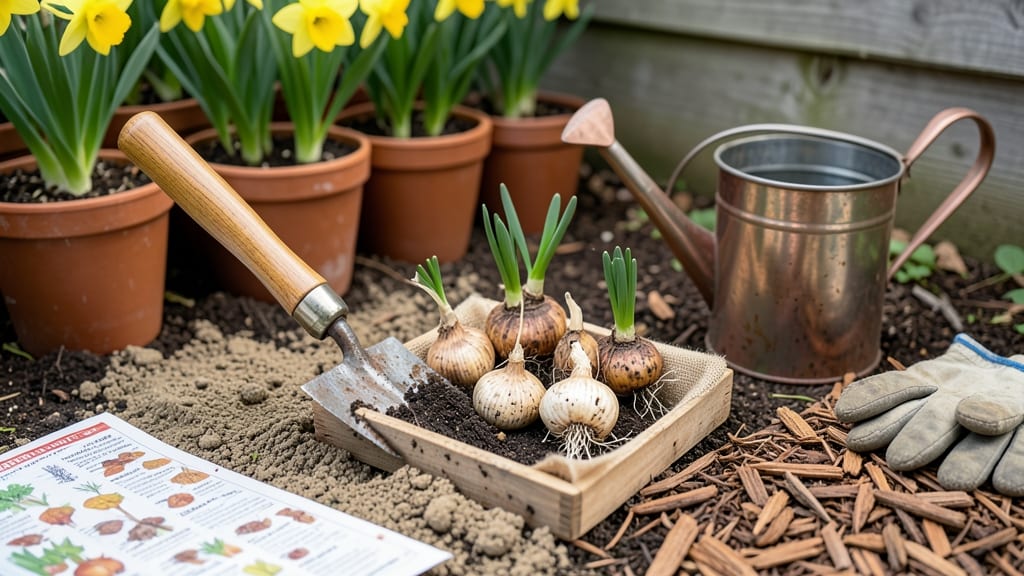
Planting daffodil bulbs too late can still yield bright 🌼 blooms next spring—if you know the right tricks for your zone.
Wondering if your fall gardening season is slipping away? Daffodil bulbs are hardy survivors—but planting them too late can mean missed blooms next spring. Here’s how to know if it’s still worth digging in, whether you’re in USDA Zone 6a or a milder climate.
The ideal window is September through November, but late plantings can work with the right adjustments. Soil temperature, frost risk, and bulb variety all play a role in whether your 🌼 daffodils will make it through winter and burst into color by April.
Below, I’ll walk you through how to assess your late-planting chances, the fastest ways to boost success, and when to call it quits before the ground freezes for good.
The exact fall planting window for daffodil bulbs (and why timing matters)
Daffodils are one of the most forgiving spring-blooming bulbs, but their fall planting window is critical for establishing strong roots before winter. Planting too late can delay—or even prevent—next year’s vibrant 🌼 blooms. The key lies in balancing soil temperature, chill requirements, and your USDA zone.
Most gardeners aim to plant daffodil bulbs 6-8 weeks before the ground freezes. This gives roots time to anchor before winter dormancy. In USDA Zones 3-5, that typically means mid-September to early October. Warmer zones (6-9) have more flexibility, often until late November.
Here’s the golden rule: Daffodil bulbs need 4-6 weeks of root growth before the ground freezes solid. If your zone’s first frost is November 15, plant by early October. For zones with December frosts, you might squeeze in plantings until mid-November.
Soil temperature is your best guide. Daffodils thrive when soil cools to 50-60°F (10-15°C). Use a soil thermometer to check—if temps drop below 40°F (4°C), roots won’t establish properly. In Zone 7, that might mean planting by October 15.
Chill requirements play a hidden role in bloom timing. Most daffodils need 12-16 weeks below 40°F (4°C) to trigger flowering. In Zone 5, this happens naturally, but in Zone 9, you might need to plant earlier or use cold stratification tricks.
Regional variations matter too. Coastal areas with mild winters (e.g., Zone 8-9) can plant later, while inland zones with early frosts must rush. For example, Denver (Zone 5) should plant by October 1, while Los Angeles (Zone 10) can wait until December.
If you’re on the fence, check your last frost date and count backward. Daffodils planted 4-6 weeks before frost have the best chance to establish roots.
In Zone 6, that’s usually mid-October—but if you’re late, don’t panic. Bulbs planted in November can still bloom, though they may be smaller.
Pro tip: Plant dwarf varieties like ‘Tête-à-Tête’ if you’re cutting it close—they establish faster. For standard daffodils, prioritize well-draining soil and mulch heavily to protect roots. Even a 2-inch layer of straw can extend your planting window by 1-2 weeks.
Remember, daffodils are hardy survivors. While timing matters, a late planting isn’t a total loss—just a trade-off between bloom size and establishment time. With the right soil prep and
How to tell if it’s Really Too Late: Soil, Weather, and Bulb Health Signs
Daffodil bulbs are tough, but even their resilience has limits. If you're staring at your calendar in late November and wondering whether to dig in, here’s how to assess your odds.
The key factors are soil temperature, frost risk, and bulb condition—each can make or break your late-season planting.
Start by checking your local soil temperature. Daffodils need the ground to be below 60°F (15°C) for at least 4-6 weeks before winter to establish roots.
Use a soil thermometer or check your weather service’s soil freeze alerts—if frost is predicted within 2-3 weeks, your window is closing fast.
Next, evaluate your bulb health. Healthy daffodil bulbs feel firm and plump, with no soft spots or mold. If you see sprouting shoots already, plant immediately—they’re eager to grow and need soil protection. Bulbs with wrinkled or shriveled skins may not recover, even with late planting.
- Frost damage: Bulbs planted too late may freeze before rooting, killing them outright.
- Poor blooms: Late plantings often skip flowering or produce weak stems.
- Pests: Soft, newly planted soil attracts voles and squirrels in winter.
If your last frost is within 4 weeks, consider container planting or waiting until next fall.
For emergency planting, focus on cold protection. Plant bulbs deeper than usual (6-8 inches) to shield them from temperature swings. Add a thick layer of mulch (4-6 inches)—straw or shredded leaves work best—to insulate the soil.
In containers, move pots to a protected spot like a garage or under eaves if frost is imminent.
Don’t overlook microclimates—southern exposures or slopes warm up faster. If your yard has a sunny, sheltered spot, bulbs there may survive a late planting better than those in shady or low-lying areas. Test soil in multiple spots with a thermometer to find the warmest pocket.
If you’re still unsure, try the "finger test": Stick your hand in the soil for 10 seconds. If it’s too cold for your comfort (below 50°F/10°C), the bulbs will struggle.
When in doubt, plant a few test bulbs in a visible spot—if they sprout next spring, you’ve got a green light for future late plantings.