
Planting
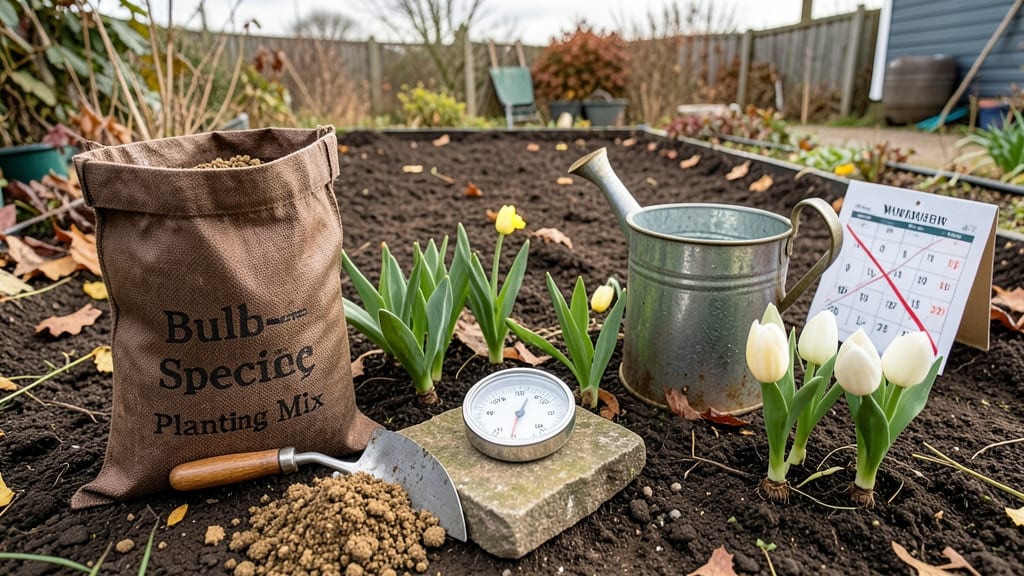
If you've missed your USDA zone's ideal fall planting window (typically October–November), it may be too late to plant spring bulbs—but hardy varieties like tulips and daffodils can still establish roots before the first hard frost. Late planting often results in shallow growth, weaker blooms, or winter damage, especially in warmer climates (Zones 8–10), though cooler regions (Zones 5–7) offer a slightly extended window.
Timing matters because bulbs need 6–8 weeks of cool soil temperatures (below 60°F) to develop strong roots before winter. 🌱 If you're in a warmer zone (like Zone 9 or 10), even late fall plantings may struggle to root before the ground hardens.
I've seen gardeners in these areas plant as late as December with some success, but the blooms tend to be smaller and later. For best results, focus on soil prep—amend with compost and ensure proper drainage—if you're pushing the deadline.
Hardier bulbs like crocuses or early tulips sometimes tolerate later planting, but most varieties prefer the ideal window. If you're unsure, check your local frost dates and plant at least 4–6 weeks before the first expected frost.
Mulching heavily after planting can help insulate the soil and protect tender roots during winter.
💡 In This Article
- USDA Zone Deadlines for Spring Bulb Planting
- How to Salvage Late Spring Bulb Plantings
USDA Zone deadlines for spring bulb planting
Spring bulbs like tulips and daffodils rely on a critical 6–8 week window of cool soil temperatures (below 60°F) to establish roots before winter dormancy.
In USDA Zone 5 (e.g., Chicago, Minneapolis), this means planting between mid-September and mid-October—soil temps drop below 50°F by November, giving bulbs time to root 4–6 inches deep. The deeper roots grow before frost, the better they survive winter.
In contrast, Zone 9 (e.g., Los Angeles, Phoenix) has only a 3–4 week window (late October–early November) before soil temps drop too quickly, often forcing gardeners to plant by Thanksgiving or risk shallow growth.
The first hard frost is your true deadline—bulbs planted too late may not root deeply enough, leaving them vulnerable to heaving (forcing out of the ground) or rot.
For example, in Zone 7 (e.g., Dallas, Atlanta), the average first frost hits November 15, so bulbs must be in the ground by October 15 to establish roots.
Hardier varieties like crocuses or snowdrops can sometimes tolerate planting until December in cooler zones (5–6), but their blooms will be smaller and later. The trade-off? These late plantings often produce 20–30% fewer flowers compared to bulbs planted on time.
Soil temperature is the hidden factor most gardeners overlook. A soil thermometer reveals when temps consistently stay below 60°F—this is your green light to plant. In Zone 8 (e.g., San Diego, Raleigh), soil may still hover around 65°F in early November, delaying root growth.
To compensate, amend soil with compost or peat moss to improve moisture retention and cool the root zone faster. Mulching with 4–6 inches of straw after planting also helps insulate bulbs and maintain stable temps during winter fluctuations.
Here’s how frost timing shifts deadlines by zone:
- Zones 5–6: Plant by October 15–31 (first frost November 1–15)
- Zones 7–8: Plant by October 1–15 (first frost November 15–December 1)
- Zones 9–10: Plant by October 1–15 (soil stays warm longer, rooting stalls)
What happens if you miss the window? Bulbs planted in December or January often fail to root deeply enough, leading to weak stems that flop over or no blooms at all.
In Zone 10 (e.g., Miami, San Diego), where winters are mild, bulbs may even rot if planted after December 1—the soil stays too warm for root dormancy. The key is to prioritize root establishment over bulb size: smaller bulbs planted early will outperform large bulbs planted late.
For gardeners in Zones 9–10, consider fall-blooming bulbs like caladiums or canas, which thrive in warm climates and don’t need cold stratification. These can be planted as late as spring (March–April) and still produce vibrant foliage. 🌿 The lesson?
Not all bulbs follow the same rules—always match your variety to your climate’s quirks.