
Flowers
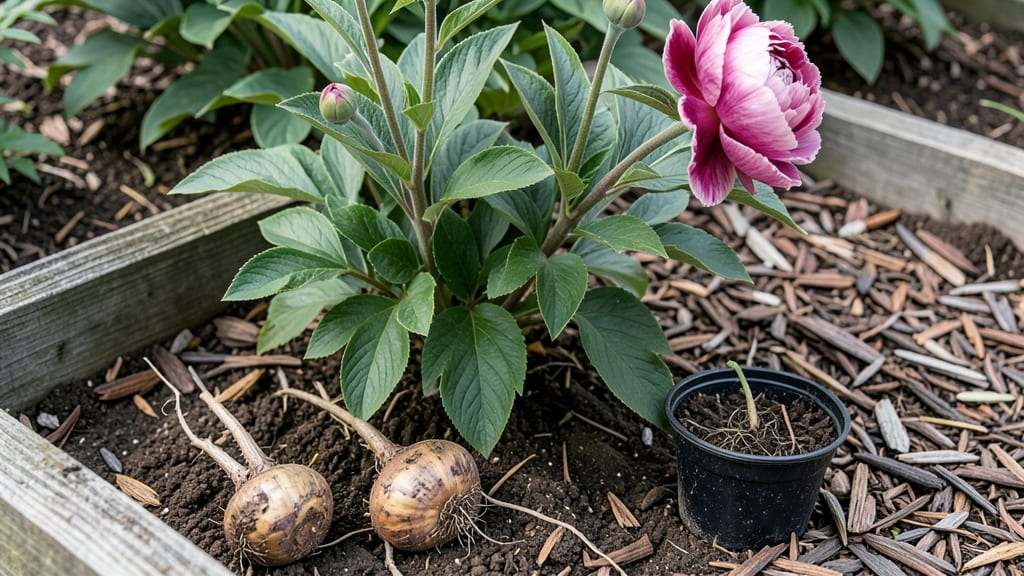
Planting peony flowers isn’t about bulbs—it’s about herbaceous perennials that reward patience with decades of blooms. 🌸 These fragrant giants thrive when planted in early fall, giving roots time to establish before winter’s chill. I’ve learned the hard way that spring planting often leads to weak stems and fewer flowers.
The secret lies in soil prep: peonies hate soggy roots but love well-draining, slightly rocky soil. Dig a hole twice as wide as the root, set the "eyes" (buds) just below soil level, and backfill with native soil—not compost. Overwatering now means floppy stems later.
By late spring, you’ll see bold, velvety foliage pushing through the earth, followed by blooms that smell like a country garden. The best part? They multiply naturally, gifting you new plants every year with minimal effort. Winter care is simple: leave the foliage until it browns naturally.
Cut it back only after the first frost, and you’ll avoid disturbing next year’s buds. Perfect for cottage gardens, borders, or cutting gardens—just plant them once and enjoy for decades.
📚 In This Guide
- What you need
- Instructions
- Tips and common mistakes
- Wrapping up and next steps
What you need
- ● Peony bulbs (corms): Choose healthy, disease-free bulbs (1–3 inches in diameter). Quantity depends on your garden size—plan for 3–5 bulbs per square foot for a lush display!
- ● Well-draining potting mix or garden soil: Peonies thrive in loamy, slightly alkaline soil (pH 6.5–7.5). Avoid heavy clay or waterlogged soil.
- ● Compost or organic matter: Mix in 2–3 inches of compost to enrich the soil before planting.
- ● Bone meal or phosphorus-rich fertilizer: Use 1–2 tablespoons per bulb to encourage strong root growth.
- ○ Mulch (optional but recommended): 2–3 inches of organic mulch (e.g., straw or wood chips) to retain moisture and regulate soil temperature.
- ● Garden trowel or shovel: For digging planting holes (aim for 12–18 inches deep).
- ● Measuring tape or ruler: To ensure proper planting depth (eyes of the bulb should be 1–2 inches below soil).
- ● Garden gloves: Protect your hands from thorns and soil.
- ● Watering can or hose with a gentle spray nozzle: Peonies need 1–1.5 inches of water per week (more during drought).
- ● Pruners (sterilized): For trimming dead foliage in late fall or early spring.
- ● Sunlight: Full sun (6–8 hours daily) is non-negotiable for vibrant blooms.
- ● Climate: Peonies prefer USDA Hardiness Zones 3–8. Plant in early fall (4–6 weeks before frost) for best results.
- ● Patience: Peonies take 2–3 years to reach full bloom but reward you with decades of growth!
How to plant and establish peony bulbs for long-lasting blooms
Peonies thrive with minimal fuss once planted correctly. Here's my foolproof method for getting them established and multiplying naturally.
🌱 Step 1: Choose the Right Location and Prepare the Soil
Peonies need full sun—at least 6-8 hours daily—and well-draining soil. I always pick a spot with morning sun and afternoon shade in hotter climates, which prevents leaf scorch. Avoid low-lying areas where water pools after rain.
Loosen the soil to a depth of 12-15 inches with a garden fork or tiller. Amend the area with 2-3 inches of compost mixed into the top 6 inches of soil. Peonies hate soggy roots, so if your soil drains poorly, add a layer of coarse sand or perlite to improve drainage. Test the soil pH—peonies prefer a slightly acidic to neutral range of 6.5-7.0.
🪴 Step 2: Plant Bulbs at the Correct Depth and Spacing
Peony bulbs (or "eyes") should be planted 1-2 inches deep, with the top of the bulb just below the soil surface. Planting too deep delays flowering, while planting too shallow exposes them to frost damage. Space bulbs 3-4 feet apart to give plants room to multiply and prevent overcrowding.
Dig a hole slightly wider than the bulb, place the peony root crown at the correct depth, and backfill with soil, pressing gently to remove air pockets. Water deeply right after planting to settle the soil and encourage root growth. I like to add a 1-inch layer of mulch around the base to retain moisture and regulate soil temperature.
☀️ Step 3: Water and Fertilize for Strong Establishment
Keep the soil consistently moist but not waterlogged for the first 2-3 weeks after planting. You'll know moisture is right when the top 2 inches of soil feel damp but not saturated. Once established, peonies are drought-tolerant, but young plants need regular watering during dry spells.
Apply a balanced, slow-release fertilizer (like 10-10-10) at planting time, then again in early spring before new growth appears. Avoid high-nitrogen fertilizers—they promote lush foliage at the expense of blooms. I also add a handful of bone meal to the planting hole for extra phosphorus, which encourages strong root and flower development.
⏰ Step 4: Prune and Divide as Needed for Healthy Growth
Wait until late fall or early spring to prune peonies. Cut back the foliage to 2-3 inches above the ground once it turns brown and crispy in fall. Never prune in summer—this removes the plant’s energy reserves for next year’s blooms. In early spring, remove any dead or damaged stems before new growth begins.
Peonies multiply naturally over time, so divide clumps every 3-5 years to maintain vigor. Dig up the plant in early fall or early spring, separate the roots into smaller sections with 3-5 eyes each, and replant immediately. This ensures each division gets enough energy to establish and flower well.
🌿 Step 5: Enjoy and Protect for Future Blooms
Peonies typically bloom in their second or third year, so patience is key. Once established, they’ll reward you with large, fragrant blooms for decades. To extend their lifespan, protect them from harsh winter winds by adding a 3-inch layer of mulch around the base in late fall.
Watch for peony leaf blight or botrytis blight, which cause brown spots on leaves. Improve airflow by spacing plants properly and avoid overhead watering. If you notice powdery mildew, remove affected leaves immediately and treat with a fungicide if necessary. With proper care, your peonies will multiply and flourish for years to come.
Tips & tricks for perfect peony planting
Here's what nobody tells you about peony planting that'll make all the difference in your garden.
Sunlight Strategy: That 6-8 hours of full sun is non-negotiable, but here's the secret: position your peonies to catch morning sunlight first. This prevents afternoon leaf scorch in hotter climates. I've seen peonies in full afternoon sun develop brown patches—morning sun gives them a gentler start. If you're in a very hot region, even a few hours of afternoon shade can make a difference.
Soil Prep Secret: When loosening that 12-15 inch depth of soil, don't just break up the top layer—focus on creating horizontal channels for roots to spread. I use a garden fork to gently pry apart soil layers rather than tilling aggressively. This preserves the soil structure while improving drainage. The compost should be worked into the top 6 inches only—deeper compost can lead to rot.
Planting Depth Visual: The 1-2 inch planting depth is critical, but here's how to check: after placing your bulb, the topmost "eye" (bud) should be just below soil level—if you can see it, it's too shallow. I like to make a small mound of soil before placing the bulb, then fill around it so the crown sits slightly higher than the surrounding soil. This prevents water pooling around the crown.
Pro Tips for Peonies Flowers Bulbs
- Here's what nobody tells you about peony planting that'll make all the difference in your garden.
- Sunlight Strategy: That 6-8 hours of full sun is non-negotiable, but here's the secret: position your peonies to catch morning sunlight first.
- Soil Prep Secret: When loosening that 12-15 inch depth of soil, don't just break up the top layer—focus on creating horizontal channels for roots to spread.
Frequently asked questions
Got questions about growing peony bulbs? You’re not alone! Here are some of the most common queries—plus straightforward answers to help you cultivate lush, fragrant blooms with ease.
When is the best time to plant peony bulbs?
Plant peony bulbs in early fall (4–6 weeks before the ground freezes) or very early spring (as soon as the soil is workable). This gives roots time to establish before winter or summer heat. Avoid planting in late fall or summer—it stresses the bulbs and reduces blooming potential!
How long does it take for peony bulbs to bloom after planting?
Peonies are patient perennials! Expect blooms 2–3 years after planting (sometimes sooner if you’re lucky). First-year plants focus on root growth, so don’t be discouraged if they skip flowering. Patience pays off with decades of reliable blooms!
Can I grow peonies in containers or do they need garden beds?
Peonies thrive in garden beds but can adapt to large containers (at least 18" deep) with well-draining soil. Use a mix of garden soil, compost, and perlite. Just remember: containers dry out faster, so water consistently. Pro tip: Move pots to a sheltered spot in winter if temps drop below 20°F!
What pests or diseases should I watch for with peony bulbs?
Peonies are tough, but keep an eye out for botrytis blight (gray mold on flowers) and peony wilt (a fungal disease). To prevent issues:
- Space plants 3–4 feet apart for airflow.
- Avoid overhead watering (water at the base).
- Remove spent blooms promptly to reduce fungal spores.
Why aren’t my peony bulbs blooming this year?
No flowers? Don’t panic! Common reasons include:
- Too much nitrogen (focus on phosphorus/potassium for blooms).
- Overcrowding (dig up and divide clumps every 5–7 years).
- Improper sunlight (peonies need 6+ hours of sun daily).
- Young plants (give them 2–3 years to mature).
Wrapping up and next steps
Peonies are a gardener’s dream—easy to grow, stunningly beautiful, and self-multiplying with care! 🌸 Their fragrant blooms and hardy nature make them a perfect addition to any yard, whether you’re a beginner or a seasoned green thumb.
Now that you know how to plant and nurture peony bulbs, it’s time to watch your garden flourish.
Ready to dive in? Start by choosing your peony variety—then grab those bulbs and get planting! Your future blooms will thank you.