
Planting
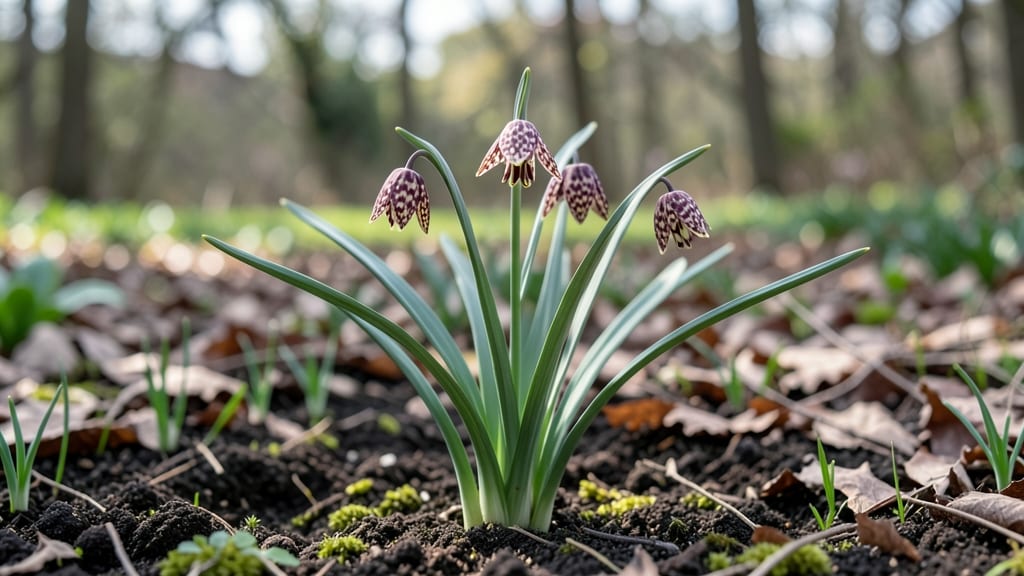
Mastering snake’s head fritillary bulbs unlocks those iconic, nodding bell flowers that look like they’re straight out of a fairy tale. 🌿 These picky bulbs demand chill hours and precise planting, but once you nail their needs, they reward you with months of drama-free blooms that outshine tulips and daffodils.
The secret lies in understanding their dormancy requirements and soil preferences—most gardeners overlook how critical the winter chill is for triggering those stunning spring displays.
Plant them in well-draining soil under deciduous trees where they’ll get spring sun but summer shade—too much heat stresses them. Bury bulbs 4-6 inches deep in fall, after soil temps drop below 60°F, and water lightly until winter rains take over.
The key is patience: these bulbs need 12-16 weeks of cold (32-45°F) to set flower buds properly. Skimp on chill hours, and you’ll get foliage but no blooms—my first year’s disappointment taught me that lesson the hard way.
By late spring, you’ll be rewarded with clusters of dangling bells in shades of purple, white, or checkered patterns that hummingbirds adore. The foliage disappears by early summer, so naturalize them in grassy areas where they can go dormant undisturbed.
For repeat blooms, divide clumps every 3-4 years—they multiply slowly but reliably, making them a low-maintenance perennial once established.
Troubleshooting is simple: yellowing leaves? Too much water. No flowers? Insufficient chill hours. These bulbs thrive in USDA zones 3-8** and pair beautifully with hellebores and lungwort for a woodland understory effect. The payoff—those nodding, otherworldly blooms—makes the fuss worthwhile. Ready to grow them like a pro?
Hidden Triggers Behind Bulb Struggles
Understanding why your snakeshead fritillary bulbs (or similar spring ephemerals) fail to thrive often boils down to a few key factors—many of which are rooted in their natural habitat needs. These delicate beauties demand precision, especially when it comes to chill hours, soil conditions, and planting depth.
Let’s break down the science behind common setbacks and how to fix them.
Snakeshead fritillaries (Fritillaria meleagris and hybrids) are native to temperate climates with distinct winter dormancy periods. Their bulbs require 12–16 weeks of temperatures between 35–50°F (2–10°C) to trigger flowering. Without enough cold exposure:
- Bulbs stay dormant but fail to break dormancy in spring.
- Leaves appear weak or stunted, signaling poor energy reserves.
- No blooms emerge, even if the plant seems healthy.
Why it happens:
- Mild winters (common in warmer zones) prevent the internal clock from "resetting."
- Greenhouse-grown bulbs (often shipped early) may lack natural cold stratification.
- Over-mulching in fall traps heat, delaying chill accumulation.
Actionable fix: ✅ Pre-chill bulbs if planting in Zone 7+—store them in a fridge (not freezer) for 8–12 weeks before planting. ✅ Plant in the fall (not spring) to ensure winter exposure. ✅ Avoid thick mulch until temps drop below 50°F consistently.
These bulbs hate soggy conditions—their native meadows and woodlands have well-draining, slightly sandy loam. Waterlogged soil leads to:
- Rotten bulbs (gray, mushy texture) from fungal infections like Fusarium.
- Yellowing leaves before blooming, a sign of oxygen starvation.
- Slow or no growth as roots suffocate.
Why it happens:
- Clay-heavy soil holds excess moisture, especially in rainy springs.
- Low-lying planting spots where water pools after rain.
- Over-potting in containers without drainage holes.
Actionable fix: 🔧 Amend soil with perlite, coarse sand, or grit (1 part amendment to 3 parts soil). 🔧 Plant on a slope or mound to encourage runoff. 🔧 Use raised beds for heavy clay or urban gardens with poor drainage.
Snakeshead fritillaries have shallow root systems and bulbs that need light exposure to trigger blooming. Planting them too deep:
- Stunts foliage (leaves may not emerge at all).
- Delays or prevents flowering—bulbs "forget" to bloom.
- Increases rot risk if soil stays damp around the bulb.
Why it happens:
- Following generic bulb-planting rules (e.g., "twice as deep as the bulb")—these are not tulips!
- Heavy mulch or soil settling after planting buries them further.
- Small bulbs (1–2 inches wide) get lost in deep holes.
Actionable fix: 📏 Plant shallow: No deeper than 3–4 inches (just below the bulb’s neck). 📏 Mark planting spots with flags to avoid over-mulching. 📏 Use a soil gauge to check depth—never guess!
These bulbs thrive in partial shade (4–6 hours of sun) but can struggle in full sun or deep shade:
| Issue | Cause | Fix |
|---|---|---|
| Leaves scorch | Harsh afternoon sun in hot zones | Plant under dappled shade (e.g., near trees). |
| Weak, leggy growth | Too little light for photosynthesis | Add 1–2 hours of morning sun. |
| No blooms | Shade-loving hybrids outcompeted | Thin nearby plants for better airflow. |
Why it happens:
- Full-sun gardens (especially in Zones 7+) cause heat stress.
- Thick canopies (e.g., mature trees) starve bulbs of light.
- Overcrowding from aggressive ground covers (e.g., hostas).
Actionable fix: 🌿 Site bulbs where they get "sun in the morning, shade at noon." 🌿 Pair with shade-tolerant perennials (e.g., lungwort, foamflower). 🌿 Avoid planting under evergreens—they cast dense shade year-round.
While snakeshead fritillaries are generally pest-resistant, a few culprits can derail them:
- Squirrels & voles dig up bulbs for snacks (especially in early spring).
- Slugs & snails munch on young foliage in damp conditions.
- Fungal rots (Botrytis, Phytophthora) thrive in wet, crowded beds.
Why it happens:
- Lack of barriers in high-traffic garden areas.
- Overhead watering keeps foliage damp, inviting slugs.
- Replanting in the same spot without soil rotation (fungi build up).
Actionable fix: 🛡️ Use wire mesh cages (1/4-inch hardware cloth) over bulbs at planting. 🛡️ Apply diatomaceous earth around plants to deter slugs. 🛡️ Rotate planting sites every 3–4 years to prevent disease buildup.
These bulbs need consistency—too much heat or cold at the wrong time throws them off:
- Early spring warmth (e.g., 60°F+ before last frost) tricks bulbs into sprouting too soon, risking frost damage.
- Late-season heat waves (post-bloom) can exhaust bulbs, reducing next year’s flowers.
Why it happens:
- Microclimates (e.g., south-facing walls) create unexpected warmth.
- Unpredictable weather (e.g., false springs) confuses dormancy cues.
- Urban heat islands raise soil temps faster than rural areas.
Actionable fix: 🌡️ Plant in cooler microclimates (north side of structures, near ponds). 🌡️ Mulch lightly in late winter to moderate soil temps. 🌡️ Monitor bloom timing—if shoots emerge before frost dates, protect with frost cloth.
Fixing common fritillary growing mistakes
Snakeshead fritillary bulbs (Fritillaria meleagris) are a gardener’s dream for their striking, checkered blooms—but they can be finicky if not given the right care. Whether your bulbs aren’t sprouting, flowers are sparse, or plants look weak, the good news is that most issues have simple fixes.
Below, we’ve mapped out the most common problems and actionable solutions to get your fritillaries thriving again. Plus, we’ll share prevention tips to keep your garden looking its best year after year.
If your fritillaries are slow to emerge or stay underground for months, the issue is likely tied to chill-hour requirements or planting depth/location.
✅ How to Fix It
- Verify Chill Hours - Fritillaries need 12–16 weeks of cold (40–50°F) to break dormancy.
If your climate doesn’t provide enough, try: - Pre-chilling bulbs: Store them in a refrigerator (not freezer) for 8–12 weeks before planting in fall. - Mulching heavily: Use 4–6 inches of straw or leaves over the planting area to insulate the soil.
- Check Planting Depth & Soil
- Plant bulbs 6 inches deep in well-draining soil (they rot in soggy conditions).
- If your soil is heavy clay, amend it with sand or grit to improve drainage.
- Pro Tip: 💡 Plant in raised beds or slopes if your yard floods in winter.
- Avoid Early Planting
- Plant bulbs in late fall (October–November) so they have time to root before freezing—but not so early that they sprout prematurely.
Skinny, stretched stems or tiny blooms usually mean too much sunlight, over-fertilizing, or poor nutrition.
✅ How to Fix It
- Adjust Light Exposure - Fritillaries prefer partial shade (4–6 hours of sun).
If they’re in full sun: - Move them to a dappled shade spot (under trees or near a north-facing wall). - Use light shade cloth (30–50%) in peak summer if no other option exists.
- Cut Back on Fertilizer
- These bulbs don’t need rich soil—over-fertilizing leads to leafy growth at the expense of flowers.
- Use a low-phosphorus bulb fertilizer (5-10-10) only in early spring, or compost tea for a gentle boost.
- Support Stems Gently
- If stems flop, stake them lightly with bamboo stakes or pebbles—avoid tight ties that can damage the delicate stems.
Slimy bulbs, black spots, or fungal growth mean overwatering, poor drainage, or fungal infection.
✅ How to Fix It
- Improve Drainage Immediately
- Dig up affected bulbs, trim rotten areas, and dust with fungicide (like copper spray).
- Replant in sandy soil mixes or elevated beds with a gravel layer below the bulb.
- Water Smartly
- Fritillaries hate wet feet. Water only when the top 2 inches of soil are dry, and never let them sit in puddles.
- Pro Tip: 🌡️ Use a soaker hose to water at the base—avoid overhead sprinklers that encourage fungal spread.
- Prevent Future Rot
- Plant in groups (they thrive in colonies) to improve airflow.
- Avoid mulching too thickly in winter—2–3 inches is enough.
Chewed leaves or brown patches? Pests and diseases are the likely culprits.
✅ How to Fix It
- Slug & Snail Barriers
- Create a gravel ring around plantings or use organic slug bait (iron phosphate).
- Handpick slugs at dusk when they’re most active.
- Treat Fungal Issues
- For powdery mildew or rust spots:
- Spray with neem oil or baking soda mix (1 tsp baking soda + 1 quart water + a drop of soap).
- Remove infected leaves promptly.
- For powdery mildew or rust spots:
- Encourage Beneficial Insects
- Plant marigolds or garlic nearby to deter pests naturally.
Once your fritillaries are happy, minimal maintenance keeps them coming back year after year.
✅ Prevention Checklist
- ✨ After flowering, let foliage yellow naturally—don’t cut it back until it dies down (this feeds the bulb for next year).
- 🔄 Divide bulbs every 3–4 years if they crowd (lift in summer after foliage fades).
- 🌱 Rotate planting spots if diseases persist—don’t replant in the same spot for 2+ years.
- 📅 Mark their location—they’re easy to forget and may take a year or two to rebloom after disturbance.
With these fixes, your snakeshead fritillaries should reward you with bold, checkered blooms for seasons to come. The key is patience—these beauties thrive on cool roots, good drainage, and a little neglect (they hate being fussed over!). Now, grab your gloves and get planting—spring’s worth the wait. 🌸
Frequently asked questions
When is the best time to plant snakeshead fritillary bulbs?
Plant them in late fall (October–November) after soil temperatures drop below 60°F. This ensures they get the required 12–16 weeks of winter chill (35–50°F) needed to trigger blooms. Avoid spring planting—they won’t establish roots in time for proper dormancy.
How deep should I bury these bulbs?
Unlike tulips, snakeshead fritillaries need shallow planting: 3–4 inches deep (just below the bulb’s neck). Burying them deeper stunts growth and prevents flowering. Mark planting spots with flags to avoid over-mulching, which can bury them further over time.
Why aren’t my bulbs flowering after 2 years?
No blooms usually mean insufficient chill hours or overcrowding. First, verify your winter temps hit 40–50°F for 12+ weeks. If not, pre-chill bulbs in the fridge for 8–12 weeks before planting. Also, divide clumps every 3–4 years—these bulbs multiply slowly but need space to rebloom.
Can I grow snakeshead fritillaries in containers?
Yes, but use well-draining pots with a mix of 50% potting soil and 50% perlite/sand. Plant bulbs 3–4 inches deep and ensure pots have drainage holes. Move containers to a cool garage or shaded patio in winter to mimic their chill requirements.
What’s the best way to naturalize these bulbs in my garden?
Plant them in colonies under deciduous trees where they’ll get spring sun and summer shade. Mimic their woodland habitat by scattering bulbs 6 inches apart in well-draining soil. Let foliage die back naturally—don’t cut it until it yellows completely to feed the bulb for next year.