
Plants
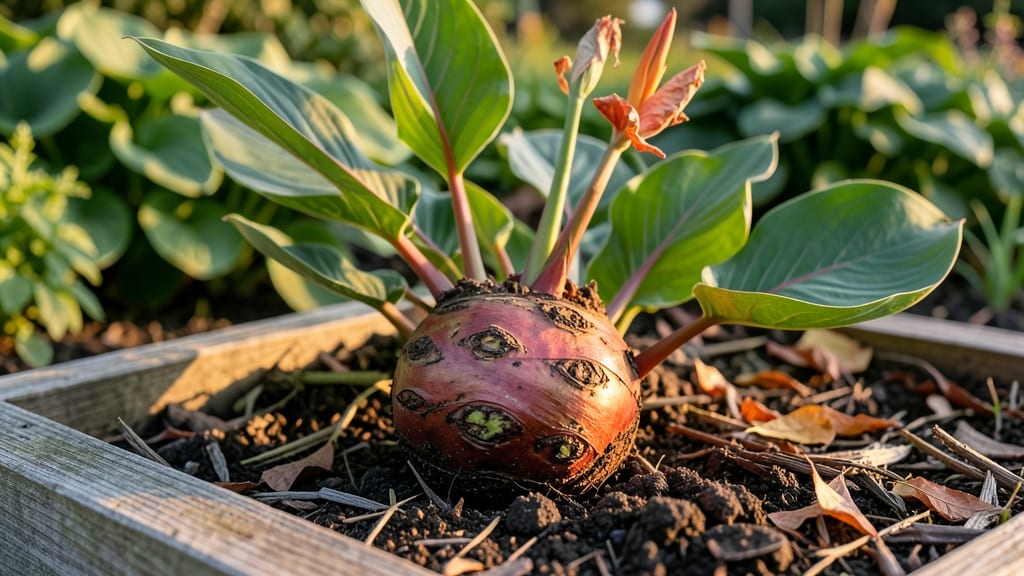
Canna bulbs look like thick, gnarled rhizomes that resemble oversized knobby ginger roots, featuring rough brownish skin and multiple eye-like growth points. These underground stems grow horizontally, typically measuring 2-6 inches wide and 3-8 inches long, with a firm, woody texture when fully mature.
Canna bulbs aren't true bulbs at all—they're actually thickened rhizomes that store energy for the plant's next growing season. 🌱 Unlike potatoes, which have smooth eyes, canna bulbs develop raised nodes where new shoots emerge, often clustered along their uneven surface.
The skin's rough texture helps distinguish them from ginger roots, which are smoother and more tapered. When digging, look for these gnarled stems near where last year's foliage grew, as they'll be most visible just below the soil's surface.
What sets canna bulbs apart is their horizontal growth pattern—they spread outward rather than growing downward like true bulbs. This makes them easier to spot if you know where to dig: follow the path of last season's stems.
The woody texture becomes more pronounced as they age, especially in mature specimens, while younger rhizomes feel softer and more pliable. If you're unsure whether you've found a canna bulb, check for these distinctive growth nodes—those are your telltale sign.
💡 In This Article
- Canna Rhizome Anatomy: Identifying Key Features
- How to Locate Canna Bulbs in Garden Soil
Canna rhizome anatomy: identifying key features
The first thing that sets canna rhizomes apart is their segmented structure—unlike smooth tubers like potatoes or ginger, canna bulbs develop distinct knobby protrusions where new shoots emerge. These growth nodes often appear as raised, irregular bumps along the rhizome's length, sometimes clustered in groups of 3-5.
Under magnification (about 10x), you'll notice the skin has a rough, papery texture with microscopic grooves that create a slightly gritty feel when rubbed between fingers.
What truly distinguishes them from ginger or taro is their horizontal growth pattern and root attachment. Canna rhizomes spread outward in all directions, while ginger grows more vertically with tapered ends.
The roots attach along the bottom of the rhizome rather than at the ends, creating a web-like network that anchors the plant. When cut open, healthy canna rhizomes reveal a moist, pale yellow interior with concentric growth rings—similar to tree rings—that indicate age and storage capacity.
Here's how to test for authenticity: press a finger into the rhizome—if it springs back with a slight resistance (like a firm apple), it's healthy. The eye-like buds (technically called "shoot primordia") are another key feature; they appear as tiny, raised dimples that will sprout leaves when conditions are right.
Unlike potato eyes, these buds are irregularly spaced and often appear in clusters along the rhizome's length rather than in neat rows.
Seasoned gardeners often confuse canna rhizomes with taro roots, but there's a simple test: taro has a smooth, waxy exterior and a dry, crumbly interior when cooked, while canna rhizomes remain moist and firm.
The brownish skin of canna bulbs also develops a leathery quality when mature, unlike the papery skin of ginger. This tougher exterior helps protect against soil-borne diseases—a natural adaptation for tropical plants.
One fascinating detail is how the rhizome's internal moisture distribution changes with maturity. Younger rhizomes have a higher water content (about 80% moisture) and feel softer, while mature specimens drop to 60-70% moisture with a denser, almost fibrous texture.
This moisture shift is why canna bulbs are excellent for energy storage—they can sustain the plant through dry seasons without wilting.
For visual identification, compare these features side-by-side with ginger or taro: canna rhizomes are 2-3 times wider than ginger roots and lack the tapered shape of taro. The rough, knobby surface is your best clue—no other common tuber has this distinctive texture combined with horizontal growth. 🌿