
Plants
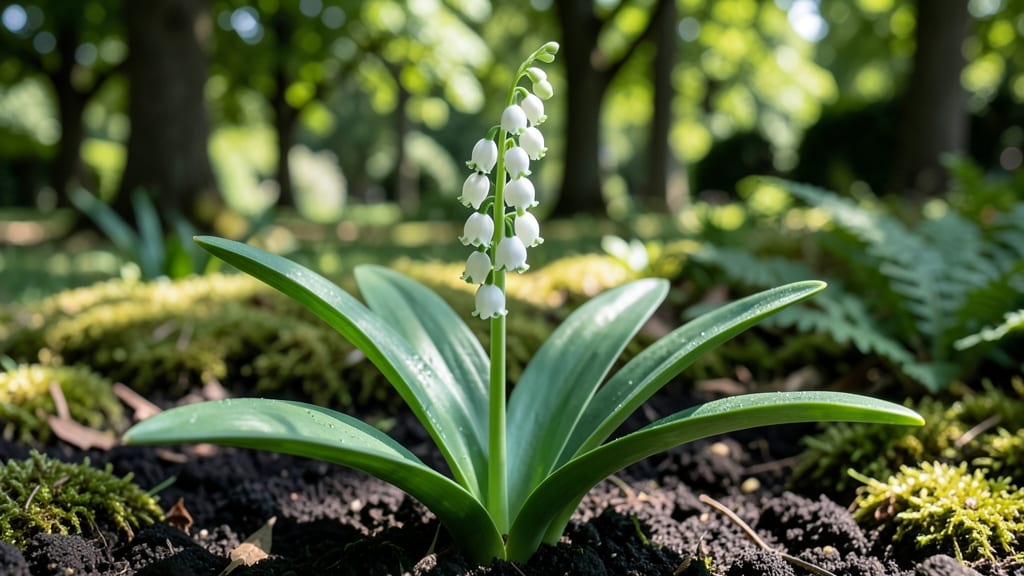
Lily of the valley bulbs look like tiny, flat oval discs about 1 inch wide and 0.5 inches thick, with a thin brown outer coating and a pale, creamy center. These bulbs grow in tight clusters underground, often nestled beneath dense foliage like hostas or ferns in shady garden areas.
Lily of the valley bulbs aren't true bulbs like tulips—they're actually rhizomes, which are more like flattened, horizontal stems with tiny scale-like leaves. 🌿 These underground structures spread slowly, forming dense colonies over time.
The brown outer skin is dry and papery, while the inner layers hold the plant's stored energy for spring growth. If you're digging them up, look for clusters rather than single bulbs, as they often grow in groups of 3-5 connected by thin roots.
One key identifier is their location: these bulbs thrive in partial to full shade, making them common finds under deciduous trees or beneath larger perennials. Early spring or autumn are the best times to spot them, as the foliage dies back, revealing their hiding spots.
Just be cautious—digging too deep can damage the plant's delicate rhizome network, so use a fork or trowel for careful extraction.
💡 In This Article
- Identifying Lily of the Valley Bulbs by Structure and Growth Habits
- Where and How to Find Lily of the Valley Bulbs in Gardens
Identifying lily of the valley bulbs by structure and growth habits
Lily of the valley bulbs aren't true bulbs like tulips or daffodils—they're actually specialized underground stems called rhizomes. These rhizomes are flattened, horizontal structures that grow just below the soil surface, typically measuring about 1 inch wide and 0.5 inches thick.
Unlike true bulbs, which have distinct layers of fleshy scales, lily of the valley rhizomes have a smooth, creamy-white interior with tiny, scale-like leaves arranged in a spiral pattern. The outer skin is dry and papery, often a dull brown color that resembles crumpled parchment.
The rhizomes grow in clusters connected by thin, fibrous roots, forming dense colonies over time. This growth habit explains why you'll often find groups of 3-5 bulbs growing closely together. Each rhizome segment can produce new shoots, allowing the plant to spread slowly but steadily.
The texture of a fresh rhizome is firm yet slightly spongy, with a faint, sweet scent that becomes more pronounced when cut. Unlike true bulbs, these rhizomes lack the strong, pungent aroma of wild garlic or the bitter taste of bluebell bulbs, which helps distinguish them from look-alikes.
Botanically, lily of the valley belongs to the Asparagaceae family, which also includes asparagus and hostas. Its growth habits reflect its woodland origins—it thrives in shaded, moist environments where competition from other plants is minimal.
The rhizomes store nutrients for the plant's spring growth, which is why they're most visible when the foliage dies back in late summer or early autumn.
Unlike tulip bulbs, which are round and segmented, lily of the valley rhizomes are elongated and flattened, resembling small, oval-shaped discs when viewed from above.
One of the most striking differences between lily of the valley and other bulbs is its lack of a true bulb structure. True bulbs, like those of tulips or onions, have concentric layers of fleshy scales that store energy.
Lily of the valley rhizomes, however, are more like flattened stems with tiny, overlapping scales. This structural difference affects how the plant spreads—while tulips grow from individual bulbs, lily of the valley spreads via its rhizome network, creating dense patches over time.
This growth pattern is why you'll often find them growing in tight clusters beneath hostas or ferns.
In woodland gardens, these rhizomes play an ecological role by stabilizing soil and providing early-season forage for wildlife. Their shallow growth habit also makes them vulnerable to disturbance, which is why they're often found in undisturbed areas like forest edges or beneath dense foliage.
If you're identifying them in the wild, look for the characteristic bell-shaped flowers that bloom in late spring—each flower grows on a single stem that emerges directly from the rhizome.
The flowers' sweet fragrance is another key identifier, as it's distinct from the more pungent scents of wild garlic or bluebells.
To further distinguish lily of the valley from look-alikes, consider the following key differences:
- Wild garlic: Bulbs are round and have a strong, onion-like odor when crushed.
- Bluebells: Bulbs are smaller, more spherical, and lack the flattened shape of lily of the valley.
- Snowdrops: Bulbs are teardrop-shaped and have a single, elongated scale.
The rhizomes' creamy-white interior and papery outer skin are unmistakable once you know what to look for. Their delicate, clustered growth pattern is a hallmark of this beloved woodland plant. 🌿