
How To
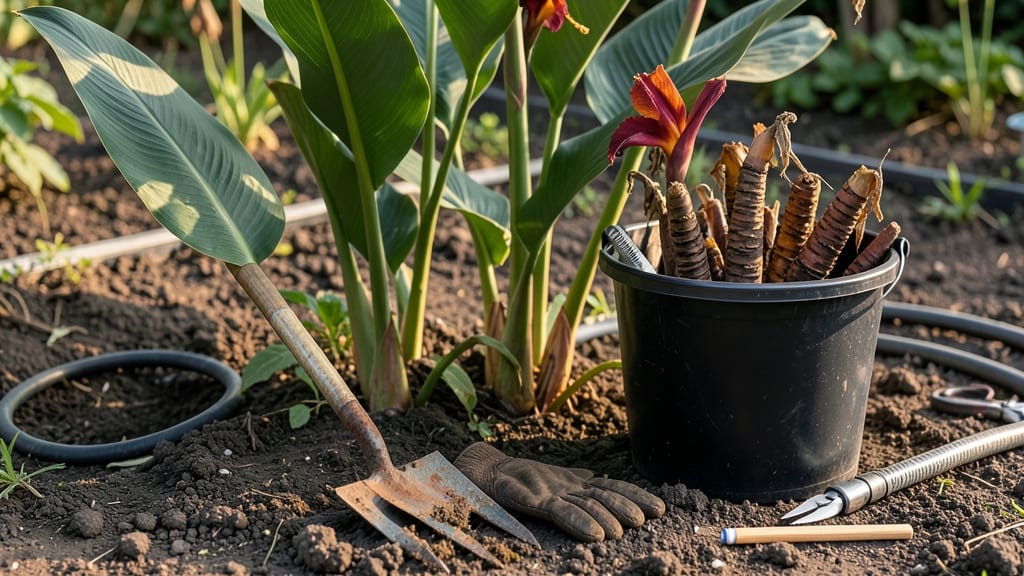
To dig canna bulbs, wait until after the first hard frost when the foliage turns black and dies back completely, usually between late fall and early winter. Soil temperatures should be below 50°F to prevent regrowth and ensure proper dormancy before storing.
Timing matters because canna bulbs enter dormancy when nights grow consistently cold, typically below 50°F for at least a week. 🌱 The blackened foliage signals the plant has redirected nutrients to the rhizomes, making them ready for storage.
In warmer zones (like 9-11), this might be December, while colder zones (3-7) could wait until January. I’ve learned the hard way that digging too early—when soil is still warm—can trigger premature sprouting, leading to rot during storage.
Always wait until the ground feels cold to the touch before lifting those heavy rhizomes.
Once you’ve marked the location, dig carefully with a fork or spade to avoid damaging the bulbs. Let them cure in a dry, shaded spot for a few days before storing in a cool (40-50°F), well-ventilated area with minimal humidity.
This mimics their natural winter conditions and keeps them viable until spring. Pro tip: Label your containers with the variety and digging date—it’s easy to forget which one was your prize-winning ‘Striped Beauty’!
💡 In This Article
- Understanding Canna Bulb Dormancy and Frost Sensitivity
- Zone-Specific Canna Bulb Digging Calendar
Understanding canna bulb dormancy and frost sensitivity
Canna bulbs—technically rhizomes—enter dormancy through a combination of temperature and photoperiod cues. When average nighttime temperatures consistently drop below 50°F for 7-10 days, the plant's metabolic processes shift from growth to survival mode.
This triggers the breakdown of chlorophyll in the leaves, turning them black—a visual cue that the plant has redirected nutrients to the rhizomes. The shorter daylight hours of late fall further accelerate this process, as reduced sunlight signals the plant that winter is approaching. 🌿
Frost acts as the final trigger because it causes cellular damage to the foliage, forcing the plant to focus its remaining energy on preserving the rhizomes underground.
Without this frost signal, canna plants in warmer zones (like Zone 9-11) might remain active well into December, making them vulnerable to rot if dug too early. The rhizomes themselves contain stored starches that fuel regrowth in spring, but these reserves deplete if the plant continues growing during storage.
This is why waiting for complete foliage dieback is critical—it ensures the rhizomes are fully loaded with nutrients.
Premature digging—when soil temperatures are still above 50°F—can have disastrous consequences. In my early gardening days, I dug canna bulbs in Zone 7 in early November, only to find them sprouting and rotting in storage by December.
The warmth triggered premature growth, causing the rhizomes to soften and develop fungal infections. The key is patience: let nature do its work by waiting for the ground to chill naturally.
You'll know it's time when the foliage is crispy to the touch and pulls away easily from the stem. 💫
Another critical factor is the rhizome's natural insulation. When left in the ground, the rhizomes benefit from the insulating effect of soil and mulch, which protects them from extreme cold. Digging too early removes this natural protection, exposing the rhizomes to temperature fluctuations that can stress them.
In colder zones (Zone 3-5), this might mean waiting until January, while in milder zones (Zone 8-11), December is often sufficient. Always check soil temperatures with a thermometer—below 50°F is your target.
What most gardeners don't realize is that canna rhizomes are sensitive to ethylene gas, a natural plant hormone produced during stress or decay. If you dig bulbs when they're still partially active, the ethylene produced by dying foliage can accelerate rot in storage.
This is why it's essential to let the foliage die back completely before digging—it reduces ethylene production and gives the rhizomes a cleaner start to dormancy. Think of it like giving your cannas a proper "goodbye" before their winter nap. ✨
Finally, consider the hardiness zone nuances. In Zone 6, for example, the first hard frost might occur in late October, but the soil may not drop below 50°F until mid-November. This delay is crucial because the rhizomes need time to fully absorb nutrients from the dying foliage.
If you dig too soon, you're essentially starving the rhizomes of their winter food supply. Always prioritize soil temperature over frost dates—it's the more reliable indicator of dormancy readiness.