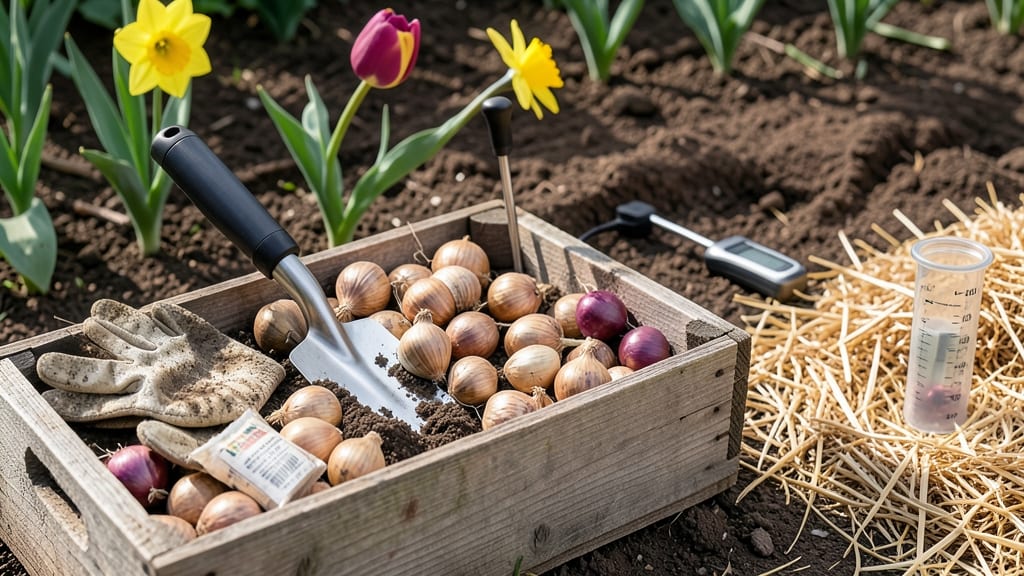
Planting bulbs in North Carolina at the right time ensures vibrant blooms next spring, whether you’re growing tulips, daffodils, or hyacinths 🌷.
North Carolina’s unpredictable winters can leave gardeners guessing whether their tulips, daffodils, or crocuses will bloom—or even survive. But timing your bulb planting to match NC’s chill requirements is the secret to vibrant, reliable spring displays.
Fall is the best window for most bulbs, with October through December offering ideal conditions before the ground freezes. Early spring planting (February–March) works too, as long as the soil is workable and frost isn’t lurking.
Below, I break down the exact planting timeline for NC’s USDA zones 6a–8b, plus pro tips for coastal, Piedmont, and mountain microclimates to maximize your blooms.
🌷
When to Plant Bulbs (General) (General)
Jan
🌱
Feb
🌷
Mar
🌷
Apr
🌱
May
🌸
Jun
☀️
Jul
☀️
Aug
☀️
Sep
🌱
Oct
🌷
Nov
🌷
Dec
🌷
NC’s ideal bulb-planting timeline by chill Zone and variety
North Carolina’s USDA zones 7a-8b create unique challenges for bulb gardeners, where mild winters can confuse traditional planting rules. Unlike colder climates, NC’s temperate winters demand precise timing to ensure bulbs get the chill period they need without rotting from wet soil.
The key? Understanding whether your bulbs are cool-season (like tulips) or warm-season (like dahlias) and adjusting for your specific microclimate.
For coastal NC (Zone 8a-8b), where winters are the mildest, bulbs often need artificial chill treatment or earlier planting. In contrast, mountain regions (Zone 7a) can handle traditional schedules but may face earlier frost risks.
Let’s break down the perfect planting windows for your zone and bulb type to guarantee those showstopping spring blooms.
🌱 Pro Tip: Use a soil thermometer to confirm when soil temps drop below 60°F—the ideal trigger for fall planting. In warmer zones, this might be as late as December.
| Bulb Type |
Chill Requirement |
Zone 7a (Mountains) |
Zone 7b (Piedmont) |
Zone 8a-8b (Coastal) |
Special Notes |
| Tulips |
Moderate (6-8 weeks below 40°F) |
Oct 15 - Nov 15 |
Nov 1 - Nov 30 |
Dec 1 - Jan 15 (or refrigerate bulbs) |
Plant shallow (6") in well-draining soil |
| Daffodils |
Low (4-6 weeks below 40°F) |
Oct 1 - Nov 15 |
Nov 1 - Dec 10 |
Dec 1 - Jan 31 |
Deer-resistant; great for woodland gardens |
| Hyacinths |
Moderate (8-10 weeks below 50°F) |
Oct 1 - Nov 1 |
Oct 15 - Nov 15 |
Nov 1 - Dec 1 (or chill indoors) |
Plant in sheltered spots to prevent wind damage |
| Crocuses |
Minimal (2-4 weeks below 40°F) |
Oct 15 - Nov 30 |
Nov 1 - Dec 15 |
Dec 1 - Jan 31 |
Early bloomers; ideal for winter interest |
| Dahlias |
None (tropical) |
After last frost (April 15) |
After last frost (April 1) |
After last frost (March 15) |
Plant tubers in warm soil; stake heavily |
| Cannas |
None (tropical) |
After last frost (April 15) |
After last frost (April 1) |
After last frost (March 1) |
How to time planting for NC’s unpredictable winters: pro tips
North Carolina’s winters are famously fickle—one year’s early frost can turn into the next year’s balmy December. To ensure your tulips, daffodils, and hyacinths bloom reliably, I’ve learned to adapt my planting strategy.
The key is working with NC’s variable chill requirements and microclimates—whether you’re in the frost-prone mountains or the milder coastal plains.
Instead of relying on a fixed calendar, I focus on soil temperature and chill hours. Most spring-flowering bulbs need 6-8 weeks of cold to trigger blooming, but NC’s zones 7a-8b can confuse things.
For example, a tender hybrid tulip might need extra protection in the Piedmont, while hardy daffodils can handle the mountains’ chill. Here’s how I adjust my timing:
1. Plant when soil hits 60°F
Use a soil thermometer—this ensures bulbs root before winter sets in. In NC, this typically means October for Zone 7a and November for Zone 8b.
2. Layer bulbs for staggered blooms
Plant early bloomers (like crocuses) first, then mid-season (tulips), and finally late bloomers (alliums). This extends your spring color show by 4-6 weeks.
3. Mulch with 3-4 inches of straw
Protects bulbs from freeze-thaw cycles and insulates roots. Remove mulch in early spring to prevent rot.
4. Use microclimates for tender bulbs
Plant dahlias or cannas near south-facing walls or under porch eaves to add 5-10°F of warmth.
5. Check NC State Extension for local frost alerts
Their frost date maps help adjust planting 2-3 weeks earlier or later based on your county’s history.
For tropical bulbs like caladiums or elephant ears, I wait until after the last frost (usually mid-April in the mountains) and pre-chill them in the fridge for 6-8 weeks to mimic winter. This trick works wonders for reliable blooming in NC’s warm winters.
One year, I planted tulip bulbs in early November in Raleigh, only for a late December thaw to sprout them too soon. I learned to delay planting by 2 weeks in unpredictable years.
Now, I monitor weather forecasts and adjust—sometimes even covering bulbs with frost cloth if a cold snap hits.
Remember, depth matters: Plant bulbs 6-8 inches deep (twice their height) for insulation. In sandy coastal soils, add a layer of compost to retain moisture, while clay soils in the Piedmont benefit from raised beds to prevent waterlogging.
With these tweaks, even NC’s unpredictable winters can’t stop your garden from bursting into color.
★★★★★4.7(4 reviews)
|