
Plants
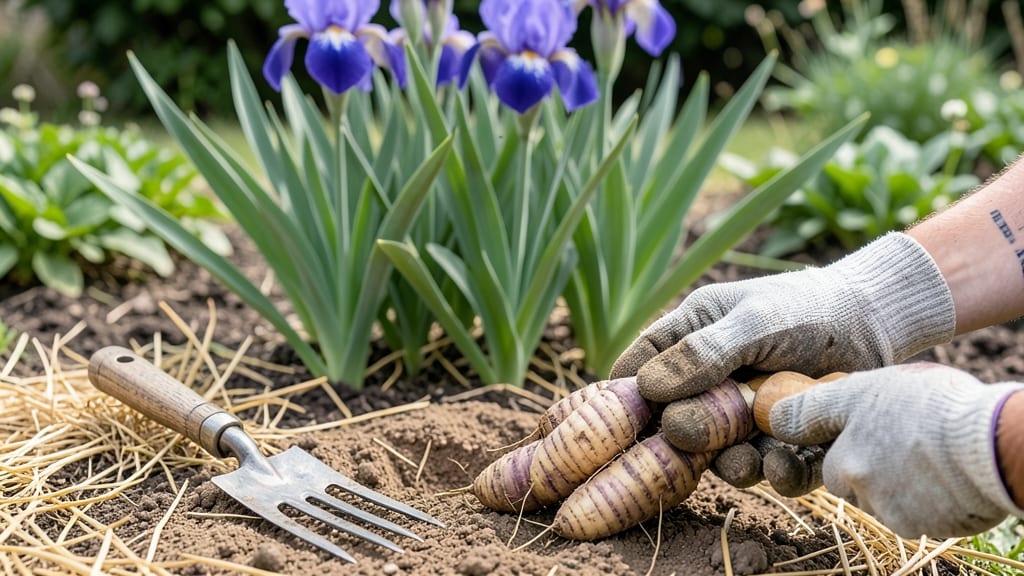
To plant iris bulbs in Washington, aim for fall (September to November) or early spring (March to April) — a window that aligns with soil temperatures and frost-free periods.
Timing is everything when planting iris bulbs in Washington’s unpredictable climate—get it wrong, and you’ll miss those stunning spring blooms entirely. But with the right frost-date formula, you can ensure your irises thrive year after year.
Washington’s USDA zones 6b-9a create regional differences: Western WA’s cooler maritime climate allows for earlier fall planting, while Eastern WA’s drier air means waiting until late fall or early spring. I’ll break down the exact frost-date math so you never guess again.
From soil prep to post-planting care, you’ll discover the perfect timing for your location, plus common mistakes that sabotage even the best-intentioned gardeners.
Washington’s frost-date formula for planting iris bulbs
Planting iris bulbs in Washington requires precision timing to account for the state’s diverse climate zones and unpredictable frost patterns. Iris rhizomes need 6-8 weeks to establish roots before winter dormancy, but planting too early risks rot, while planting too late delays spring blooms.
The key is using local frost dates and soil temperatures to create a personalized planting window.
Washington spans USDA Zones 4-8, with dramatic differences between the maritime West (Seattle) and continental East (Spokane). In Zone 6b (Seattle), average last frost dates fall around March 15, while Zone 7a (Spokane) sees frost until April 15.
Soil temperatures below 50°F can stunt root growth, making timing critical for success.
| Region | USDA Zone | Last Frost Date | Ideal Planting Window | Soil Temp Requirement |
|---|---|---|---|---|
| Western WA (Seattle) | Zone 8a-9a | March 15 | September 15 - October 15 | 50-60°F |
| Puget Sound | Zone 7b-8b | March 22 | September 1 - October 30 | 50-60°F |
| Eastern WA (Spokane) | Zone 6b-7a | April 15 | October 1 - November 15 | 45-55°F |
| Central WA (Yakima) | Zone 7a-7b | April 1 | September 30 - October 30 | 48-58°F |
To calculate your exact planting window, start by finding your local last frost date using resources like the National Oceanic and Atmospheric Administration (NOAA) or local gardening extension services. Subtract 6-8 weeks from this date to determine your ideal fall planting window.
For example, if your last frost is April 1, plant between September 30 and October 30.
Soil temperature is equally critical. Iris rhizomes need soil to be between 45-60°F at planting time. Use a soil thermometer to check temperatures at a 4-inch depth. If soil is too cold, wait 1-2 weeks.
In warmer regions like Zone 8-9, you can also plant in early spring (March-April), but avoid planting when soil temperatures exceed 70°F.
For precision timing, I recommend checking Washington’s microclimates. Urban areas like Seattle stay warmer due to the urban heat island effect, while rural areas near Mount Rainier may have later frost dates.
Adjust your window by 1-2 weeks if your garden sits in a frost pocket or near large bodies of water.
Once you’ve determined your window, prepare your site by amending the soil with compost or sand to improve drainage—iris rhizomes rot in soggy soil. Plant rhizomes with their top half exposed and roots covered with 1-2 inches of soil.
This positioning ensures proper airflow and prevents waterlogging during Washington’s rainy fall season.
After planting, water lightly to settle the soil but avoid overwatering, which can cause rhizomes to suffocate. Mulch with 2-3 inches of straw to insulate roots during winter.
In Zone 4-5 areas (like northern WA), add an extra layer of mulch to protect against early frosts that can damage emerging shoots in spring.
Timing your iris planting with Washington’s frost-date formula guarantees stronger root systems and more vibrant spring blooms. By aligning your schedule with local frost patterns and soil temperatures, you’ll avoid the common pitfalls of rotten rhizomes or missed blooms.
Start with your region’s data, then fine-tune based on your garden’s microclimate for perfect results every season.
Best months to plant iris bulbs by Washington region
Washington’s diverse climate means your iris planting timeline should depend on whether you’re in the cooler, maritime west or the drier, continental east. In the Puget Sound area, milder winters let you plant later, while Eastern WA’s earlier frosts demand an earlier start.
Let’s break down the best months for each region to maximize your irises’ chances of thriving.
For Western WA (Seattle, Olympia, Bellingham), aim to plant iris rhizomes between mid-September and mid-November. The cooler, wetter climate allows for a longer window, but avoid planting after the first frost.
In Eastern WA (Spokane, Wenatchee, Yakima), the drier air and earlier frosts mean you should plant between mid-August and mid-October to give roots time to establish before winter.
| Region | Best Planting Window | Key Climate Factor | Microclimate Adjustments |
|---|---|---|---|
| Western WA (Puget Sound) | Mid-September to Mid-November | Cooler, wetter winters | Add 2 weeks if in sheltered valleys |
| Eastern WA (Spokane Plateau) | Mid-August to Mid-October | Drier, earlier frosts | Shift earlier if high elevation |
| Puget Sound Lowlands | Late September to Early November | Maritime influence | Extend to December in mild microclimates |
If you miss the fall window, don’t worry—early spring planting works too! In Western WA, plant between March 15 and April 15, while Eastern WA gardeners should aim for March 1 to April 1.
Spring planting works best in well-draining soil, as cooler temps reduce the risk of bulb rot compared to summer heat.
For Puget Sound gardeners, consider microclimates like urban heat islands or sheltered gardens. These areas can extend your planting window by 2-4 weeks.
For example, a south-facing slope in Seattle might support planting until late November, while a Spokane valley could allow for early August starts in protected spots.
Always check your local USDA zone (most of WA falls in Zones 6b-8a) and adjust for elevation changes. High-elevation areas like Mount Rainier foothills may need a 2-week earlier start.
Use a soil thermometer to confirm temps are below 60°F before planting—this signals roots to settle in for winter.
Pro tip: Mark your calendar for 6-8 weeks before your area’s first frost. This gives irises enough time to establish roots before winter dormancy. In Western WA, that’s typically mid-November, while Eastern WA often sees frost by mid-October. 🌸