
Vegetables
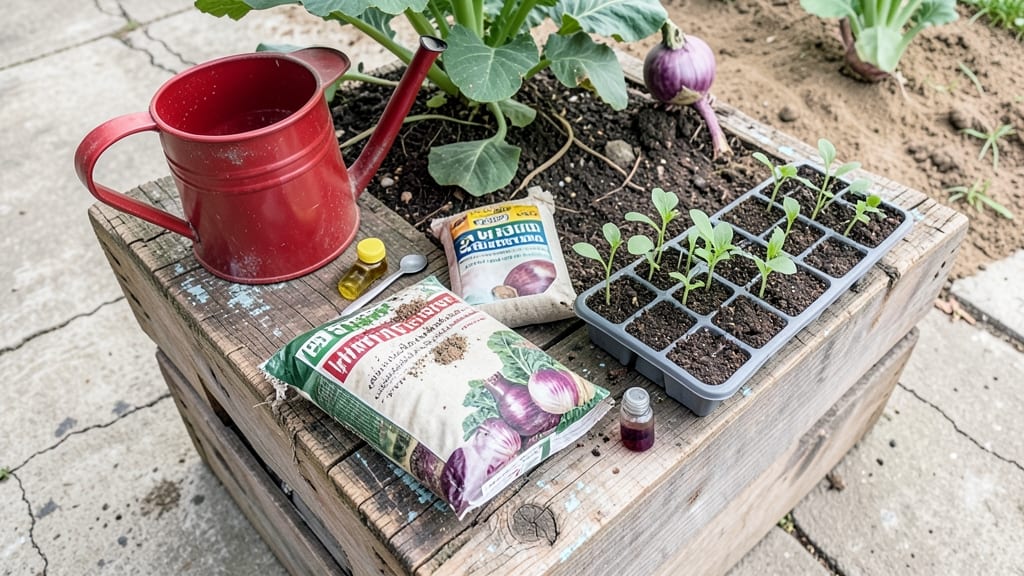
Your kohlrabi plants are throwing a tantrum by refusing to not form bulbs, and cold stress is the usual culprit. 🌱 I’ve seen this happen when days stay below 50°F for too long, or when the soil just isn’t right.
The plant prioritizes leaf growth over bulb formation when conditions aren’t ideal, leaving you with lush greens but no harvestable stems.
The fix starts with soil temperature—bulbs form best when soil stays between 60-70°F. Amend heavy clay or sandy soil with compost to improve moisture retention, and avoid overwatering, which dilutes nutrients.
If your garden runs cool, try black plastic mulch or a low tunnel to warm the roots. Even a 10°F difference can trigger bulb development.
Once you adjust the soil and temperature, watch for crowding—plants need 12-18 inches of space to bulb properly. Thin seedlings early, and side-dress with nitrogen-free fertilizer (like fish emulsion) to encourage stem thickening. Within 2-3 weeks, you’ll see those knobby bulbs start to swell, ready for harvest.
If pests like cabbage worms or aphids are stripping leaves, they force the plant to focus on regrowth instead of bulbing. A row cover or neem oil spray can turn things around fast.
The key? Act before the plant gives up entirely—kohlrabi bulbs form fastest when the plant feels secure, not stressed.
📚 In This Guide
- What you need
- Instructions
- Tips and common mistakes
- Wrapping up and next steps
What you need
- ● Kohlrabi seeds or seedlings: Choose hybrid varieties like ‘Purple Vienna’ or ‘White Vienna’ for better bulb formation.
- ● Quantity: 1–2 seeds per planting hole (or 6–12 seedlings for a 3’ x 3’ plot).
- ● Well-draining soil mix: Ideal pH: 6.0–6.8 (test with a soil pH kit 🌡️).
- ● Amend with compost (2–3 inches mixed into the top 12” of soil) or aged manure (1–2 lbs per 10 sq ft).
- ○ Optional: Add perlite or vermiculite (10–20%) for looser texture.
- ● Fertilizer: Balanced fertilizer (e.g., 10-10-10) at planting (1 tbsp per hole).
- ● Low-nitrogen supplement (e.g., 5-10-10) when bulbs start forming (side-dress lightly).
- ● Cold-frame or row covers: Floating row covers (black or clear) or a mini cold frame (for temperature control).
- ○ Optional: Thermometer (soil probe type) to monitor temps (aim for 50–65°F for bulb development).
- ● Watering supplies: Drip irrigation or soaker hose (to avoid wetting leaves).
- ● Watering can with a fine rose (for seedlings).
- ● Garden tools: Trowel (for transplanting seedlings).
- ● Pruners (to trim yellow leaves or side shoots).
- ● Gloves (for handling prickly stems).
- ● Mulch: Straw or shredded leaves (1–2” layer) to retain moisture and regulate soil temp.
- ● Epsom salt: 1 tbsp dissolved in a gallon of water (spray foliage if magnesium deficiency is suspected).
- ● Reflective mulch: Aluminum foil or silver plastic (to deter pests and boost bulb growth).
- ● Garden journal: Track planting dates, temps, and fertilizer applications to spot patterns!
Diagnosing your kohlrabi: how to fix bulb formation
Kohlrabi refuses to bulb when basic needs go unmet—here’s how to troubleshoot and correct it.
🌱 Step 1: Verify Your Variety and Planting Time
Not all kohlrabi varieties produce bulbs—check your seed packet. Purple Vienna and White Vienna are classic bulb-forming types, while some modern varieties focus on leaf production. Planting too early in cool weather can also stall bulb development, as kohlrabi needs 50-60°F soil temperatures to initiate swelling.
If you’re growing from seed, germination happens best at 60-70°F—colder soils delay everything. I’ve seen seedlings emerge fine in 50°F but refuse to bulb until soil warms. Wait until nighttime temps stay above 55°F before planting, or use black plastic mulch to warm the soil faster.
☀️ Step 2: Confirm Light and Temperature Conditions
Kohlrabi bulbs form best with 12-14 hours of daylight and daytime temps between 60-70°F. If your plants are leggy or flowering prematurely, they’re either getting too much heat or not enough light. Move them to a spot with full sun (6+ hours daily) and watch for the first signs of swelling—usually 3-4 weeks after transplanting.
Here’s the thing—if your garden runs hotter than 80°F, bulb formation slows or stops. Provide afternoon shade with floating row covers or shade cloth if needed. I’ve had kohlrabi bolt in 85°F+ heat, and once they flower, the bulbs stay small and tough.
💧 Step 3: Adjust Watering and Soil Moisture
Kohlrabi bulbs swell when soil moisture is consistently even, not fluctuating. Let the top 1 inch of soil dry between waterings, then water deeply to encourage steady growth. Too little water stresses plants, while too much causes rot and prevents bulbing. You’ll know you’re on track when the soil feels like a damp sponge—firm but not soggy.
I always water in the morning so excess moisture evaporates by evening. Avoid overhead watering once seedlings emerge—wet leaves attract pests like flea beetles, which chew holes and stunt bulb development. Use a soaker hose or drip irrigation instead.
🪴 Step 4: Check Soil Fertility and pH Balance
Kohlrabi thrives in fertile, slightly acidic soil (pH 6.0-7.0). If your soil is heavy clay or sandy, bulbs won’t form properly. Amend with 2-3 inches of compost before planting, and side-dress with balanced fertilizer (10-10-10) when plants are 4-6 inches tall. Too much nitrogen promotes leafy growth over bulbs, while phosphorus and potassium encourage swelling.
Test your soil’s pH—if it’s below 6.0, add lime; if above 7.0, use sulfur. I’ve seen kohlrabi refuse to bulb in alkaline soil until I adjusted the pH. Healthy bulbs should feel firm and smooth, not spongy or cracked.
✂️ Step 5: Thin and Prune for Optimal Growth
Overcrowded kohlrabi plants compete for nutrients and won’t bulb properly. Thin seedlings to 12-18 inches apart when they’re 2-3 inches tall, leaving the strongest stems. If you’re growing in containers, limit to 1 plant per 12-inch pot—they need space to swell.
Remove any flower stalks immediately—they signal the plant to stop bulbing and go to seed. Pinch off side shoots too, as they divert energy away from bulb formation. You’ll see the difference within 10-14 days of proper thinning and pruning.
Tips & tricks for perfect kohlrabi bulb formation
When your kohlrabi refuses to bulb, it's often the small details that make all the difference. Here's what nobody tells you about growing these stubborn root vegetables.
Variety Matters: Not all kohlrabi seeds produce bulbs—double-check your seed packet for varieties like Purple Vienna or White Vienna. I've grown leaf-focused varieties by accident and wondered why my plants stayed skinny and green. The difference between bulb and leaf production comes down to genetics, so start with the right seeds if bulbs are your goal.
Soil Temperature Secret: Those 50-60°F soil temperatures in Step 1 aren't just suggestions—they're critical thresholds. I learned this the hard way after planting in 45°F soil and getting nothing but leaves. Use a soil thermometer if you're unsure, or wait until nighttime temps consistently stay above 55°F before planting. Black plastic mulch can add 5-10°F to soil warmth if you're in a cool climate.
Light and Heat Balance: The 12-14 hours of daylight mentioned in Step 2 isn't about sunlight duration—it's about photoperiod sensitivity. Kohlrabi needs this light exposure to trigger bulb formation. If your plants are leggy, they're either getting too much heat or not enough light. I've seen kohlrabi bolt in 85°F+ heat, so afternoon shade cloth becomes essential in hot climates. Watch for the first signs of swelling around 3-4 weeks after transplanting—that's your cue everything's on track.
Watering Precision: The 1-inch dry topsoil rule in Step 3 is non-negotiable for bulb development. Too much water causes rot, while too little stresses the plant. I've had success with drip irrigation on a timer set for morning watering—this maintains that perfect "damp sponge" consistency without wet leaves. Remember, flea beetles love damp foliage, and they'll chew your plants into Swiss cheese if you're not careful.
Pro Tips for Why Is My Kohlrabi Not Forming Bulbs
- When your kohlrabi refuses to bulb, it's often the small details that make all the difference.
- Variety Matters: Not all kohlrabi seeds produce bulbs—double-check your seed packet for varieties like Purple Vienna or White Vienna.
- Soil Temperature Secret: Those 50-60°F soil temperatures in Step 1 aren't just suggestions—they're critical thresholds.
Frequently asked questions
about kohlrabi bulb formation—here’s what you need to know!Why does my kohlrabi keep growing tall but not bulbing?
Kohlrabi needs cold stress (40–50°F) for 2–3 weeks to trigger bulb formation. If temps stay warm, it’ll focus on leafy growth instead. Try planting earlier in spring or later in fall, or use shade cloth to slow leaf growth.
How long does it take for kohlrabi bulbs to form?
Bulbs usually form in 4–6 weeks after planting, but timing depends on variety and weather. Check your seed packet—some types (like ‘Purple Vienna’) bulb faster than others. Harvest before bulbs get woody or bitter!
Can I force bulb formation if my plants are already leafy?
Yes! If your plants are leggy, reduce water slightly and expose them to cooler temps (40–50°F) for 1–2 weeks. Avoid over-fertilizing with nitrogen—it encourages leaves over bulbs. Mulch with straw to regulate soil temps.
What’s the best kohlrabi variety for small spaces or containers?
Look for compact varieties like ‘Dwarf White Vienna’ or ‘Gourmet’—they bulb reliably even in pots (5+ gallons). Avoid giant types like ‘Kossak’ if space is tight; they need more room and may skip bulbing in containers.
My kohlrabi bulbs are splitting or cracking—what’s wrong?
Splitting happens when bulbs grow too fast due to too much water or uneven soil moisture. Keep soil consistently moist (not soggy) and harvest bulbs when they’re firm but still tender (3–4 inches wide). Avoid heavy watering before harvest!
Can I still eat kohlrabi if it doesn’t bulb?
Leafy kohlrabi is edible and nutritious—just harvest the stems and young leaves like a mild cabbage. They’re great in salads, stir-fries, or roasted. Bulb formation is ideal, but don’t waste leafy plants!
Wrapping up and next steps
Don’t let a few missed bulbs discourage you—kohlrabi is still a rewarding (and delicious!) crop, even if it leans toward leafy growth. 🌱 The key is patience, experimentation, and tweaking your approach based on light, soil, and timing.
Try adjusting one variable at a time—like adding a cold snap or enriching your soil—and soon, you’ll be harvesting those crisp, bulbous beauties!
Ready to take the next step? Plant a small test batch with these tips, and track what works best for your climate. Happy growing—your future kohlrabi bulbs are waiting!