
Orchid Care
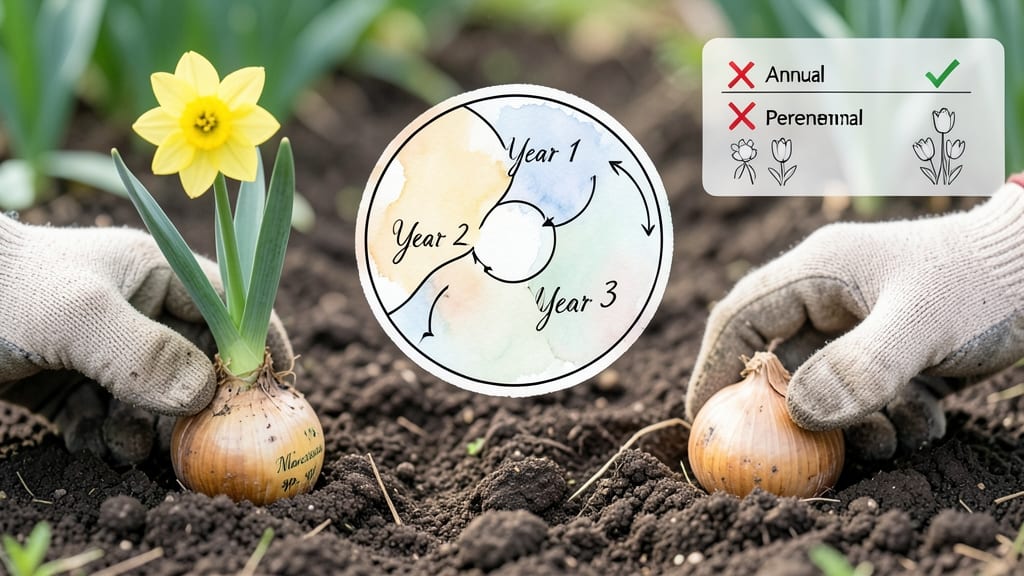
Bulbs are perennial plants that regrow each season from the same underground storage structure, though some may die back above ground annually while their roots persist underground for years.
Bulbs are perennial plants because their underground storage structures—like tunicate bulbs (tulips) or rhizomes (irises)—store energy to regrow year after year. 🌱 Unlike true annuals, which complete their life cycle in one season, bulbs enter dormancy above ground but keep their roots alive underground, ready to sprout again when conditions improve.
This makes them perfect for gardeners who want seasonal color without replanting every year.
What sets bulbs apart is their ability to store nutrients in specialized underground organs. For example, daffodils and hyacinths store energy in bulb scales, while crocuses use corms. This storage system lets them survive harsh winters or dry summers, then burst back into bloom when the time is right.
Here's a pro tip: Many gardeners plant bulbs in layers—adding new bulbs each fall—to create continuous blooms from early spring through late summer. This works because bulbs like tulips and alliums often flower at different times, giving you a staggered display.
Just remember, some bulbs (like gladiolus) are technically perennial but perform better as annuals in colder climates.
💡 In This Article
- How Bulb Life Cycles Differ From Annuals and Perennials
- Best Bulb Planting Strategies for Year-Round Growth
How bulb life cycles differ from annuals and perennials
Bulbs belong to a unique category of perennials because they rely on specialized underground storage organs—like tunicate bulbs (tulips), scaly bulbs (onions), or rhizomes (irises)—to survive seasonal changes.
Unlike true perennials that regrow from the same root system year after year, bulbs store energy in concentrated layers (scales) that allow them to enter dormancy above ground while keeping their core alive underground.
This is why you’ll often see a tulip bulb’s foliage die back in summer, only to re-emerge the following spring from the same dormant structure. 🌱
The key difference from annuals lies in their storage mechanism. Annuals complete their entire life cycle in one season—growing, flowering, producing seeds, and dying—while bulbs pause growth during unfavorable conditions but retain their ability to regenerate.
For example, a daffodil bulb planted in fall can remain dormant for months, then sprout again when temperatures rise. This storage system allows bulbs to persist for 5-10 years or even longer with proper care, unlike annuals that must be replanted each year.
What makes bulbs fascinating is their dormancy strategy. Many bulbs, like hyacinths, enter a resting phase after flowering, where their aboveground parts wither but their underground storage organs remain active. This is different from true perennials, which often maintain some green growth year-round.
The bulb’s ability to "reset" its energy reserves each season is what gives gardeners that reliable, year-after-year blooms—think of the 3-4 inch tulips that return faithfully every spring after their first planting.
Climate plays a huge role in how bulbs behave. In colder regions, bulbs like crocuses need a period of cold (40-50°F) to break dormancy, while tropical bulbs (like rain lilies) thrive in warm, humid conditions.
This adaptability is why bulbs can be perennial in one zone but act like annuals in another—like gladiolus, which dies back in freezing winters but regrows from its corm in milder climates.
Here’s what most gardeners overlook: Bulbs often need a 6-8 week period of cool soil temperatures to properly store energy for the next season. Planting them too late in fall (when soil is still warm) can trick the bulb into thinking it’s time to grow, depleting its reserves before winter.
This is why fall planting (6-8 weeks before first frost) is critical for perennial performance.
Consider the lily-of-the-valley as an example. Its rhizomes spread underground, creating new growth points each year without ever fully dying back. This contrasts with true perennials like hostas, which regrow from the same crown annually.
The bulb’s underground storage gives it a survival advantage in harsh conditions, making it a gardener’s secret weapon for low-maintenance beauty. 💫