
Companion Plants
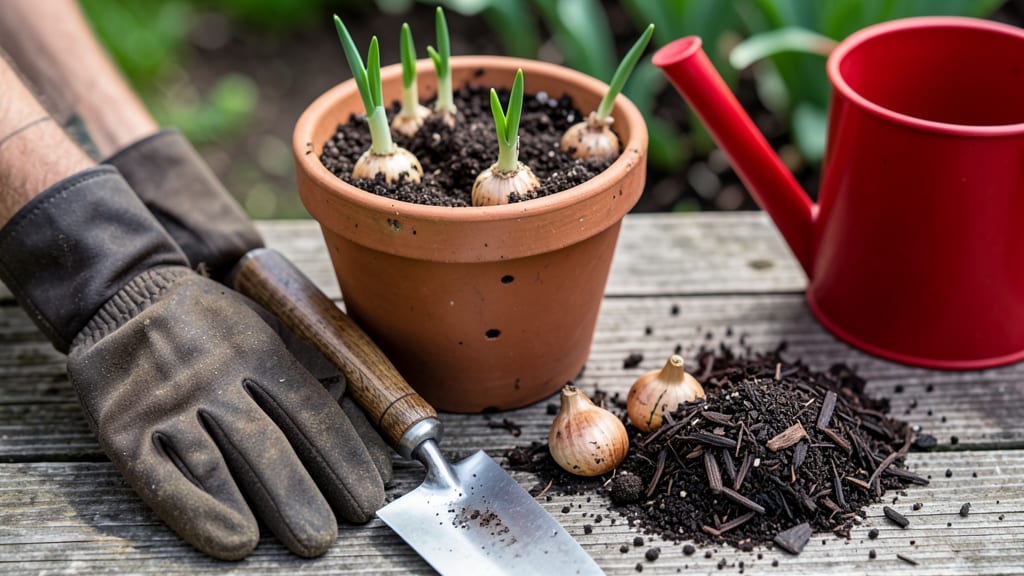
You can plant tulip bulbs in pots in spring, but they'll likely need artificial chilling first to mimic winter dormancy. The best approach is to plant bulbs in fall for natural cold exposure, or force them indoors in late winter using a refrigeration process before moving them outside. Always use containers with drainage holes and bright, indirect light.
Tulips are finicky about timing because they rely on vernalization—a cold period that triggers blooming.
When you skip this step, bulbs may sprout but produce weak stems or no flowers at all. 🌱 I've had success forcing bulbs in paper bags with moist peat moss in the fridge for 8-12 weeks before planting, which tricks them into thinking winter's passed.
The key is patience: spring-planted bulbs often bloom later or not at all compared to their fall-planted counterparts.
For container gardening, choose pots at least 6 inches deep with drainage holes to prevent rot. A mix of potting soil and perlite (60/40 ratio) works best, and place your pots in a sunny windowsill or under grow lights once sprouts appear.
Remember, tulips are temporary perennials—they'll fade after blooming, but you can save the bulbs for next year's planting if you let the foliage die back naturally.
💡 In This Article
- Why Tulip Bulbs Need Cold Dormancy Before Spring Planting
- Step-by-Step Guide to Forcing Tulip Bulbs in Pots for Spring Blooms
Why tulip bulbs need cold dormancy before spring planting
Tulip bulbs rely on a biological process called vernalization, where exposure to cold temperatures (typically 35-45°F for 12-16 weeks) triggers the production of flowering hormones. Without this cold period, the bulbs remain in a dormant state, unable to initiate the complex biochemical pathways that lead to bloom formation.
Think of it like winter hibernation for bulbs—just as bears need cold months to prepare for spring, tulips need their chilling period to "wake up" properly.
The science behind this involves florigen, a protein that acts as a messenger to signal flowering. Cold temperatures break down inhibitory compounds in the bulb, allowing florigen to accumulate and activate genes responsible for flower development.
When you skip this step, the bulbs may sprout leaves but often produce weak stems or no flowers at all. I've seen bulbs forced without chilling grow to 12 inches tall with just a tiny bud—or none—while properly chilled bulbs reach 18-24 inches with vibrant blooms.
Artificial chilling mimics nature's winter conditions by placing bulbs in a cool, dark environment (like a refrigerator's crisper drawer) with 40-45°F temperatures and 70-80% humidity. The key is consistency—fluctuating temperatures can confuse the bulbs and delay or prevent flowering.
Use a thermometer to monitor conditions, as fridge temperatures often vary. For best results, start chilling bulbs 8-12 weeks before your target planting date, giving them enough time to complete their dormancy cycle.
What most gardeners don't realize is that tulips are temporary perennials—they bloom spectacularly once but rely on proper dormancy to store energy for next year. Skipping cold exposure weakens the bulb's ability to replenish nutrients, leading to smaller blooms or no flowers in subsequent years.
Even if you're planting in pots, this rule applies: bulbs need their winter "reset" to perform at their best. 🌱
For spring planting, you can use a two-step process: first chill the bulbs indoors, then plant them in pots with well-draining soil. The chilling period ensures the bulbs are ready to grow when warmer temperatures arrive.
Without it, you're essentially asking the bulb to skip its biological preparation phase—like trying to run a marathon without training first. The results are predictable: disappointment.
Consider this comparison: a properly chilled tulip bulb will produce 3-5 flowers per stem, while an unchilled bulb might produce just 1-2 weak blooms or none at all. The difference comes down to whether the bulb has undergone the necessary metabolic changes to support full flowering.
This is why professional bulb growers use climate-controlled cold storage facilities—precision matters when it comes to vernalization.
If you're forcing bulbs for indoor blooms (like holiday gifts), the chilling process is even more critical. Without it, the stems will grow leggy and weak, unable to support the weight of the flowers.
The secret to success lies in patience and attention to detail—recreating nature's conditions in your own space. 💫