
Advice
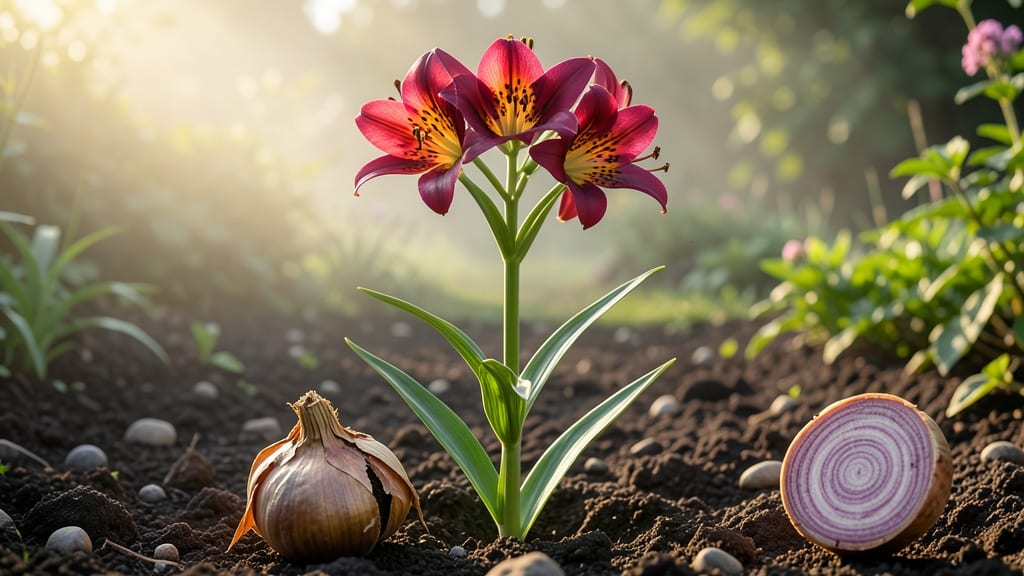
Lilies don't have true bulbs like tulips or daffodils; instead, they grow from thick, fleshy rhizomes or scales that store nutrients underground, which allows them to thrive year after year.
Lilies rely on rhizomes—horizontal, tuber-like stems—that spread just below the soil surface, storing energy for regrowth. Unlike bulbs, which have concentric layers, these rhizomes develop scales (modified leaves) that pack nutrients densely.
This unique structure explains why lilies return reliably each season, even in colder climates. 🌱 I've learned that handling these rhizomes with care during planting prevents damage, as they're more delicate than traditional bulbs.
What sets lilies apart is their perennial nature—their rhizomes continue growing year after year, while bulb plants like tulips often need replanting. This makes lilies a low-maintenance choice for gardeners who want long-term blooms with minimal effort. Just be mindful of their shallow root systems when mulching or weeding.
💡 In This Article
- Lily Root Systems: Rhizomes vs Bulbs Explained
- Planting and Caring for Lily Underground Growth
Lily root systems: rhizomes vs bulbs explained
Lilies don't grow from bulbs like tulips or onions but instead develop from rhizomes—thick, horizontal underground stems that store nutrients. These rhizomes resemble gnarled, knobby fingers about 1-2 inches thick and 3-6 inches long, packed with energy reserves.
The key difference lies in their structure: bulbs have concentric layers (like an onion), while lily rhizomes grow outward, forming clusters of fleshy scales that function like leaves but store starches and sugars for regrowth. 🌱
These scales contain 50-70% starch content by weight, far exceeding the 15-25% starch found in tulip bulbs. The rhizome's shallow placement—typically just 1-2 inches below soil—allows lilies to access sunlight for photosynthesis through their foliage while still protecting their energy reserves.
This dual system explains why lilies thrive in partial shade where bulb plants often struggle. The trade-off? Their shallow roots make them more vulnerable to temperature fluctuations and improper planting depth.
What most gardeners overlook is how rhizomes continuously grow each season. Unlike bulbs that remain dormant underground, lily rhizomes produce new shoots annually, creating a network that spreads 12-18 inches per year if undisturbed.
This perpetual growth pattern means lilies establish themselves permanently in garden beds, unlike bulb plants that may need replanting every 3-5 years. The downside? Their aggressive spreading can become invasive if not contained with barriers.
Here's where biology meets practical care: lilies' rhizomes oxidize rapidly when exposed to air, turning brown within hours—a process called "scaling." This is why gardeners must plant them immediately after digging, using moist, well-draining soil to prevent desiccation.
The rhizome's porous surface also makes it prone to rot in waterlogged conditions, a critical factor when choosing planting sites. Unlike bulbs that can tolerate brief dry spells, lilies need consistent moisture to maintain their nutrient reserves.
Consider the Asiatic lily variety, which develops rhizomes with prominent "eyes" or buds along their length. These buds are where new shoots emerge each spring, while Stargazer lilies produce more compact, bulb-like rhizomes with fewer growth points.
The difference affects division strategies: Asiatic lilies can be split more aggressively, while Stargazers require gentler handling to preserve their smaller growth centers. This biological variation explains why some lilies multiply faster than others in the same garden conditions.
Understanding this root system also reveals why lilies bloom later than bulb plants—their energy comes from stored rhizome reserves rather than seasonal soil nutrients. Early spring bulb plants like daffodils rely on winter soil moisture, while lilies wait until their rhizomes have fully recharged from the previous year's photosynthesis.
This delayed bloom time gives gardeners a longer window to prepare soil and support structures before the flowers emerge. 🌸