
How To
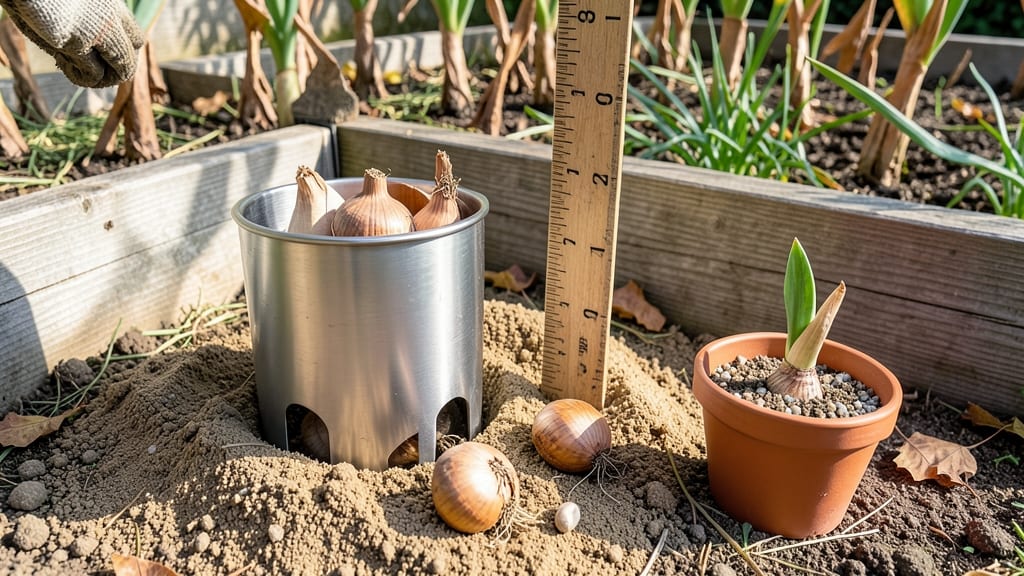
Planting tulip bulbs 🌷 too close can turn your dream spring garden into a crowded mess of floppy stems and stunted blooms.
Struggling to get tulips blooming year after year? Planting them too close—or too far apart—can ruin your spring display before it even begins. The right spacing isn’t just about looks; it’s the difference between healthy, vibrant blooms and a garden that fizzles out by mid-May.
Most gardeners assume "close enough" means packing bulbs tightly, but that leads to competition for nutrients, weak stems, and even disease. The science behind spacing—like 4 to 6 inches apart for single bulbs or 6 to 8 inches for clusters—ensures each tulip gets the room it needs to thrive.
Get it wrong, and you’ll spend next spring wondering why your tulips look more like weeds than flowers.
In this guide, I’ll break down the exact distances for different tulip types, how to adjust for soil and climate, and the 3 most common mistakes that kill tulip health before they even bloom.
By the end, you’ll know exactly how to space your bulbs for a showstopping display that lasts for years.
Optimal spacing for tulip bulbs: science-backed planting distances
Getting your tulips to bloom reliably starts with one critical step: proper spacing. Too close, and you risk disease, stunted blooms, and overcrowding. Too far apart, and your garden will look sparse.
The science behind tulip spacing balances air circulation, nutrient access, and root development—all of which directly impact next year's blooms. Let's break down the ideal distances based on bulb size, soil type, and planting style.
Most gardeners follow a simple rule: plant tulip bulbs 4-6 inches apart in rows spaced 6-8 inches apart. This spacing works for standard-sized bulbs (about 2-3 inches in diameter). However, larger varieties (like Darwin Hybrid tulips) need slightly more room—6-8 inches between bulbs—to prevent competition for nutrients.
Smaller bulbs, like those in tulip mixes, can be planted 3-4 inches apart.
Here's why spacing matters: Tulips store energy in their bulbs for next year's growth. When planted too closely, bulbs compete for water, nutrients, and sunlight, leading to weaker stems and fewer blooms.
Proper spacing also reduces humidity buildup between leaves, which minimizes the risk of fungal diseases like gray mold. Think of it like giving each bulb its own personal space to thrive.
Soil type plays a surprising role in spacing decisions. In heavy clay soils, which drain poorly, increase spacing to 6-8 inches to prevent waterlogging. In sandy soils, where nutrients wash away quickly, you can plant slightly closer (4-5 inches) but add a slow-release fertilizer to compensate.
Always amend your soil with organic matter (like compost) before planting to improve drainage and nutrient retention.
| Bulb Type | Spacing (inches) | Row Spacing (inches) | Depth (inches) | Notes |
|---|---|---|---|---|
| Standard (2-3" diameter) | 4-6 | 6-8 | 6-8 | Best for borders and mixed beds |
| Large (3-4" diameter) | 6-8 | 8-12 | 8-10 | Ideal for focal points and mass plantings |
| Dwarf (1-2" diameter) | 3-4 | 4-6 | 4-6 | Perfect for containers and rock gardens |
| Clusters (3+ bulbs) | 2-3 per bulb | 6-8 | 6-8 | Plant in groups of 3-5 for dramatic effect |
| Heavy Clay Soil | 6-8 | 8-12 | 8-10 | Amend soil with compost to improve drainage |
Depth matters just as much as spacing. Plant tulip bulbs 3 times their height deep—so a 2-inch bulb goes 6 inches deep. This ensures stability and protects them from temperature fluctuations that can damage emerging shoots.
In colder climates (USDA Zones 3-5), add an extra 1-2 inches of depth for insulation. Use a bulb planter or your finger to create holes at the correct depth—this precision prevents uneven growth.
For cluster planting, group 3-5 bulbs together in a tight circle, spacing them 2-3 inches apart within the cluster. This creates a fuller bloom display while still allowing air circulation. Place clusters 6-8 inches apart from other clusters to maintain balance.
This technique works beautifully in container gardens and small-space landscapes, where every inch counts. Just avoid planting clusters in low-lying areas where water pools after rain.
One common
Common mistakes when planting tulip bulbs too close (and how to fix them)
Planting tulip bulbs too close together might seem like a way to pack more blooms into your garden, but it often backfires. Overcrowding leads to stunted growth, disease spread, and even bulb rot over time.
I’ve seen gardens where tulips barely bloom because the bulbs competed for nutrients and space. Let’s fix these common mistakes before your next planting season.
One of the biggest errors is planting bulbs in tight clumps without considering their mature size. Tulips need room to grow—especially standard varieties that can reach 20-24 inches tall. When bulbs are too close, they’ll fight for sunlight and water, resulting in weak stems and fewer flowers.
Even dwarf tulips (8-12 inches) need at least 4 inches of space between them.
⚠️ Warning: Planting Tulip Bulbs Too Close
Mistake: Planting bulbs closer than 4 inches apart causes overcrowding, leading to:
- Stunted blooms (fewer or smaller flowers)
- Bulb rot from poor air circulation
- Mold growth in damp, crowded soil
- Weak stems that flop over
Fix: Space bulbs 4-6 inches apart in rows 8-12 inches apart. For containers, limit to 3-5 bulbs per 12-inch pot.
Another frequent mistake is ignoring soil drainage when planting bulbs close together. Tulips hate soggy soil, and when bulbs are packed tightly, water pools between them, creating the perfect conditions for rot and fungal diseases.
Always plant in well-draining soil with a mix of sand or perlite if your garden soil is heavy clay. Raised beds are ideal for crowded planting areas.
Many gardeners also make the error of planting tulips too deep in containers. In pots, bulbs need shallow planting (just 4-5 inches deep) to prevent waterlogging at the bottom.
If you’re layering bulbs in a container, leave 2 inches of space between layers and ensure the pot has drainage holes. Without proper spacing and depth, bulbs suffocate and fail to bloom.
For mass plantings or borders, a common mistake is skipping mulch after planting. Mulch helps regulate soil temperature and moisture, but when bulbs are too close, mulch can trap excess humidity.
Use 1-2 inches of organic mulch (like straw or shredded leaves) but keep it 2 inches away from bulb bases to prevent rot. Always water deeply before applying mulch to settle the soil.
Finally, don’t forget that container planting requires extra care. Overcrowding in pots is a recipe for disaster—bulbs compete for nutrients and roots get tangled. If you’re planting multiple bulbs in a container, space them 3-4 inches apart and choose smaller varieties like Tulipa greigii or Tulipa humilis.
Rotate containers yearly to prevent disease buildup and ensure healthy blooms.
By avoiding these mistakes, your tulips will thrive with strong stems, vibrant blooms, and long-lasting bulbs for years to come. Happy planting! 🌷