
Watering
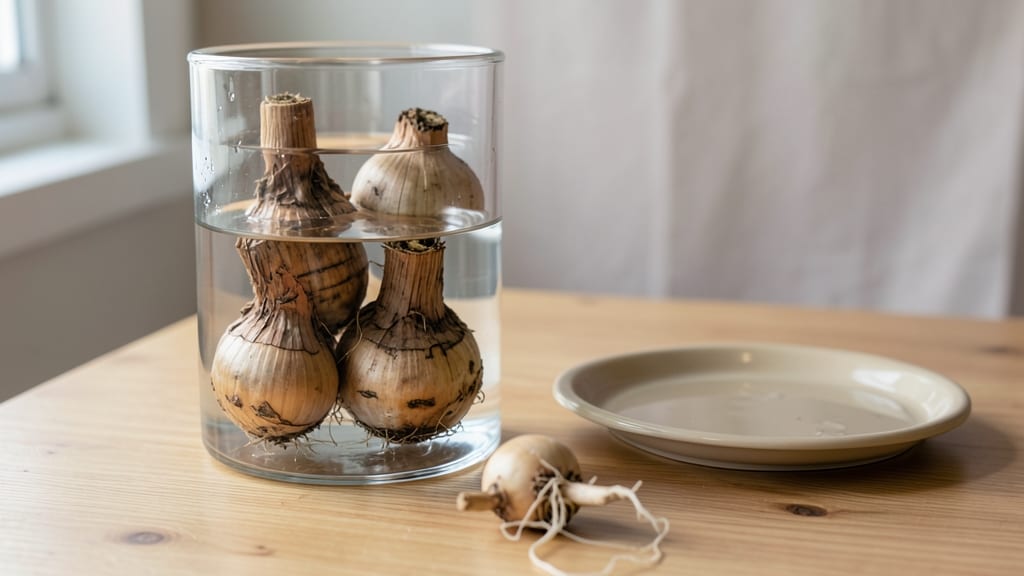
Yes, you can put tulip bulbs in water to force blooms indoors by placing them in a vase with pebbles, covering the bulb halfway, and keeping them in a cool, dark spot until roots and shoots appear. This method mimics natural dormancy and accelerates growth for early indoor flowers.
This water-forcing technique tricks tulip bulbs into thinking spring has arrived, even when it's still winter outside. 🌱 The key is patience—smaller bulbs may take 4-6 weeks to sprout, while larger ones can bloom in just 3-4 weeks.
I’ve found that using a narrow-necked vase prevents mold by limiting water exposure to the bulb’s base. Just remember: once roots appear, move your vase to bright, indirect light to encourage strong stems and vibrant blooms.
What makes this method special is how it bypasses traditional soil planting, letting you enjoy tulips months earlier than usual. The process relies on the bulb’s natural ability to store energy during dormancy—when submerged in water, that stored energy converts into rapid root growth.
For best results, choose firm, plump bulbs from a garden center, as they’ve already undergone some natural dormancy breaking.
💡 In This Article
- How Tulip Bulbs Bloom in Water: The Science Behind Forcing
- Step-by-Step Guide to Forcing Tulip Bulbs in Water at Home
How tulip bulbs bloom in water: the science behind forcing
The magic of forcing tulip bulbs in water lies in their natural dormancy cycle. Tulip bulbs enter a resting phase after blooming, storing energy in their scales as starches that convert to sugars when triggered.
When submerged in water, the bulb’s base absorbs moisture through its porous skin, activating enzymes that break down these stored starches into glucose—the fuel for root growth. This process mimics spring rains, which naturally signal bulbs to wake up in their outdoor beds. 🌱
Temperature plays a critical role—ideal forcing occurs between 45-55°F, mimicking early spring conditions. At these cooler temps, the bulb’s metabolic rate slows just enough to prevent rot while still allowing root development.
Larger bulbs (over 3 inches in diameter) force faster because they’ve stored more energy, often producing blooms in 3-4 weeks, while smaller bulbs may take 6-8 weeks. The water method skips soil’s natural resistance, letting roots grow unobstructed in a controlled environment.
Light deprivation is equally crucial. Tulips forced in water need complete darkness initially to prevent premature leaf growth, which weakens the stem. Once roots appear (typically after 2-3 weeks), move the vase to bright, indirect light to encourage strong stems.
Without this light transition, stems grow leggy and may collapse under bloom weight. The science here is similar to how gardeners use black plastic to force spring bulbs in garden beds—darkness preserves energy for flowering.
Bulb selection matters too. Choose firm, plump specimens with no soft spots or mold, as damaged bulbs rot in water. The best candidates are hybrid tulips like Darwin or Parrot varieties, which respond well to forcing.
Unlike soil planting where bulbs can develop multiple stems, water-forcing typically produces 1-2 strong stems per bulb due to limited nutrient access. This focused growth results in larger, showier blooms than garden-grown counterparts.
What most people don’t realize is that the vase’s neck shape affects success. A narrow neck (like a mason jar) creates a smaller water surface, reducing evaporation and limiting mold exposure to the bulb’s base.
The pebbles you place beneath the bulb serve two purposes: they anchor the bulb in place and create air pockets that prevent rot by allowing excess moisture to drain. This simple setup turns your vase into a mini hydroponic system tailored to tulip biology. 💫
The forcing process also demonstrates how tulips prioritize energy allocation. In water, bulbs devote nearly all their resources to root and stem growth first, then to blooms—a survival strategy that ensures reproductive success in their natural habitats.
This is why you’ll often see roots appear before any visible shoots, sometimes within just 7-10 days of starting the process. The bulbs are literally racing against time to develop strong anchors before they can afford to grow upward.
For gardeners curious about the differences between water-forcing and soil planting, the key lies in control. Water-forcing gives you precise environmental conditions—consistent moisture, temperature, and light—whereas soil planting depends on unpredictable outdoor variables. The tradeoff?
Water-forced tulips typically bloom 3-4 weeks earlier than their soil-planted siblings, making them perfect for Valentine’s Day or Mother’s Day surprises. The science shows that with the right conditions, even dormant bulbs can be coaxed into premature bloom with remarkable reliability. ✨