
Flowers
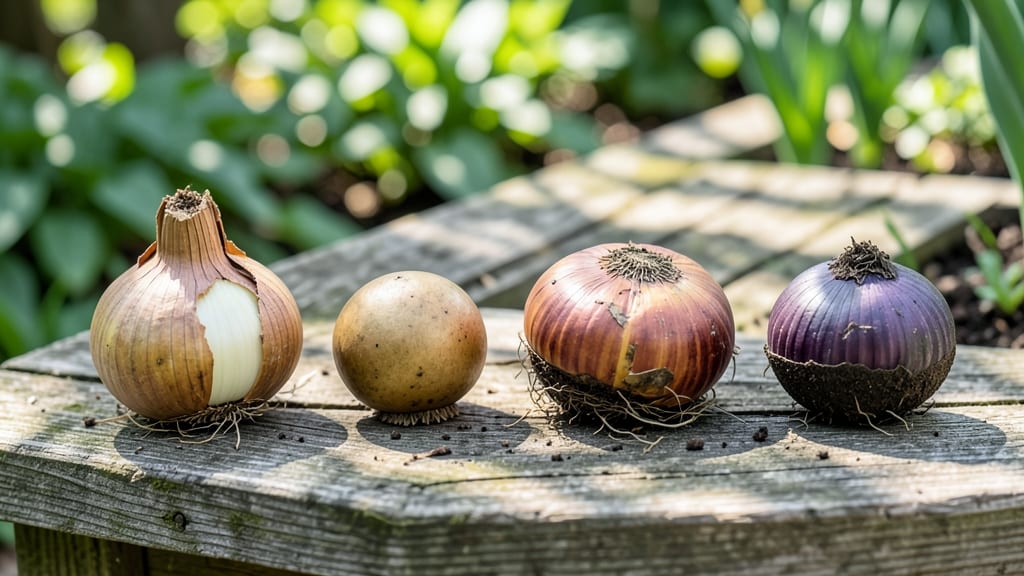
Identifying flower bulbs starts with three simple clues: shape, size, and the way they layer underground. 🌱 I’ve spent years digging up mystery bulbs in my garden—some turned out to be daffodils when I thought they were tulips, and the difference in blooms (and fragrance!) was shocking.
The key is noticing whether they’re round like crocuses or elongated like alliums, and how their layers stack up.
Leaf patterns and blooming season are your secret weapons. Tulips have smooth, sword-like leaves, while daffodils sport narrow, grassy foliage. Hyacinths bloom early spring with clustered flowers, while alliums wait until summer with their dramatic globe-shaped blooms.
Grab a notebook next time you’re at the nursery—jot down these details before you buy.
Once you’ve got the basics down, apps like PlantNet or a good bulb catalog become your best friends. Snap a photo of a bulb’s layers or compare it side by side with reference images.
I keep a small digital album of my garden’s bulbs labeled by type—it’s saved me from planting the wrong bulb in the wrong spot more times than I can count.
Confidence comes with practice, but even beginners can nail this. Start with a handful of common bulbs—tulips, daffodils, and hyacinths—and soon you’ll be spotting the differences like a pro. Your garden’s spring show will thank you for it.
Root Causes Of Bulb Confusion
Understanding why flower bulbs can be so tricky to identify starts with recognizing the natural and human factors at play. Whether you're a seasoned gardener or a curious beginner, these challenges often stem from biology, environmental influences, or even simple miscommunication.
Let’s break down the key reasons why bulb identification can feel like solving a puzzle—sometimes with missing pieces.
Many flower bulbs share striking similarities in shape, size, or even scent, making them nearly indistinguishable at first glance. Here’s why:
- Evolutionary Adaptations: Bulbs like tulips, daffodils, and hyacinths evolved to thrive in similar climates, leading to convergent traits (e.g., layered, papery tunics or rounded, fleshy structures).
Nature didn’t prioritize uniqueness—just survival. - Hybridization: Gardeners and breeders intentionally cross-pollinate bulbs to create hybrids (e.g., Tulipa × darwiniana hybrids). These offspring blend traits from parent species, blurring the lines between them. - Seasonal Variations: A bulb’s appearance can shift based on its growth stage.
For example, a freshly harvested Allium might look plump and uniform, while a dormant one could shrink and wrinkle, mimicking a different bulb entirely.
Pro Tip: 🔍 Examine the base: The "neck" or stem plate of a bulb often holds clues. A flat base (like in Narcissus) suggests a different family than a pointed one (common in Fritillaria).
Bulbs don’t come with labels, and their dimensions can be deceiving:
- Scale Illusions: A Crocus bulb might look like a tiny Tulip if viewed from afar, but up close, its papery texture and lack of a true stem plate reveal its true identity. - Layering Confusion: Bulbs like Lilies (e.g., Lilium martagon) have layered scales, while others like Daffodils (Narcissus) have a single, fleshy disc.
Misinterpreting these layers can lead to incorrect assumptions about the plant’s family. - Dormant vs. Active States: A bulb stored for winter may shrink significantly, making it harder to match against reference guides that show bulbs in their springtime glory.
Actionable Fix: 📏 Use a ruler: Measure the bulb’s diameter and depth. Record these metrics alongside visual traits (e.g., "3-inch diameter, 2-inch deep, papery tunic") to narrow down options.
How and where bulbs are grown or stored can alter their appearance:
- Moisture Exposure: Overly wet storage can cause bulbs to sprout prematurely or develop mold, obscuring their natural shape. Dry, cool conditions (like a basement) preserve their true form. - Pest Damage: Rodents or insects may nibble on bulbs, leaving irregular holes or chewed edges that mimic natural variations (e.g., a gnawed Hyacinth might resemble a damaged Snowdrop). - Disease: Fungal infections (e.g., Botrytis) can distort bulb shapes, making them look like entirely different species.
A healthy bulb should feel firm and smell earthy, not musty.
Pro Tip: 🌡️ Check for consistency: Healthy bulbs of the same species should have uniform shapes and textures. Inconsistencies often signal environmental stress or disease.
Even the most careful gardeners can contribute to bulb confusion:
- Mislabeling: Nurseries or online sellers sometimes use vague terms like "spring bulb" or "perennial bulb" instead of specific names.
Without clear labels, identification relies solely on visual cues. - Regional Names: A bulb might be called a "rain lily" in one area (Zephyranthes) but "atamasco lily" in another (Zephyranthes atamasco), causing mix-ups. - Digital Misinformation: Online forums or social media often feature bulbs out of context (e.g., a photo of a flower without the bulb itself).
Without the root structure, identification becomes guesswork.
Solution: 📝 Document your sources: If buying bulbs, request certificates of authenticity or take photos of the bulb and its packaging for reference.
Some bulb traits are invisible to the naked eye but critical for accurate ID:
- Root Structure: The number and arrangement of roots can differ. Tulips often have a single, thick root, while Daffodils may sprout multiple fibrous roots. - Tunic Texture: The outer covering can be papery (e.g., Allium), parchment-like (e.g., Hyacinth), or leathery (e.g., Cyclamen).
A magnifying glass can reveal these details. - Internal Segmentation: Cutting a bulb open (safely!) might show unique patterns. For example, Fritillaria bulbs have a segmented, almost "beaded" appearance inside.
Caution: ⚠️ Avoid cutting unless necessary—this can harm the bulb’s viability. Use a sterile knife and only if you’re certain you won’t replant it.
Quick Fixes for Common Bulb ID Confusion
Got tangled in bulb identification? Don’t stress—here’s how to untangle the mystery with practical, step-by-step solutions. Whether you’re staring at a bulb with no label or trying to match it to a catalog, these fixes will help you sort it out fast.
Start with the basics—shape, size, and texture—to narrow down possibilities.
H3: 📏 Measure and Compare
- Grab a ruler or measuring tape and note the bulb’s diameter and height. Record these dimensions in a notebook or on your phone.
- Compare to known bulbs: Use a trusted guide (like the [American Meadows Bulb Guide](https://www.americanmeadows.com/bulbs)) to match sizes. For example:
- Tulips: Typically 1–2 inches wide.
- Daffodils: Often 2–3 inches in diameter.
- Hyacinths: Smaller, around 1–1.5 inches.
H3: 🌱 Check the Base and Neck
- Flat vs. pointed base: Tulips and daffodils have flat bases, while hyacinths and crocuses often have pointed or tapered bottoms.
- Neck length: Longer necks (like those on tulips) suggest a taller stem, while shorter necks (like narcissus) hint at a bushier bloom.
If the bulb still baffles you, technology can lend a hand.
H3: 📱 Use a Bulb ID App Download free apps like:
- PlantNet (iOS/Android) – Upload a photo of the bulb and its packaging (if available) for AI-assisted identification.
- Gardenate – Lets you input size, shape, and location for tailored suggestions.
H3: 🔍 Search with Keywords If apps aren’t an option:
- Take a well-lit photo of the bulb from multiple angles.
- Search Google Images with terms like:
- “Flower bulb shape size inches”
- “Bulb with [texture, e.g., papery, smooth] base”
- Filter results by “Labels” or “Bulb Catalogs” for gardening sites.
Even faded or missing labels can reveal clues.
H3: 🔎 Look for Hidden Marks
- Brand logos: Companies like Bare Root Bulbs or John Scheepers often stamp their products.
- Color codes: Some nurseries use colored dots or stripes to indicate bloom time (e.g., red = early spring).
- Latin names: If you spot a scientific name (e.g., Tulipa gesneriana), search it directly.
H3: 📥 Check Old Receipts or Notes
- Dig through gardening journals, emails, or seed packets for past purchases.
- Pro tip: 💡 Save photos of bulbs you’ve planted in a shared album (Google Photos or Dropbox) for future reference.
When all else fails, plant the bulb and let nature do the talking.
H3: 🌱 Choose a Temporary Spot
- Pop the bulb into a small pot or a section of your garden bed labeled with a stake (e.g., “Mystery Bulb #1”).
- Water lightly and wait for sprouts—this can take 2–6 weeks depending on the bulb type.
H3: 🌸 Identify by Bloom Once flowers emerge, compare them to a flower identification app (like PictureThis or iNaturalist) or cross-reference with:
- Petal shape: Tulips have pointed petals; daffodils have trumpet-like coronas.
- Color patterns: Striped tulips or speckled crocuses are dead giveaways.
- Scent: Hyacinths have a strong fragrance, while many tulips are scentless.
Avoid future bulb mix-ups with these simple habits:
📌 Label Everything
- Use waterproof tags or a whiteboard in your shed to log bulb types by pot or row.
- Pro tip: ✨ Take a photo of each bulb before planting and save it in a folder named “My Bulb Collection.”
📦 Buy Pre-Labeled Bulbs
- Opt for named varieties (e.g., “Darwin Hybrid Tulip”) over generic mixes.
- Avoid bulk bins unless you’re confident in your ID skills.
🗓️ Track Planting Dates
- Keep a gardening calendar to note when bulbs were planted and when they bloomed. This helps predict future growth.
🌿 Start Small
- If you’re new to bulbs, begin with easy-to-identify varieties like daffodils or alliums before tackling rarer types.
🎯 Final Pro Tip: When in doubt, dig it up! If a bulb still stumps you after all these steps, carefully dig it up (in fall or early spring) and send a photo to a local gardening forum (like r/Gardening on Reddit).
Gardeners love a good ID challenge—and you’ll get answers fast!
With these fixes, you’ll go from bulb bafflement to confident gardener in no time. Happy digging! 🌱🔍
Frequently asked questions
What’s the easiest way to tell a tulip bulb from a daffodil bulb?
Look at the base! Tulip bulbs have a flat, disc-like bottom with a long neck, while daffodil bulbs are more rounded with a shorter, fatter base. Also, tulip bulbs often have a papery outer layer, whereas daffodils feel smoother and firmer.
Can I identify a bulb just by its size?
Size helps narrow it down, but it’s not foolproof! For example, hyacinth bulbs are typically 1-1.5 inches wide, while alliums can range from 1-3 inches. Pair size with shape and texture—like a papery tunic for hyacinths or a leathery skin for snowdrops.
Why do some bulbs smell bad when I open them?
A musty or rotten smell means the bulb is diseased or moldy—likely from poor storage (too damp or warm). Healthy bulbs should smell earthy, not sour. Discard any with soft spots, slimy textures, or foul odors to avoid spreading rot to other bulbs.
How do I know if a bulb is dormant or already sprouting?
Check for green shoots or a soft top—these mean it’s waking up! Dormant bulbs feel firm and dry, while active ones may have tiny roots or a slightly swollen base. If you’re unsure, plant it in a pot with soil to see what grows.
Are there bulbs that look identical but bloom at different times?
Yes! For example, crocus and snowdrop bulbs can resemble each other, but crocuses bloom in early spring while snowdrops appear in late winter. Another trick: Snowdrops have a single, nodding flower, while crocuses have clusters.